

Wilmar H1 net profit rises 2.3% on stronger feed and food product segments
Group declares an interim dividend of S$0.05 a share, up from S$0.04 a share a year earlier
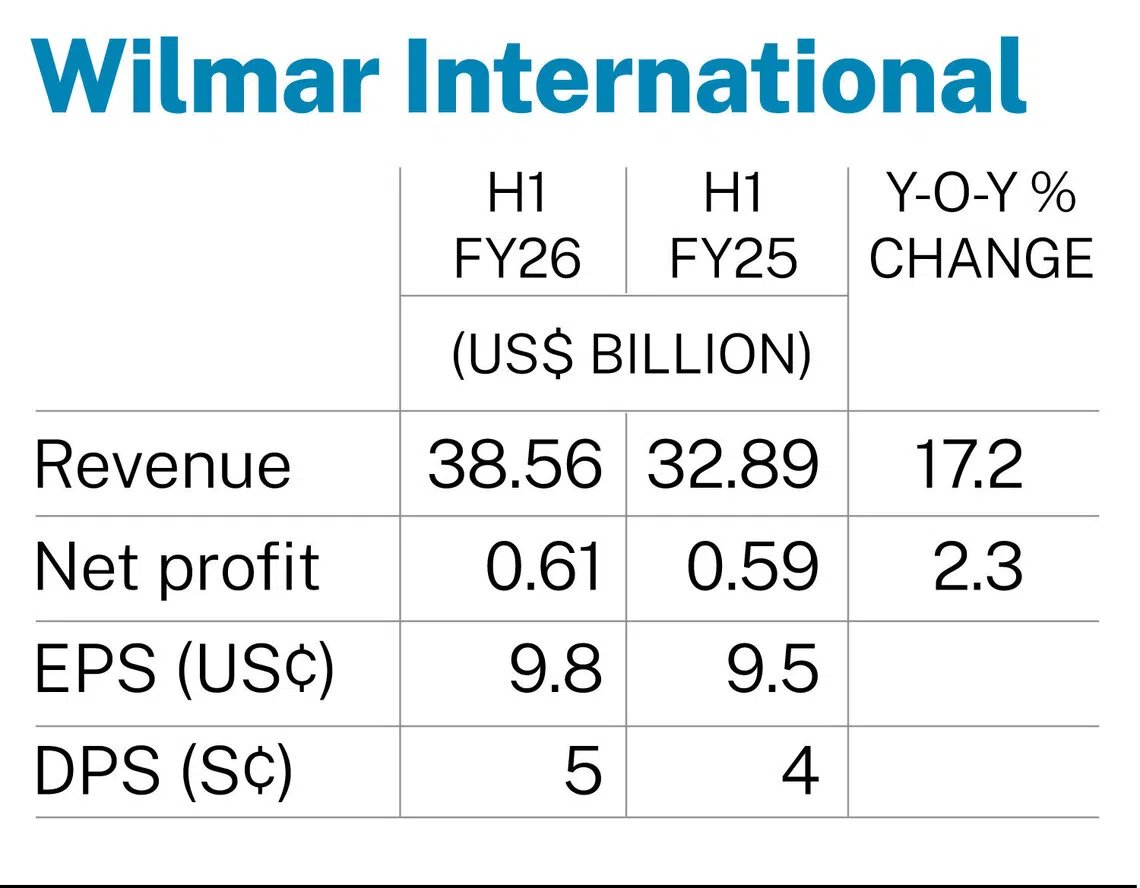
[SINGAPORE] Agribusiness Wilmar International on Wednesday (Aug 12) reported a net profit of US$608.9 million for the first half ended Jun 30, up 2.3 per cent from US$594.9 million for the year-ago period.
The group attributed this to stronger performance in the food, feed and industrial products segments. However, these improvements were partially offset by weaker performance from the plantation and sugar milling segment.
The group also recorded lower contributions from associates and joint ventures, partly due to the absence of the share of results of Mumbai-listed AWL Agri Business since it became a subsidiary of Wilmar in December 2025.
Wilmar said this segment was further impacted by weaker contributions from the group’s investments in Europe and South-east Asia.
Revenue rose 17.2 per cent year on year to US$38.6 billion in H1, from US$32.9 billion. Wilmar attributed this largely to the consolidation of AWL's results since December 2025.
The top line was further supported by higher selling prices on most products during the period.
Earnings per share came in at US$0.098, up from US$0.095 a year earlier.
The group declared an interim dividend of S$0.05 a share, up from S$0.04 a share previously. The dividend will be paid out on Sep 2.
Performance amid “heightened volatility”
Wilmar noted that its food products segment was boosted by the impact of AWL’s consolidation, the recognition of a gain from the disposal of joint ventures in China in the first quarter of 2026, as well as improved sales volume in H1.

Under its feed and industrial products segment, the tropical oils business recorded better volumes and refining margins during the period, the group said.
Sales volumes for the oil seeds and grains business also climbed 6 per cent, as rising feed demand in China boosted soybean-crushing activities.
Meanwhile, the plantation and sugar milling business was weaker, primarily on the back of softer sugar prices. Wilmar also recorded a US$24.7 million impairment loss on its sugar milling assets in India.
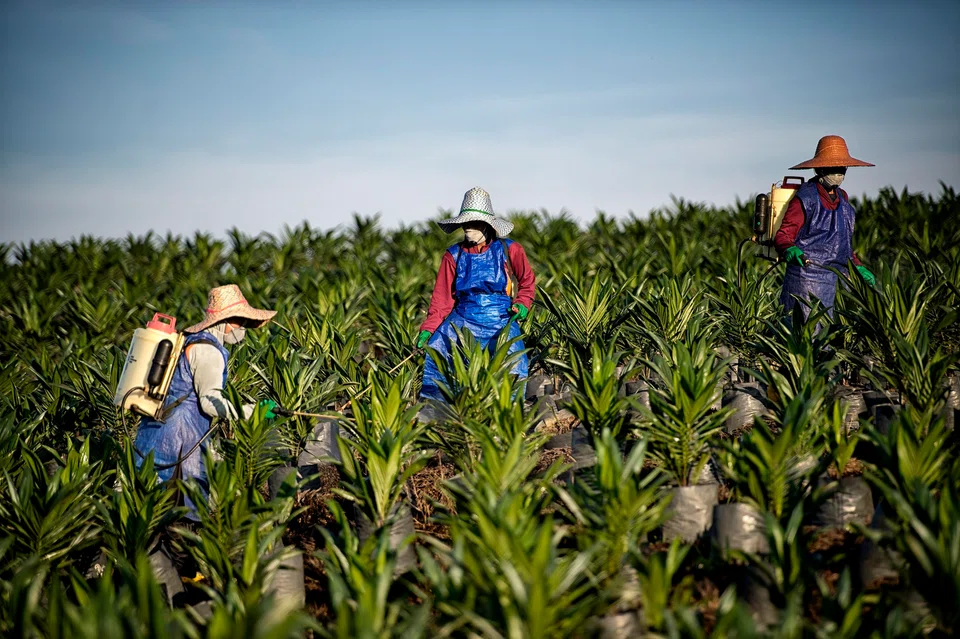
The group’s palm plantation business recorded a 6 per cent decline in fresh fruit bunch production volumes in H1 due to lower crop production in Indonesia.
Wilmar also recorded higher mark-to-market losses on its investment securities.
Kuok Khoon Hong, CEO of Wilmar, noted that the H1 results improved despite “heightened volatility across commodity markets” which arose following the conflict in the Middle East.
He said management expects operating conditions to “remain uncertain due to continuing geopolitical developments”.
“Nevertheless, our integrated business model, diversified operations and broad geographical presence are expected to provide resilience amid these challenging conditions.”
In April, Wilmar noted in a bourse filing that it foresees “certain indirect impact” on its operations from the Middle East conflict, but believes its current structure is sufficient to manage the situation.
“Barring unforeseen circumstances, the group expects results for the year to be satisfactory,” said Kuok.
Shares of Wilmar closed 0.5 per cent or S$0.02 lower at S$3.94 on Wednesday, before the results were announced.
Decoding Asia newsletter: your guide to navigating Asia in a new global order. Sign up here to get Decoding Asia newsletter. Delivered to your inbox. Free.
Copyright SPH Media. All rights reserved.
TRENDING NOW

Once staunchly pro-China, Malaysian Chinese businesses are now distancing themselves from Beijing

Stocks to watch: HPL, Aims Apac Reit, Zico, Advanced Systems Automation, ComfortDelGro

‘How many will survive?’: Bubble fears arise as China’s humanoid robotics face reality check

Smaller board lots can’t fix a market run by three banks

