

Wilmar's YKA listing to help fund 19 investment projects in China
Amid overwhelming subscription of IPO shares, YKA now eyes "huge expansion" that will accelerate growth in China

Uma Devi
Singapore
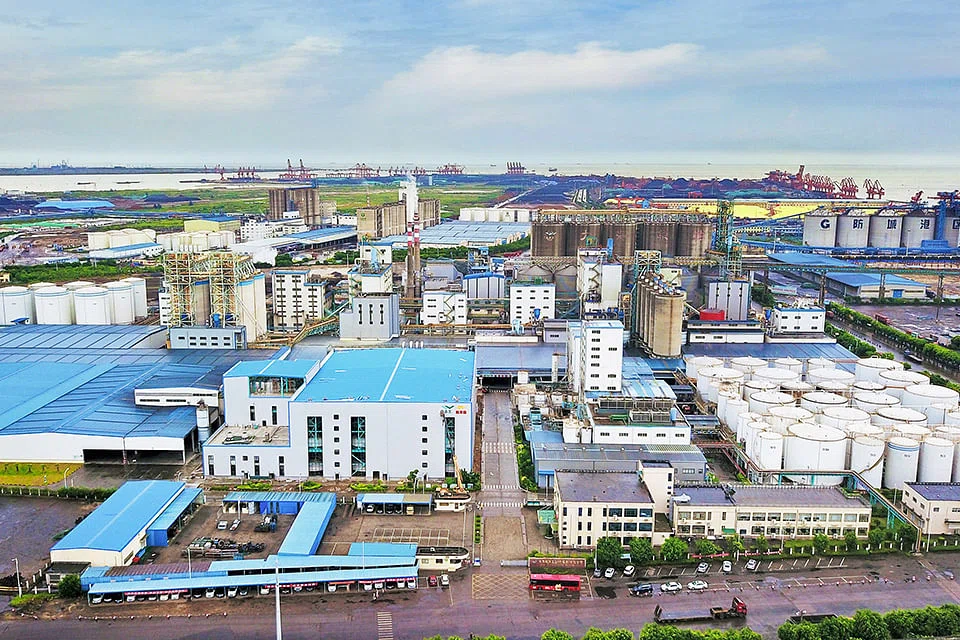
WILMAR International's China unit, Yihai Kerry Arawana (YKA), is expected to list on the Shenzhen Stock Exchange's ChiNext Board this month. With the money raised, the company is eyeing a "huge expansion of its agri-commodity processing and food product businesses".
"The listing will allow YKA to accelerate its growth in China, which we believe will be the world's largest and most sophisticated consumer food market," Wilmar said in response to queries from The Business Times.
YKA is a wholesaler and distributor of food products such as small package edible oil, rice and flour. The company is also involved in industry processes such as oilseed crushing and edible oil refining.
At a price tag of 25.7 yuan apiece, the IPO will raise 13.9 billion yuan (S$2.8 billion). Proceeds will go towards the partial funding of 19 investment projects.
Seven of these are integrated facilities that can process more than one type of food product: whether grains, oils, flour, rice, noodles, peanuts or other edible items. For instance, the company is investing 150,800 in the first phase of a grain, oil and food processing project in Gansu province. Another six are edible oil processing projects, and four are flour processing projects. The remaining two are a corn processing project, and one that processes both flour and feed meal ingredients.
YKA already has more than 300 manufacturing plants across China. Wilmar said the strategic location and the integrated nature of these plants help to keep the company's costs low.
These facilities also follow a circular economy model that generates minimal waste. For instance, rice bran oil and rice husk ash are derived from the by-products of processing rice and wheat. This leads to "higher productivity and efficiency".
The decision to expand comes on the back of "good demand for our products". The pandemic has created additional demand as consumers are "eating more at home and recognising the health benefits from safer and better quality products".
Wilmar said the funds raised from its IPO will be enough to cover "part of the capex in the next few years" with the remainder set to be funded from YKA's earnings.
YKA will also develop new businesses in the food sector, and will work on "expanding its product portfolio" with products that are supported by "extensive research and development (R&D) work".
"We recognise the importance of continuously improving our product quality and innovation, hence we invest substantially in building robust R&D capabilities. We believe that YKA has the scale, efficiency and innovation to stay ahead of competition," said the company.
Investor appetite for IPOs in China has been strong this year, and YKA's IPO has attracted its fair share of attention. Demand for YKA shares coming from offline investors was 600.5 times the value of shares available, while demand from online investors was 1,750 times over.
Analysts, meanwhile, are bullish on Wilmar's prospects following the IPO updates. UOB Kay Hian analyst Adrian Loh said in a recent report that with 60 per cent of Wilmar's revenue derived from YKA, the IPO is set to be a "key share price catalyst" for the counter in the next few months.
OCBC Investment Research analyst Chu Peng believed the listing will "unlock value for Wilmar's shareholders and further grow (the company's) business in China". Mr Chu also estimated that Wilmar's share price will potentially trade in the range of S$4.44 to S$6.50 after the IPO.
Wilmar shares closed on Tuesday three Singapore cents or 0.67 per cent higher at S$4.54, valuing the company at 15.2 times its historical earnings.
TRENDING NOW

MAS allocates S$1.45 billion to five asset managers in third EQDP batch: Chee Hong Tat
‘My grandfather’s legacy’: Sherman Kwek lays out three-year plan for CDL to drive returns

He built the Vingroup empire. Now South-east Asia’s richest man is handing some key roles to his sons
‘How many will survive?’: Bubble fears arise as China’s humanoid robotics face reality check

