

Winds of change for oil-slump survivor Marco Polo Marine

Anita Gabriel
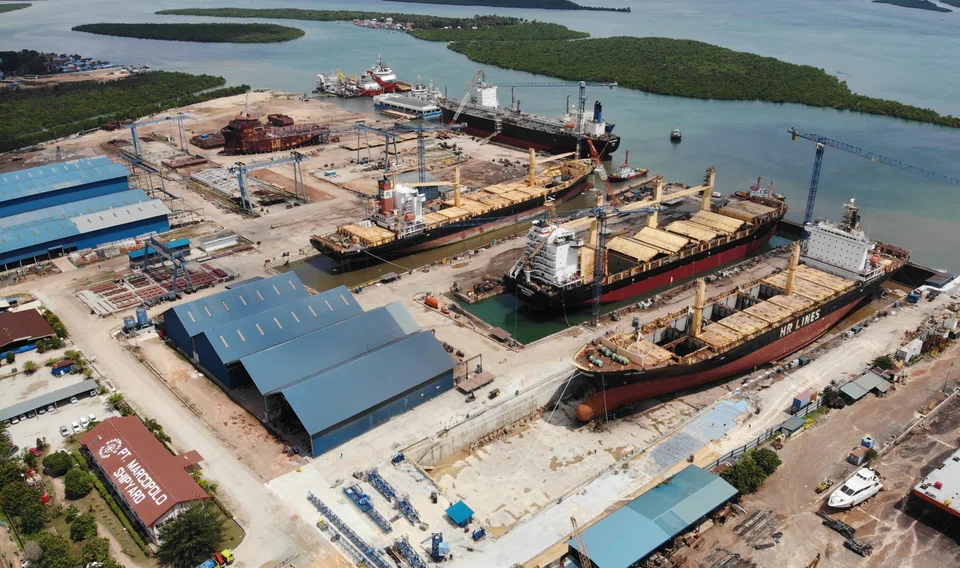
AFTER enduring back-to-back slumps in the oil and gas sector from 2014 to the pandemic years, shipping firm Marco Polo Marine seems to have taken key steps to future-proof itself. And the rewards are showing.
A week ago, the mainboard-listed company, which counts shipyard and ship chartering as core businesses, issued its report card for the nine months to June 2023. Revenue for the period rose 65 per cent to S$93 million, while gross profit improved nearly 80 per cent to S$32 million.
Higher energy prices and a bustling offshore landscape, plus continued tight supply in the offshore support vessels (OSV) market, have lifted utilisation rates over the third quarter to 92 per cent – up eight percentage points from a year ago.
Similarly, as shipbuilding and ship repair activity ramped up for the quarter, Marco Polo ’s yard in Batam, Indonesia, operated at an average utilisation rate of 93 per cent – a nine percentage point increase compared to the same period last year.
Rosy patch
Perhaps the rosiest patch in the group’s prospects now is its bet on the offshore wind sector – a space bustling with as much promise as activity amid the green energy transition, which the firm embarked on to dull the sting of the volatile oil and gas sector.
According to a report released in November last year by the World Economic Forum, an estimated US$1 trillion will flow into the offshore wind industry over the next decade.
The International Renewable Energy Agency estimates that by 2050, Asia will be a global leader in wind power and will account for over 60 per cent of all offshore wind capacity installed globally.
In May last year, Marco Polo took a big step towards this end and scooped up PKR Offshore, a vessel owner based in Taiwan – one of Asia’s most prolific offshore wind markets. The diversification has provided a new utilisation base for the group’s vessels and hence has boosted the vessel charter and utilisation rates of the group.
Although the specifications differ from those used in oil and gas exploration projects, the vessels can be deployed to support key stages in wind farm installation and construction without additional capital expenditure, said Marco Polo in its latest annual report.
Chartering hope
Marco Polo’s ship chartering business, which contributed around 60 per cent to the group’s top line 10 years ago, had begun taking a backseat to shipbuilding and repairs following oil’s downturn from 2015 onwards.
However, in FY2022, the ship chartering business was back to pulling its weight, contributing nearly S$45 million to group revenue, versus S$41 million from the shipbuilding and repairs segment.
Contributions from chartering surged more than twice in 2022 from the year before, mainly owing to the consolidation of results of Indonesia’s PT Pelayaran Nasional Bina Buana Raya (PT BBR) and PKR Offshore from March and May 2022 onwards, respectively. (Marco Polo raised its interest in PT BBR to a majority stake last year following the completion of a rights issue to offer customised solutions for the offshore oil and gas sector.)
Strong winds
It is worth noting that, by end-FY2022, about 40 per cent of Marco Polo’s offshore fleet was deployed to support the burgeoning demand from offshore wind farm projects in the Asia-Pacific region.
The firm is constructing its own Commissioning Service Operation Vessel (CSOV), which will be integrated into its fleet around Q3 FY2024. Once this pans out, it will also step up the company’s game in catering to the unique requirements of the offshore wind farm industry, chiefly in Taiwan, Japan and South Korea.
According to RHB Research in a May report, Marco Polo remains in a “sweet spot” to deploy and operate its first CSOV, particularly in an environment where such vessels are in short supply as bank financing for new vessels is tight while older vessels are being scraped.
The house estimates that there are around 800 vessels currently, down from some 1,000 previously, that serve both the offshore wind farms and O&G sectors. Furthermore, it said the offshore wind sector is facing a shortage of tier-1 CSOVs with only 10 operating – mainly deployed in Europe – while another 30 or so are in the pipeline.
Marco Polo, which is sitting on a cash pile of S$53 million, has spent four out of the past 10 years in losses, and is likely en route to its third straight year of being in the black.
Healthy chartering and utilisation rates plus new contracts and more repair jobs are keeping hopes high for the firm’s prospects. But if past downturns have taught the company anything, it’s that the good times could turn very quickly. In a slowing economy such as now, it’s a lesson to constantly bear in mind.
* Amendment note: A previous version of this article wrongly stated Marco Polo’s 9M gross profit. The article has been amended to reflect this change.
TRENDING NOW

Indonesia’s coal tycoon Low Tuck Kwong replaced as Bayan Resources president-director

OCBC names Ang Eng Siong as global corporate banking head in rejig of wholesale banking business

Consider lowering homeownership barriers for some non-resident foreigners

DBS opens flagship investment strategy to retail investors with new fund

