

Working group to review SGX retail bonds framework
Tightening admission criteria for retail bonds, introducing insurance coverage for bond issuers among key proposals
Singapore
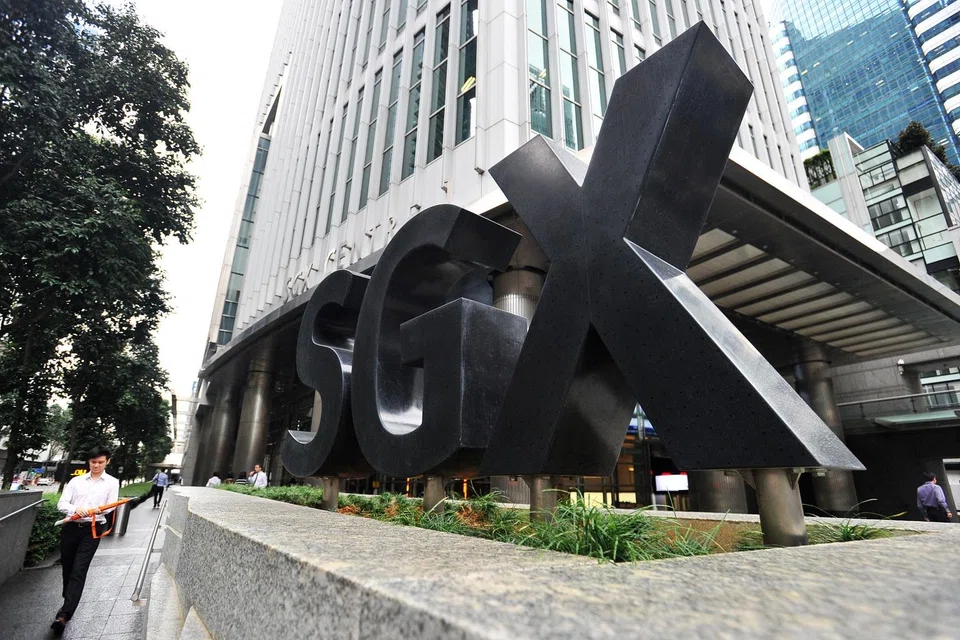
THE Hyflux saga has prompted questions on whether additional support is needed for retail investors in bond defaults. With that in mind, a fresh retail-bonds working group has been set up to review salient issues around retail-investor protection on this front.
The Singapore Exchange told The Business Times that tightening the admission criteria for retail bonds, introducing insurance coverage for bond issuers at the time of issuance to draw down on in times of default, and improving disclosures on bond issues are some of the key proposals that the working group would review.
The group comprises representatives from Perpetual (Asia) Limited, Allen & Gledhill, Allen & Overy, Clifford Chance, DBS Bank, OCBC Bank, UOB Bank and the Securities Investors Association Singapore (Sias).
In an interview with The Business Times, chief executive officer of Singapore Exchange Regulation (SGX RegCo), Tan Boon Gin, who chairs the working group, said in reviewing the admission criteria for retail bonds, the group is considering the types of securities that should be allowed for retail investors.
"Should we just allow plain vanilla bonds? What about perpetuals or asset-backed securities," Mr Tan said, with an example of the latter being bonds issued by Temasek Holdings-linked private equity vehicle Astrea V.
"We are also looking at entry criteria, such as whether we should require a minimum credit rating, or at least have a credit rating for the issuer of the bonds."
Another question that the group is looking at is whether more assurance needs to be given over the quality of issuers - for instance, by requiring a third-party opinion by way of a Sias commentary, or analyst research report.
A more controversial proposal has to do with whether a minimum participation by institutional investors should be mandated in every retail bond issue. Other considerations include whether proceeds raised should be allowed to pay off existing debt, in particular existing debt to interested third persons.
Under improving disclosures, the working group is mulling the idea of mandating that certain ratios relevant to debt investors such as debt-to-equity ratio and interest coverage ratio be disclosed to bondholders, along with annual reporting of material events that would be of interest to bondholders. In the case that there is none, a confirmation that there is no event of default or breach of covenant should also be disclosed.
Under protection of investors' interest in cases of default, the working group plans to clarify the roles of parties such as the issuer and trustee. It will also discuss how to fund trustees acting for bondholders, and ways to help bondholders organise themselves.
Mr Tan said that so far, Sias has been doing the job of organising meetings with bondholders on an ad hoc basis, but these roles should be clarified, together with the question of who pays for the cost of organising these meetings. As for trustees, they are often unwilling to get involved to represent other bondholders unless they are paid. "So should it be pre-funded out of the debt proceeds, or should there be some form of insurance coverage?" he said.
He added that questions of whether bondholders have the right to attend creditor meetings or to vote must also be addressed. Bonds are often widely held, including through custodians. "Thus far, we have gone to the courts for certain rulings, and I think the courts have taken a very pragmatic approach and not an overly legalistic one, but it's probably incumbent on us to clarify these matters."
In fact, the proposal of having retail bond issuers take up a collective insurance policy is not new. It was first mooted by Sias and Rajah & Tann Singapore in a joint submission to the Monetary Authority of Singapore two years ago. The idea was that when a default occurs, the payout from the policy can fund the cost of calling for meetings and other legal and financial advisory fees.
The suggestion was made at a time when there was unprecedented local bond defaults among offshore and marine firms, but Mr Tan said these were mostly wholesale bonds offered only to institutional and accredited investors.
Back in 2017, the proposal was also accompanied with the suggestion that bond promoters allocate a minimum 30 per cent of the total issue to institutions, so that in a default event, institutional investors can take up the cudgels for their retail counterparts who have less financial muscle and experience. Large investors would also have the funds to pursue legal action and obtain the best legal advice.
But market watchers opposed to the idea said at the time that there was a lack of demand from institutions for unrated corporate bonds and even some rated issues. They cannot simply be compelled to take up bond issues; it also makes the market unattractive.
Yeo Wico, partner at Allen & Gledhill, stands among those who support the proposal of institutional participation. He said: "Retail investors tend to be price takers. The best way to improve is to ensure that institutional investors play a key role in price fixing, and that the price so fixed is offered on the same terms to retail investors."
The insurance debate, too, has been well-argued. Stefanie Yuen Thio, joint managing partner of TSMP Law Corporation, thinks it is unfair to have credit-worthy issuers "underwrite" the professional fees for defaulting issuers. "That just ups the costs for everyone, and is an inefficient use of resources. Aren't we better off educating ourselves on who are good quality issuers and investing in their bonds?"
"Arm (retail investors) to make better assessments of investment risks. Corporate defaults cannot be totally avoided, but investors can make investment decisions based on a studied evaluation of the issuers."
But Sias president David Gerald said installing an insurance policy for bond issuers as a backstop measure to fund legal and financial advisers fees would be "a gracious act" - for the better good of all issuers, even if not all may default.
"It's just like insurance. All premium holders pay premiums, but not all have claims. If every issuer pays, then it will be affordable and it won't amount to much per issuer . . . At the same time, bondholders (in a bond default) don't have to be stranded because the company has no money. Financial failure can happen to any company; any issuer, any bond can fail."
Patrick Ang, managing partner of Rajah & Tann Singapore also agreed that issuers need to look at the bigger picture - even though this would raise the cost for good quality issuers, as if all come onboard, the cost is minimal compared to the overall benefit of increased confidence in the Singapore bond market.
The retail bond market in Singapore is not tremendous. There are currently only 13 retail bonds and perpetual securities listed on the SGX, compared to 4,186 wholesale bond listings as at end-November 2019. As for defaults, that of Hyflux's bonds was the only incidence in recent history, Mr Tan said.
BT understands that almost every law firm in Singapore has encountered not being paid fees by a company in default before. In most cases, before law firms start acting, they would try to request a deposit first, but sometimes the case drags on for longer than expected due to complications, so the deposit runs out. Most responsible law firms would try to see the case to an appropriate juncture before discontinuing, rather than drop it immediately.
The working group is expected to present its recommendations and views to SGX RegCo by mid-2020, after which a public consultation will likely take place by the end of the year.
The last time the retail bonds framework was revised was in 2016 when the bond seasoning framework came into effect, allowing retail investors to buy certain bonds that were initially meant for institutions and accredited investors.
TRENDING NOW

32 companies, 6 individuals bag accolades at Singapore Corporate Awards 2026

He built the Vingroup empire. Now South-east Asia’s richest man is handing some key roles to his sons
URA to review guidelines on floor space to give developers more design flexibility: Chee Hong Tat

Chagee, Mixue and Luckin won the market. Sustaining their edge is the harder part

