The world’s super rich are moving to Dubai, but keeping their assets in Singapore, Switzerland
Nevertheless, influx of wealth into the UAE city will likely support its growth as a booking centre

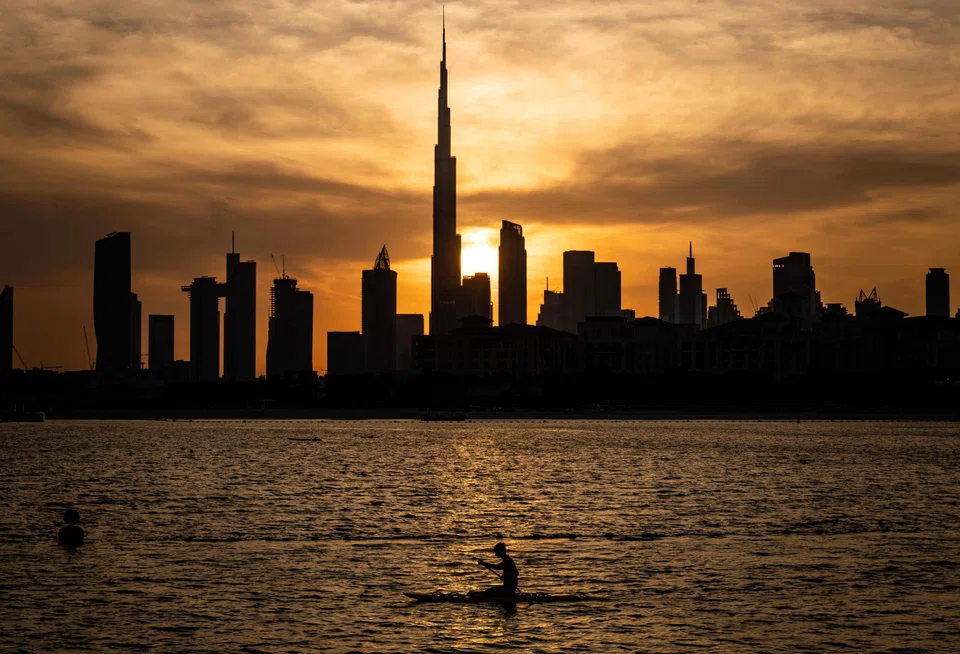
MORE high-net-worth individuals around the world are moving to Dubai, as the city actively positions itself as a global wealth hub. But many still prefer to keep their assets in more established wealth hubs such as Singapore and Switzerland, market observers said.
Dubai – and the rest of the United Arab Emirates (UAE) – has become a strong magnet for private wealth and talent in recent years. Migration consultancy Henley & Partners projects the UAE will have the highest net inflow of millionaires globally in 2024, at more than 6,700. For Singapore, it projects a net inflow of 3,500 millionaires for 2024.
A report by the Boston Consulting Group said that the UAE also has the highest percentage growth as a booking centre in 2023, up 8.9 per cent or US$48 billion in cross-border wealth. It is on track to become the sixth-largest booking centre worldwide by 2028.
Yet, high-net-worth clients who are moving there are still not viewing the UAE as a premiere booking centre, said Dominic Volek, group head of private clients at Henley & Partners and a member of its executive committee.
“A lot of wealthy people still look at Switzerland, Singapore, the US and London, as better known – and therefore, safer – bets in terms of booking assets,” he said.
While several global private banks may have a presence in the UAE, they are typically there as relationship managers with no booking centres, he noted.
Safer bet
In fact, the private banks in the UAE are largely focused on helping clients who reside in the UAE but wish to hold their funds overseas, said David Gibson-Moore, president and chief executive of Dubai-based corporate advisory Gulf Analytica.
Gibson-Moore said traditional centres such as Singapore and Switzerland remain the gold standard in wealth management, due to their decades-long reputations for trust, stability and specialised expertise.
“Their strong regulatory frameworks and political stability are particularly appealing for those focused on intergenerational wealth preservation,” he noted.
While the UAE has made many significant strides, it still faces challenges from the perceptions of geopolitical risk in the region, Gibson-Moore said.
It also lacks certain more sophisticated financial products that are typically available in other financial centres, and local depth in wealth management expertise, he added.
“Many wealthy individuals located in the UAE follow diversification strategies anyway, spreading their assets across multiple jurisdictions to mitigate risk,” he said.
Meanwhile, a spokesperson for Singapore-based family office Manoharan Capital said Dubai has a harder landscape to navigate, due to differences in relationships and the business environment.
“Dubai is really thriving in the capital they have, but when you compare it with Singapore, being more established, it just seems like (Singapore is) a safer bet,” said the spokesperson.
Dubai recognises the fact that clients perceive Singapore as “far stronger” in terms of safety of assets, said Vivek Sharma, head of the international clients group at Indian wealth manager Nuvama Group.
This is why it is pushing banks to also open their booking centres there – although it has to play catch up with Singapore’s decades worth of private banking expertise, he said.
“They will have to go through their own journey of becoming more acceptable and stronger… But clearly they are making the right investments, and say very openly that Singapore and Hong Kong are where they’re deriving a lot of the lessons from,” he added.
2030 vision
The UAE has invested heavily in its efforts to bring in more wealthy immigrants.
Dubai aims to double its economy by 2030 and rank among the top three global cities for investment, living and working, under the Dubai economic agenda “D33”.
Abu Dhabi’s economic vision 2030 also aims to revolutionise the emirate into a cutting-edge, globally competitive hub.
This has culminated in the form of favourable tax policies – Henley & Partners’ Volek said the UAE’s tax policy has become more attractive than those of Singapore and Hong Kong.
Geographically, the UAE is also more attractive because it is in the middle of the world, making it a good base for global businesses to connect from the East to the West, he added.
“As companies and individuals become more globally focused in terms of their business, it might potentially be a bit of a pull towards the Middle East,” he said.
He noted that Dubai’s golden visa scheme is also a highlight.
The UAE residence by investment programme offers long-term residence to individuals across investment categories, including real estate, where investors can obtain a 10-year renewable residence visa by purchasing a property worth at least two million Emirati dirham (S$733,000).
This golden visa goes beyond investments and targets individuals who want to stay in the UAE, allowing it to attract more talent, Volek said.
In comparison, Singapore’s visas have higher thresholds to meet, and the city-state also has limited space and land to accommodate a large influx of immigrants, he added.
Nevertheless, Volek said he would not pit Dubai against Hong Kong and Singapore at this juncture, given that it is not yet a booking centre, but a relationship hub.
“But because the high-net-worth population here is growing at such a big level… it will for sure become a lot more competitive going forward,” he said.
Additional reporting by Tessa Oh