

Worldwide Flight Services CEO sees near-term softness in cargo, but robust long-term prospects

Tay Peck Gek
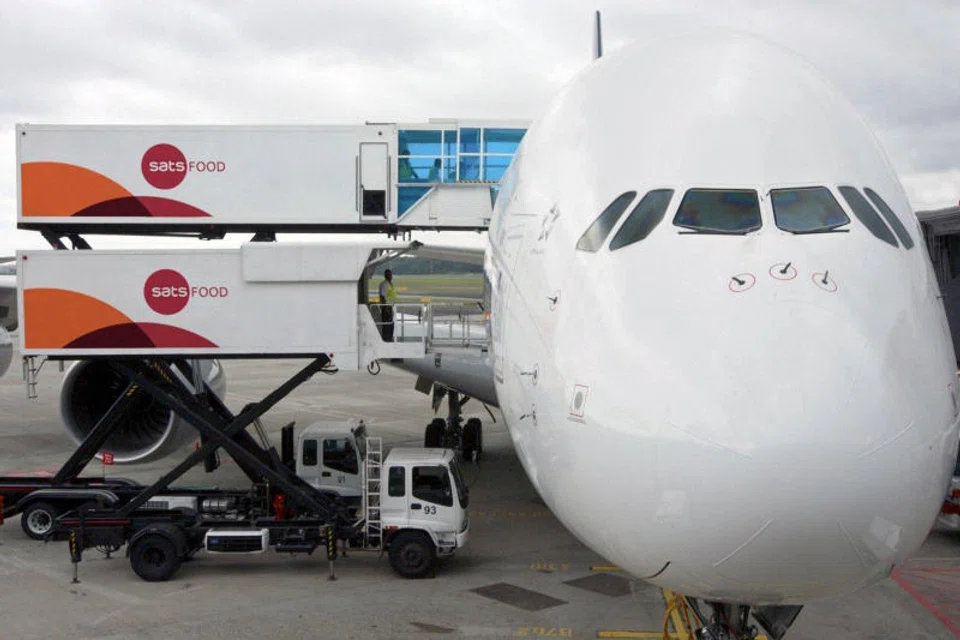
WORLDWIDE Flight Services (WFS) chief executive Craig Smyth expects further softness in the global air freight market.
But if history is any indication, he said, the hit to the sector will probably last only three or four quarters. After that, the sector will likely take fewer than a couple of quarters to recover.
There were periods of anomaly, when the air freight market did not follow historical patterns.
The recent pandemic, for instance, led to a sharp contraction in capacity. And during the global financial crisis, which erupted in one quarter and lasted for four quarters with a 10 per cent reduction in volumes, it took six or seven quarters for the sector to see a full recovery.
Most cyclical downturns, however, tend to follow an established pattern, said Smyth, who joined air cargo handler WFS a little over six years ago.
With close to three decades in the aviation industry under his belt, he was also involved in an acquisition that helped transform the British bookstall owner John Menzies into a freight forwarding organisation.
Now, Smyth is overseeing what could be another transformative deal.
WFS has become a takeover target of Singapore-listed ground-handler and inflight caterer Sats . The latter hopes to acquire Paris-based WFS for about 1.3 billion euros (S$1.86 billion), pending approval from Sats shareholders.
Since the deal was announced, however, shares of Sats have come under pressure.
Criticisms of the deal include the dilutive effect of fundraising to pay for WFS, the price tag, and the possibility that WFS’ performance will weaken from here while Sats’ should strengthen.
WFS posted a net loss of 30.9 million euros for the third quarter to September, compared with earnings of 26.8 million euros in the year-ago period, said its unaudited financial statements released last week.
This was even as the company’s revenue increased 44.2 per cent to 511.3 million euros.
Margins were hit by a 57.8 per cent rise in operating overheads and field expenses, and were mostly associated with acquisitions WFS had made in the United States last year.
Expenses also rose because of investments in business development and information technology, the company said.
Sats, too, reported a loss for the quarter to September, to the tune of S$9.9 million. This was a reversal from its year-ago profit of S$6.8 million, but was distorted by the effect of the government’s pandemic reliefs.
Stripping out the reliefs, Sats’ net loss would have been S$19.7 million in the most recent quarter – an improvement from a net loss of S$30.1 million in the year-ago period.
WFS also has a significant debt load. Its adjusted net total financial debt was about 1.1 billion euros as of end-September, up 54.7 per cent year on year.
The air cargo handler attributed the jump to its refinancing early in the year in the form of senior secured notes. These listed notes carry interest rates of 6.375 per cent, 7.875 per cent and Euribor (Euro Interbank Offered Rate) plus 6.125 per cent per annum.
Smyth, however, is optimistic about the cargo sector’s long-term prospects, which he believes should outperform global gross domestic product growth.
The current softness in the market is related to Russia’s invasion of Ukraine and the Covid-induced lockdown in China, Smyth said.
However, he expects cargo traffic to rebound once both these situations are resolved. Any easing of trade tensions between the United States and China would also help.
Meanwhile, the sector is riding a structural tailwind from e-commerce. Demand took off during the pandemic and now accounts for 20 per cent of products flown, he said.
Smyth is therefore confident of WFS’ prospects. Until the cycle turns, he expects the company’s diverse clientele and geographical footprint – spanning 160 airport stations in 17 countries – will keep it steady: “The spreads, the strengths, the depth of the WFS network across the world, but particularly in Europe and North America – that diversification of geography does give us a lot of resilience.”
According to Smyth, 25 per cent of WFS’ global airline customers are Asia-based. The Middle Eastern airlines make up another 20 per cent, with Qatar Airways and Emirates among them.
Besides airlines, WFS also serves a myriad of players in the freight industry: “We’re the biggest partner when it comes to the handler partner of Amazon in the US. And we’re building a relationship with China now.”
Most of the company’s contracts also provide for the pass-through of inflation.
Having a presence in various nations has provided his team the experience of working in different cultures, Smyth said. He therefore does not expect any integration issues with Sats.
He does not believe that the acquisition would run into antitrust problems either, as he said there is an “almost zero overlap between the companies”.
Over the longer term, Smyth has growth on his mind. WFS aims to increase its capacity globally by 30 per cent over the next three or four years.
If the deal with Sats takes place, he said, retrenchment of WFS’ 31,000 workers is not on the cards, as the acquisition is “all about enhancing the network”.






