
Yen holds on to big gains after BOJ’s surprise policy tweak
 Add BT as a preferred source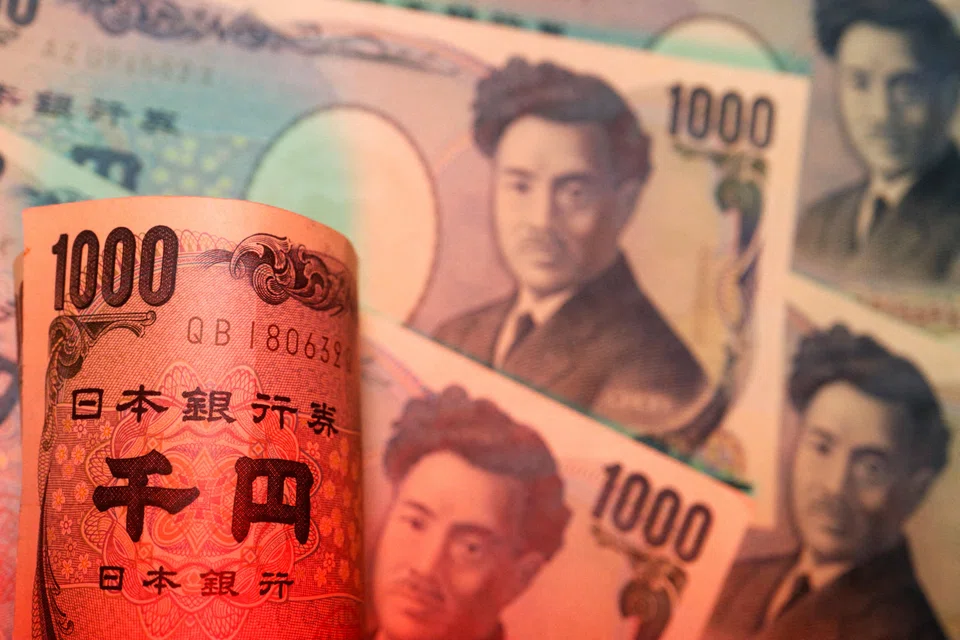
THE yen slipped slightly on Wednesday (Dec 21) after surging almost 4 per cent in the previous session, when the Bank of Japan (BOJ) unexpectedly tweaked a key policy, allowing government bond yields more room to move.
The BOJ decided to change its “yield curve control” policy on Tuesday even as it kept broad policy settings unchanged. It is now letting 10-year yields move 50 basis points either side of its 0 per cent target, wider than the previous 25 basis point band.
On Wednesday, the yen was down 0.13 per cent, trading at 131.88 per US dollar, not far off the four-month high of 130.58 touched on Tuesday, when the yen jumped 3.8 per cent in its biggest one-day rise since 1998.
The surge was a sign that traders expect the BOJ to further tighten monetary policy in coming meetings, said Derek Halpenny, head of research at Japanese bank MUFG.
“The easiest way to express a view in this being the first step in a normalisation process… was obviously in FX rather than in rates,” he said.
Elsewhere in currency markets, the euro was down 0.16 per cent against the US dollar at US$1.061.
Navigate Asia in
a new global order
Get the insights delivered to your inbox.
Sterling was down 0.68 per cent to US$1.211, with high government borrowing figures causing some nervousness.
The BOJ’s move marked a small step away from the central bank’s ultra-loose monetary policy.
Japan, long preoccupied with reviving price growth to avert a risk of deflation, has been an outlier this year. It has kept interest rates negative while other central banks have hiked hard to tame inflation and bolster domestic currencies against the mighty US dollar.
“The market has interpreted the decision as step towards an eventual pivot from the current ultra-dovish monetary policy,” said Carol Kong, a currency strategist at the Commonwealth Bank of Australia.
She said traders are still digesting the change and the yen could continue to rise in the near term.
The Australian dollar rose 0.07 per cent to US$0.669, while the kiwi dropped 0.8 per cent to US$0.63.
The Antipodean currencies were wobbly after suffering big losses against the yen as rising Japanese bond yields threatened to kill “carry trade” flows into Australia and New Zealand.
Activity in currency markets was winding down on Wednesday ahead of the festive period, with trading volumes low.
The story of 2022 has been the strength of the US dollar, which has surged as the US Federal Reserve (Fed) hiked interest rates at a rapid clip, luring investors back towards the country’s fixed income assets.
Yet the US dollar index has dropped roughly 9 per cent since hitting a 20-year high in September, with a sharp slowdown in US inflation raising hopes that the Fed may soon end its tightening cycle.
The index, which measures the US dollar’s performance against a basket of major currencies, was up 0.22 per cent on Wednesday to 104.22. It remained around 8 per cent higher for the year.
Many analysts expect the US dollar to weaken further next year as inflation cools and the Fed’s rate hikes come to an end.
Goldman Sachs expects the euro to fall in the first three months of the year to US$1.02, but to strengthen to US$1.10 in 12 months’ time. REUTERS
Decoding Asia newsletter: your guide to navigating Asia in a new global order. Sign up here to get Decoding Asia newsletter. Delivered to your inbox. Free.
Share with us your feedback on BT's products and services

