

Yen slides after sources say BOJ leaning to holding key policy
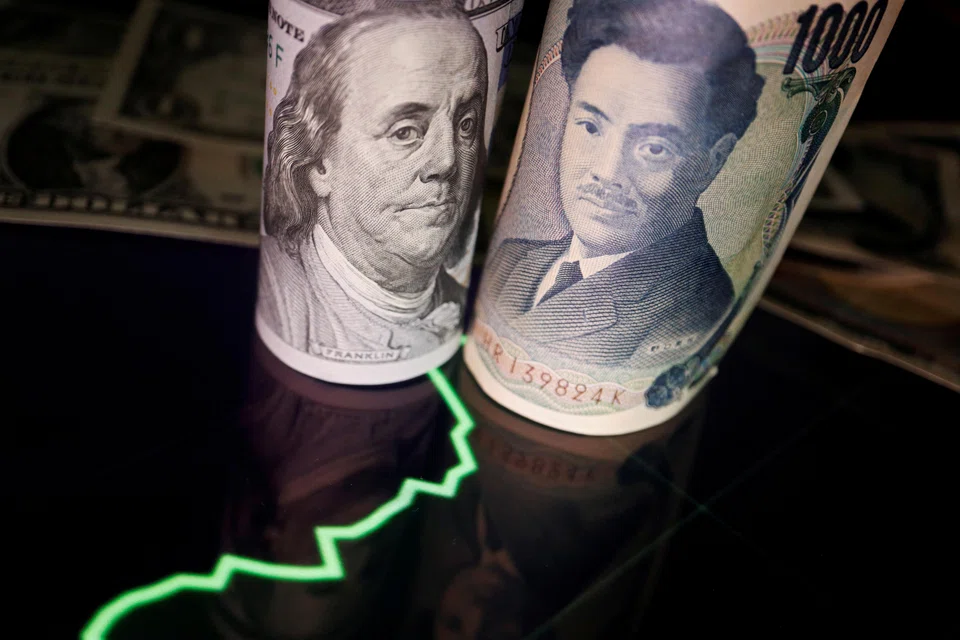
THE yen slid against the US dollar on Friday (Jul 21) after a Reuters report that the Bank of Japan (BOJ) is leaning towards keeping its key yield control policy unchanged next week, ahead of a crunch run of central bank meetings that includes the US and Europe.
BOJ policymakers prefer to scrutinise more data to ensure wages and inflation keep rising before changing the policy, five sources familiar with the matter said. The report added there was no consensus within the central bank and the decision could still be a close call.
The US dollar was heading for its biggest one-day gain versus the yen since April, rising as much as 1.3 per cent to a nearly two-week high of 141.95. It was last up 1.2 per cent at 141.73. Prior to the report, the US dollar had been up around 0.3 per cent versus the yen.
Trade in the yen had been broadly subdued earlier in the session after data showed Japan’s core inflation rose to 3.3 per cent, matching a median market forecast but remaining ahead of the BOJ’s 2 per cent target.
Kenneth Broux, head of corporate research for FX and rates at Societe Generale, said the sharp move in the yen on Friday might prompt Japan’s finance ministry to make further public comments to try to support the currency.
“It puts more pressure again on the Ministry of Finance,” Broux said, adding that the report echoed comments made by BOJ governor Kazuo Ueda this week.
Japanese authorities will consider all options to deal with excess volatility in the currency market, the country’s top currency diplomat, Masato Kanda, was reported as saying later on Friday by a local news agency.
With inflation having exceeded the BOJ’s target for more than a year, markets have been simmering with speculation the central bank could tweak yield curve control as early as the Jul 27-28 meeting.
Japan’s benchmark 10-year government bond yield sank 4.5 bps to 0.41 per cent on Friday, the lowest level since Jul 6, right before speculation for a hawkish tweak to policy this month began to ramp up and its largest one-day drop since late April.
Earlier in the day, the yield had pushed as high as 0.48 per cent, just 2 bps shy of the BOJ’s policy ceiling, and to the cusp of last Friday’s four-month peak at 0.485 per cent
Central bank meetings from Europe and the US are also due next week, with investors parsing through data to better gauge the likely path of monetary policy.
The US dollar index – which tracks the greenback against six major peers including the yen – was last up 0.3 per cent at 101.040.
The index was on track for a 1.1 per cent weekly gain, its biggest rise in two months.
Data on Thursday showed the number of Americans filing new claims for unemployment benefits unexpectedly fell last week, touching the lowest level in two months amid ongoing labour market tightness.
Money markets are pricing in a 96 per cent chance of a 25 basis point hike from the Federal Reserve next week.
“We could see the last rate hike in this cycle, but any dovish pivot seems far out,” Christian Scherrmann, US economist at DWS, said.
The euro was broadly flat against the US dollar at US$1.11285, having dropped 0.6 per cent on Thursday.
The European Central Bank is expected to raise interest rates by 25 basis points on Jul 27, according to all economists in a Reuters poll, a slight majority of whom were now also expecting another hike in September.
The pound fell for a sixth day versus the US dollar – its longest stretch of daily losses since last September – and was last down 0.2 per cent at US$1.28470, despite bouncing earlier in the session on data showing UK consumer spending was stronger than expected in June.
The pound is on track for around a 1.9 per cent weekly fall, its biggest since early February this year. REUTERS
Decoding Asia newsletter: your guide to navigating Asia in a new global order. Sign up here to get Decoding Asia newsletter. Delivered to your inbox. Free.
Share with us your feedback on BT's products and services
TRENDING NOW

Philippine power giant First Gen rebuffs foreign offers, plans up to US$2.6 billion in expansion

Cliff Tan has 7 million followers and a 4-month waitlist. Why won’t he expand his business?

Could stablecoins be the future of money?

From finance aspirant to Asean CEO: TUV SUD’s Jonas Strahberger on finding people who believe in you

