

Yen surges to 4-month high as yuan slides further
London
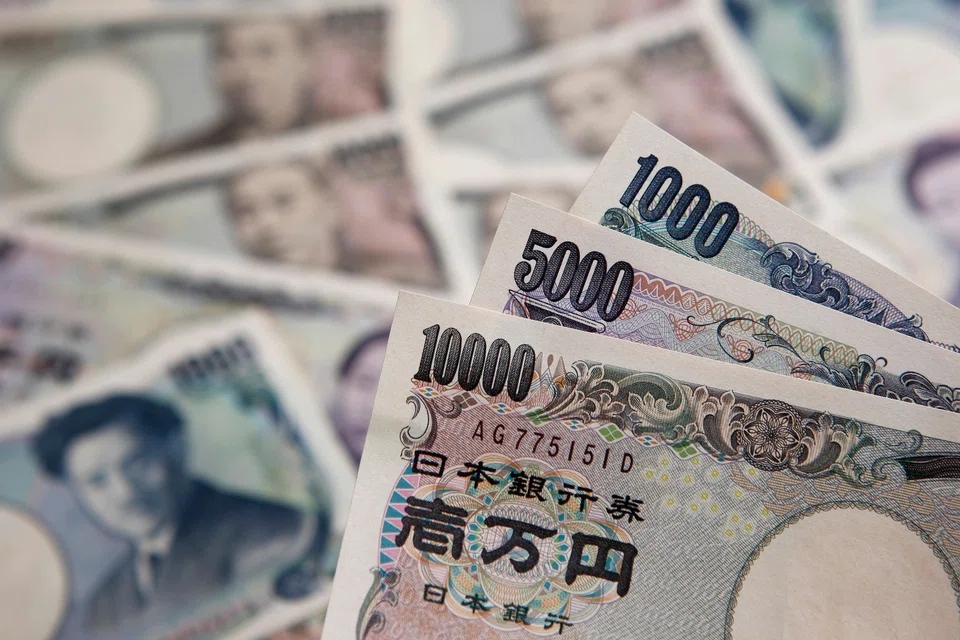
THE yen rose to its highest against the dollar in more than four months on Thursday as investors looked for a haven after China guided the yuan aggressively lower, fuelling fresh anxiety about its economy and its policy intentions.
The dollar dropped nearly one per cent to 117.33 yen, a level not seen since late August, and was last trading at 117.60 yen, still down 0.8 per cent. The euro was down 0.1 per cent against the yen, close to Wednesday's nine-month lows.
The People's Bank of China set its official yuan midpoint rate 0.5 per cent weaker than Wednesday's fix. That was the biggest daily decline since last August, when Beijing surprised global investors by abruptly devaluing the currency almost 2 per cent. "The lower yuan fixing probably signifies greater risks to the Chinese economy than we know of, leading to risk-off trades," said Jeremy Stretch, head of currency strategy at CIBC World Markets.
"Its not surprising that the yen is gaining and we could see it rise further if stock markets continue to lose ground."
Global stock markets were deep in the red, rattled by the Chinese market, which plunged 7 per cent at one point, leading to a nationwide trading halt for the second time this week.
Markets regained some stability after the offshore yuan erased early losses of up to one per cent after suspected intervention by the authorities.
Data released on Thursday showed that Chinese foreign exchange reserves, the world's largest, registered their biggest monthly decline on record amid rising foreign capital outflows. The reserves fell US$512.66 billion in 2015 to US$3.33 trillion, central bank data show.
The softer-than-expected fixing in onshore trading led to speculation that the Chinese authorities are engineering a weaker yuan to support exports and help the economy. Surveys on economic activities in China so far this year indicate its economy is still slowing.
"The Chinese yuan weakness onshore and more importantly, the PBOC allowing the yuan to reflect weakness in economic fundamentals, sends a more accurate signal on the state of the Chinese economy and a bigger threshold for the government to accept pain. The floor is getting lower," said Sean Yokota, head of Asia strategy at SEB, a Nordic bank.
The uncertainty on China led traders to sell the Australian dollar, often used as a liquid proxy for China plays.
The Aussie fell more than one per cent to a two-month low of US$0.6984, having shed more than 3 per cent since the start of new year. The euro was up 0.8 per cent against the dollar at US$1.0864. REUTERS






