Yuan falls to 9-month low after China rate cut; sterling rises after jobs data
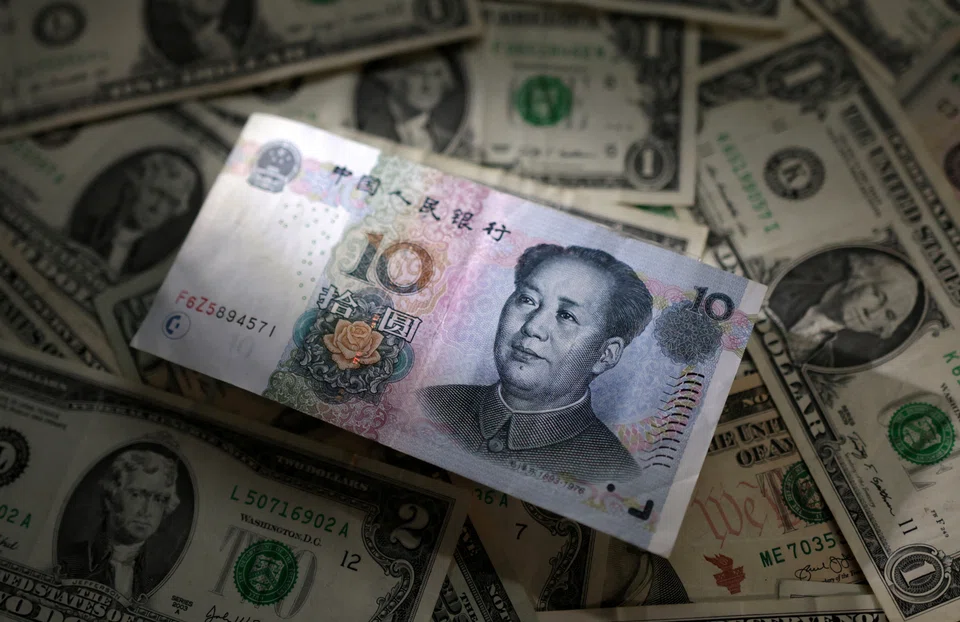
THE yuan sank to a nine-month trough on Tuesday (Aug 15), after China’s central bank unexpectedly cut key policy rates, while sterling rose after data showed British basic wages grew at a record pace, adding to the Bank of England’s (BOE) inflation worries.
In contrast, the Russian rouble gave up early gains after Russia’s central bank lifted its key interest rate by 350 basis points to 12 per cent at an emergency meeting. This came as an attempt to halt the currency from weakening past 100 to the US dollar, after a public call from the Kremlin for tighter monetary policy.
The pound was last 0.2 per cent higher at US$1.2705, after rising as high as US$1.2731, following data showing British wages excluding bonuses were 7.8 per cent higher than a year earlier in the three months to June. That represented the highest annual growth rate since comparable records began in 2001.
The UK unemployment rate, however, unexpectedly rose to 4.2 per cent from 4.0 per cent. But money market traders still expect the BOE to raise rates by at least 25 basis points next month, on worries that high pay growth will lead to second-round effects on inflation.
“BOE September rate-hike bets have jumped… providing support for the pound,” said Scotiabank chief FX strategist Shaun Osborne.
Chinese surprise
Elsewhere, the US dollar gained over 0.5 per cent against the offshore yuan to a nine-month high of 7.3212 as the People’s Bank of China cut its rates in an effort to boost a sputtering economic recovery.
The yuan briefly bounced back as major state-owned banks were seen selling US dollars to support the local currency.
The US dollar index, which measures the currency against six peers including the euro and sterling, dropped 0.1 per cent to 103.04 after hitting a 1.5-month high at 103.46 on Monday. It was buoyed by demand for the safest assets, following a spate of disappointing Chinese economic indicators that raised concerns about global growth.
Punctuating those worries, Chinese data on industrial output, retail sales and investment released shortly after the PBOC’s rate cut showed unexpected slowdowns.
“China’s surprise move spooked risk assets as investors grow more concerned about China’s growth outlook,” said Scotiabank’s Osborne.
“The US dollar’s failure to get a broader lift from the weaker risk backdrop this morning might suggest that investors feel they have adequate exposure to the US dollar for now,” he added.
Against the yen, the US dollar pushed to a fresh nine-month high of 145.865, but was last little changed at 145.5 per yen.
Traders are looking for any hints of intervention, after the greenback’s surge above 145 last autumn triggered the first yen buying by Japanese officials in a generation.
“We could definitely see more verbal interventions, but unless the move is driven by speculators and the yen is out of sync with other currencies, maybe there’s still some way to go before the actual intervention comes,” said Shinichiro Kadota, a currency strategist at Barclays.
“In any case, I think concerns about intervention (are) definitely putting a lid on the US dollar-yen around these levels.”
Japanese Finance Minister Shunichi Suzuki said on Tuesday that authorities are not targeting absolute currency levels when it comes to intervening in the market.
Decoding Asia newsletter: your guide to navigating Asia in a new global order. Sign up here to get Decoding Asia newsletter. Delivered to your inbox. Free.
Share with us your feedback on BT's products and services