Don Don Donki to open ninth Singapore outlet
Location not revealed yet; Japanese retailer is on track to hit its goal of 10 stores in the Republic by 2020 even amid coronavirus pandemic
Singapore
JAPANESE retailer Don Don Donki, which opened an outlet in Jurong in January, is currently set to open one more store in Singapore, putting it on track to hit its goal of 10 stores in the Republic by 2020 even amid the novel coronavirus pandemic.
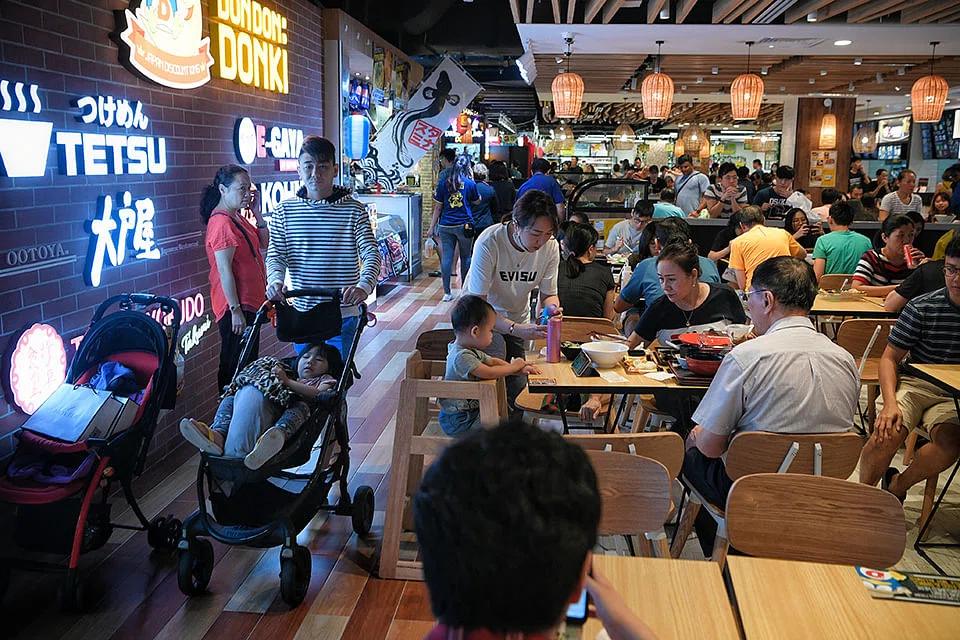
It now has eight outlets in Singapore, the latest - and largest - being the one at Jem mall in Jurong. The first one was opened at Orchard Central in December 2017.
The group did not reveal the location for the upcoming store. But it has mostly opened in the western and central regions of Singapore so far, meaning that the northern and eastern regions could be opportunities.
Regionally, Donki opened its second outlet in Thailand in March. It also unveiled its third outlet in Hong Kong this week, and plans to open two more there in the rest of this year.
Takao Yasuda, founding chairman at Pan Pacific International Holdings (PPIH), Donki's Tokyo-listed parent, told The Business Times over email: "We will continue to steadily expand overseas stores in order to fulfil our mission to be a life infrastructure company that provides daily necessities... and delivers happiness and satisfaction to our customers by allowing them to shop with anticipation and excitement (wakuwaku dokidoki) at our stores."
This comes as the group has seen steady sales abroad despite the pandemic. Mr Yasuda said that demand for goods at stores in Singapore, Hong Kong and Thailand, which mainly sell Japanese food products and produce, has "increased since the spread of Covid-19" as consumers stay indoors.
In Singapore, for instance, footfall at Donki stores fell due to a national quasi-lockdown. But each customer bought more, such that the unit price per customer was about twice as high as that pre-virus, said Mr Yasuda.
There was even a temporary shortage of certain food ingredients, he added. "However, we have made efforts to secure products by increasing the quantity of orders and cooperating closely with our Japanese export team and business partners."
Some of the bestsellers now are Calbee Frugra (a type of granola), roasted sweet potato and seared salmon sushi with spicy cod roe and mayonnaise, Mr Yasuda shared.
Likewise, in Hong Kong, the group saw total sales of HK$95 million (S$17.1 million) in June, following sales of HK$100 million in the previous month. In May, about HK$60 million of sales came from the OP Mall outlet, reflecting the highest sales among all of Donki's stores globally for that month.
"We believe this is proof that the acceptance of our business of providing high-quality products - mainly Japanese food - at reasonable prices by Asian customers is not transient," said Mr Yasuda.
In the broader scheme of things, overseas expansion is expected to drive growth for PPIH in the next decade, while it focuses on improving the margins of domestic operations.
According to the 2030 plan announced in February, the group is focusing on "shifting from (an) expansion growth strategy to (a) low cost and high profitability structure".
It aims to hit three trillion yen (S$38.9 billion) in sales by 2030, of which one trillion yen is to come from overseas operations. This means that the overseas market is expected to contribute one-third of overall sales, up from roughly 7 per cent, noted Smartkarma analyst Oshadhi Kumarasiri.
Mr Yasuda said that in 2021, the group may open stores not just in Hong Kong, but also in Taiwan, Malaysia, Guam and Macau. It had 47 stores overseas and 645 in Japan as of its third quarter ended March 31.
Domestically, PPIH plans to improve profitability by focusing more on the quality and profitability of products over sales volume, and optimise costs based on economies of scale. Among other initiatives, it will also embark on digital transformation - within the organisation and to better capture consumer data. But it does not intend to offer e-commerce.
"Our business model is based on the concept of having customers come to stores and enjoy shopping with anticipation and excitement," Mr Yasuda noted. Hence, "we would like to consider the introduction and utilisation of DX (digital transformation) in order to strengthen the real store business, not to develop an e-commerce business".
For its financial year ended June 30, the group has guided for net sales of 1.65 trillion yen, down from the previous 1.67 trillion yen forecast, mainly in anticipation of a "sharp decline" in tax-free sales due to the loss of tourist traffic.
Operating profit is now expected to rise 12.5 per cent year on year to 7.1 billion yen, instead of 7.2 billion yen. Net profit guidance remains 46 billion yen, which would reflect a 2.3 per cent fall year on year.