F&B suppliers feel 'left behind', plead for support amid drastic fall in revenue
AS Singapore began a fresh round of Covid-19 restrictions on Thursday, one group of people - those working in the wholesale trade - seem to have fallen through the cracks when it comes to receiving government support.
Many of them are struggling to hold out, with some experiencing a fall in revenue of as much as six figures every month.
Clinton Ang, the managing director of Cornerstone Wines, told The Business Times that he has received no assistance at all since the dine-in restrictions started in May, with a revenue dip of over S$300,000 every month.
The beverage distributor said that business had only just begun picking when up to two people were allowed to eat-in, with many restaurants and businesses placing advanced orders when up to five customers were allowed.
Yet, in the space of a few days, businesses have once again come forward to cancel their orders. On Tuesday, the government announced that dining-in would be banned again for four weeks, from July 22 to to Aug 18.
"I think the government forgot about the wholesale trade in F&B. The wholesale trade has not received any JSS (Jobs Support Scheme) help," said Mr Ang, who added that he had earlier voiced his struggles with various agencies such as Inland Revenue Authority of Singapore but received no reply.
Several food ingredients suppliers are also facing similar challenges, echoing a feeling of helplessness as up to 50 per cent of orders placed in anticipation of higher dine-in demand are now being cancelled.
Tan Lee Deng, who owns Sang Chow Wong Foodstuff, said she has had several customers among hawkers and restaurants who have stopped ordering her sauces entirely, as they put their own businesses on pause.
"It's worse than before, because then it looked like things were hopeful," she said about the recent reversal of previous dine-in relaxations.
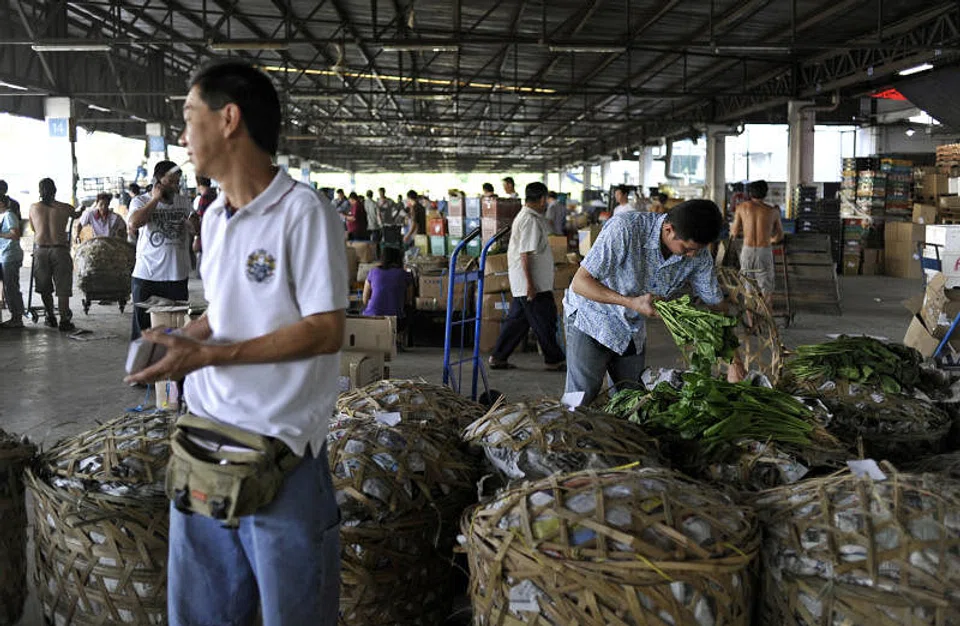
Lim Lian Chai, owner of Sheng Chai Vegetable Supplier, also observed a fall in orders among his customers. Buffet operators and caterers used to use a lot of vegetables, but now there is no longer a need for them to order in such large quantities, he explained.
"Vegetables are perishable, so we need to stock less or they will spoil," he added.
After deducting the cost of buying vegetables, Mr Lim used to see earnings of about S$700 to S$800 a day. This has since fallen to $300 to S$400, which results in an overall loss after deducting other expenses such as rent and workers' wages.
Choon Vegetables & Fruits Trading Supplier owner Eddy Lee also said that he had seen some cancellations immediately following Tuesday's announcement. Restaurants that offer steamboat and barbecue, for example, will struggle to operate without dine-in options, he said.
Mr Lee said that 80 per cent of orders still come in, but the value and quantity has fallen. Even when customers do not meet his minimum order quantities, he has continued to carry out deliveries, he added.
Weak demand is not all that these suppliers need to contend with. From a cost perspective, they also cannot afford to sustain their business in the long term, if the situation does not improve for the industry.
A common issue has been employment, as suppliers have to continue paying their workers, even as there is less work to be done.
Madam Tan of Sang Chow Wong has already been approached by some staff who wish to quit. With the dwindling earnings, she has had to pay her employees out-of-pocket and through loans she has taken, she added.
"We don't withhold payments, and I work alongside the staff, so they see that we are all doing our best," she said.
Mr Lim, on the other hand, has opted to reduce his workers' hours. Lowering their salaries is not an option, but he is unable to support all employees on a full-time basis, he said. Rather, he rotates his employees, giving them the time to seek other work to supplement their income.
Mr Lee's troubles with employment, however, differ from his peers. As his business operates around the clock, Mr Lee has found it difficult to fill night shifts. Furthermore, some of his staff that had previously left the country have been unable to return, straining manpower.
To attract workers, he has had to raise salaries by 15 per cent, and this, in addition to other factors such as supply and seasonality, have driven up the prices of his vegetables, Mr Lee said.
Nevertheless, these suppliers said that they will push on and take it one day at a time, for lack of a better option.
"There is only so much you can do. We are prepared to lose a few hundred thousand dollars again... but for now we just have to soldier on," said Cornerstone Wine's Mr Ang.