

Germany, France to push EU to end shredding of male chicks
 Add BT as a preferred source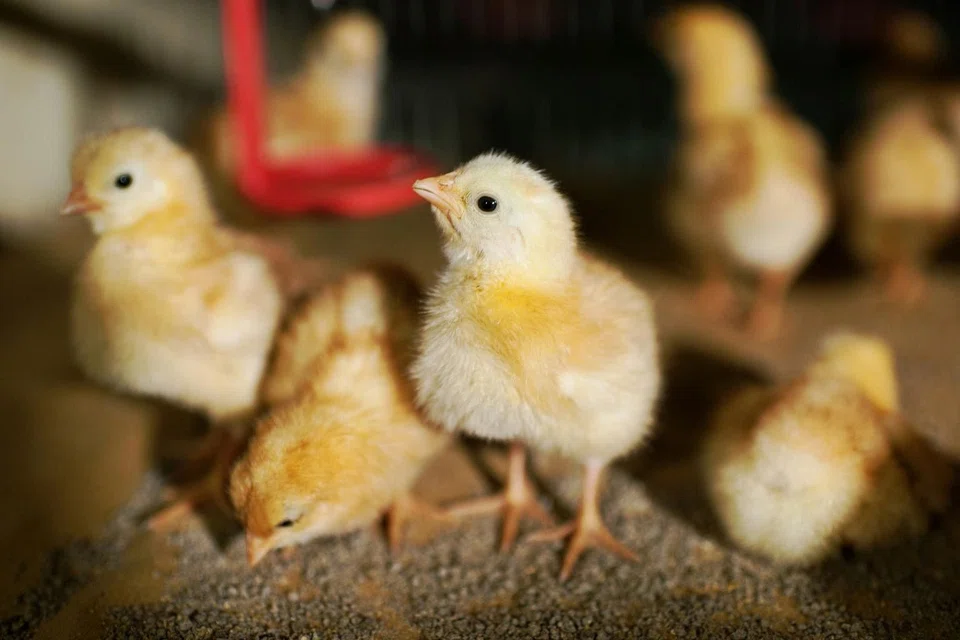
DeeperDive is a beta AI feature. Refer to full articles for the facts.
[BERLIN] Berlin and Paris will join forces to end mass shredding of male chicks at the EU level by the end of 2021, agriculture ministers Julia Kloeckner and Didier Guillaume said Monday.
"It's time to end the shredding of chicks. France and Germany should be the European motor to advance on this issue," Mr Guillaume said during a visit to his German counterpart.
Germany's presidency of the bloc in the second half of 2020 is an opportunity to push forward on the issue, Ms Kloeckner said.
In many poultry businesses, male chicks are separated from females soon after hatching and killed, as they do not produce eggs and generate less meat.
Tens of millions of males are shredded in each country per year.
Producers say that there is no practical, affordable and cruelty-free alternative.
Navigate Asia in
a new global order
Get the insights delivered to your inbox.
France and Germany now plan to bring together industry groups, companies, researchers and campaign groups to "share scientific knowledge" and "implement alternative methods".
"We welcome this scheme and the fact that non-governmental organisations are involved, but we expect clear regulatory commitments," said Agathe Gignoux of CIWF, a French NGO.
German farmers' group ZRF warned that "apparent solutions" via the law without a technical plan could depress domestic egg production in favour of imports -- meaning the chicks would simply be exterminated somewhere else.
Both governments must tread lightly, with ever-tighter regulations chafing on financially squeezed farmers, while consumers demand more environmental and animal protection.
Scientists in several countries are working on technologies to determine the sex of chicks before they hatch, but none are ready yet for industrial-scale use.
One technique, developed by a German firm, involves using a laser to make a tiny hole to extract liquid from a fertilised egg, before testing it for the presence of a female hormone.
Austrian and French firms are working on less-invasive techniques, while scientists in other countries are looking into genetically modified chickens.
AFP
Share with us your feedback on BT's products and services
TRENDING NOW

Shelving S$5 billion office redevelopment plan proved ‘wise’ as geopolitical risks mount: OCBC chairman

OCBC is said to emerge as lead bidder for HSBC Indonesia assets

Middle East-linked energy supply shocks put Asean Power Grid back in focus

Eurokars Group introduces rental car franchises Enterprise Rent-A-Car, National Car Rental, and Alamo to Singapore

