

New international school aims to cut fees by 40%
One World International School will keep costs low by sharing resources with the Global Indian school
Singapore
FORTY per cent cheaper.
That is what new international school One World International School (OWIS) promises to charge in fees when it opens in January.
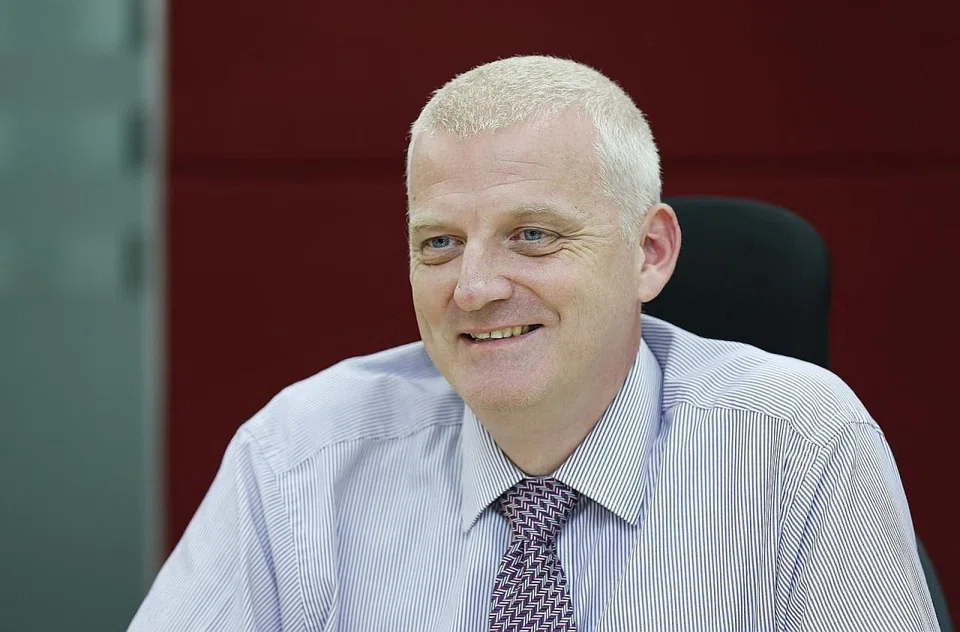
And the pooling of assets held by the Global Indian International School (GIIS) group has allowed OWIS to provide quality international school education at more affordable fees and keep its overheads low, its head of the school Gregor Polson told The Business Times.
Annual school fees for its kindergarten and primary school pupils will start from S$17,000 and will not exceed S$20,000 for the higher grade levels. This is about 40 per cent lower than the average fees at top-end international schools here.
"We will be relying heavily on Rohit (Ambekar) and GIIS, and will not be recruiting so many staff in order to keep costs down," Mr Polson said.
Mr Rohit Ambekar is the director of business and strategy at GIIS in Singapore and his schools will be helping OWIS with administration and information technology.
Mr Polson said that OWIS will be leveraging on GIIS' experience in areas such as information technology, marketing, finance and administration, while it concentrates on recruiting the teaching staff so that it could "offer a holistic multicultural education that delivers outstanding results without compromising on the quality of teaching".
Other shared resources include science laboratories, computers and transportation.
Founded in 2002 with just 48 students on Mount Sophia in Singapore, GIIS has grown to 22 campuses in seven countries across Asia - Singapore, Malaysia, Japan, Thailand, United Arab Emirates, Vietnam and India.
OWIS has outbid 11 other education providers when the Singapore Land Authority (SLA) and the Economic Development Board (EDB) conducted a tender in Aprilto repurpose the former Pioneer Secondary School at Jurong West Street 81. The tender was aimed at providing more affordable foreign system education to cater to expatriates looking for cheaper options.
"The repurposing has helped cut our investment as there was no need to build the infrastructure from scratch," Mr Polson explained.
OWIS, which already has a campus in Upper East Coast Road, will start its semester at its second campus in January.
Called Nanyang campus, OWIS will invest more than S$10 million in the campus, which will be able to take in 1,200 expatriate children between the ages of three and 18. "We are having a half academic year then and therefore we cannot have a full showcase until next August. This is a more realistic timeline," Mr Polson said.
OWIS' new school will be offering the International Baccalaureate (IB) programme at the primary school and diploma levels, as well as Cambridge's International General Certificate of Secondary Education (IGCSE), the equivalent of the O-level programme. The 3.2ha campus will also house a "nature kindergarten", meant to be a natural learning environment for children aged between three and six.
Mr Polson assured that it will be a "multicultural, diverse international school with no nationality comprising more than 30 per cent of total student enrolment".
Its Nanyang campus follows the recent opening of two other international schools that charge lower fees - Invictus International School, set up last year, and EtonHouse's Middleton International School this year.
Despite a slowdown in the growth of Employment Pass (EP) holders from 9,000 in the year ending December 2015 to 1,700 currently, about six new building projects for international schools, including expansion of existing campuses, are expected to be completed between 2015 and 2020.
But the fact still remains: international education in Singapore is not cheap.
According to a 2015 report by the Centre for Economics and Business Research, international schools in Singapore rank as some of the most expensive in the world, with an average annual tuition fee of S$27,300 for pre-preparatory, S$30,300 for preparatory and S$35,100 for senior school in 2015.
This means that a student, who enters an international school and stays all the way to Year 13, would have to pay an average of S$589,900, in total tuition fees. The rise in fees has been dramatic - in 2010, international students paid S$479,100 for their education, so fees have increased by 23.2 per cent in just half a decade.
"And if you have four children, like I do, education becomes a huge cost factor," Mr Polson noted.
"There is a change in the demographics of expatriates working and living in Singapore, many of whom are on local contracts, making it harder for parents to afford international school fees. Therefore, we need to satisfy these parents by providing a quality education for their children at a low price that's affordable," Mr Polson added.
TRENDING NOW

ComfortDelGro appoints two new independent directors

Once staunchly pro-China, Malaysian Chinese businesses are now distancing themselves from Beijing

NoonTalk needs continued financial support from CEO Dasmond Koh, auditors warn

DP Architects sets the benchmark for sustainability disclosure and design

