

NFT watchdogs say scammers abusing Twitter to take down warnings

Singapore
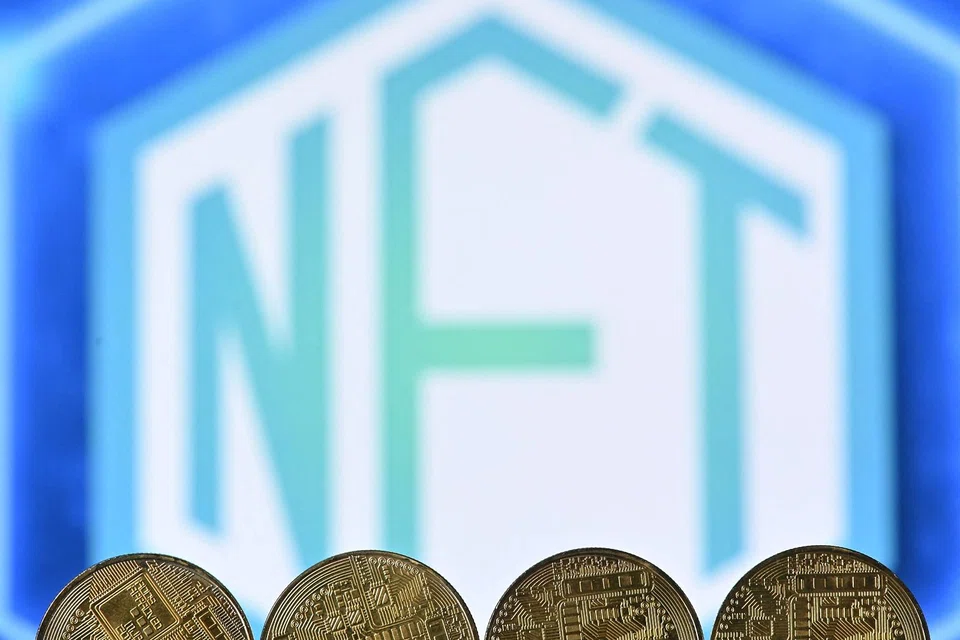
AMID a spate of fraud in the non-fungible tokens (NFTs) market, watchdogs have emerged on Twitter to discredit suspicious projects. But some say they are easily silenced by a "loophole" in the platform's content moderation policies.
NFTs are unique strings of code that function as "keys" for their owners to access digital assets. These keys are intended to bestow sole ownership of a digital asset; but in reality, NFTs are easily counterfeited.
OpenSea, the world's largest NFT marketplace, said in a Twitter post in January that over 80 per cent of the items created using its free minting tool were plagiarised works, fake collections or spam. Minting is the process of converting digital files into NFTs. Cent, a platform known for selling an NFT of a tweet by Twitter founder Jack Dorsey, recently announced it would halt most transactions amid a growing mass of counterfeits.
The blockchain facilitates such fraudulent behaviour because there is no need for traders to identify themselves. The underlying digital files of art pieces are easily plagiarised and minted as a new token on another platform. Even when artists get tipped off about their work being stolen, many face challenges in their attempts to take down the counterfeits. Some have reportedly had their takedown requests denied.
To clean up the NFT space, vigilantes have taken to social media - often via elaborate Twitter threads with screen grabs of codes - to raise red flags on dubious projects. Some even present maps to persuade followers that distinct accounts are owned by the same individual. Yet others use Twitter to share tips on how to guard their NFT artwork against theft. Many of them have garnered tens of thousands of followers.
Since late last year, however, such watchdog content has started disappearing from the Twittersphere - either because the respective accounts were suspended or blocked, or their tweets were tagged "sensitive content".
The culprits, the watchdogs say, could be the alleged fraudsters themselves. By deploying and making numerous reports to Twitter within a given span of time, they can trigger an automatic response from the platform to suspend certain accounts
Twitter did not respond to queries from The Business Times seeking confirmation, but affected netizens and social media analysts suggested that automated content moderation policies may be leading to wrongful suspensions.
Photographer Martin McNeil has had his Twitter feed flagged and blocked from certain groups of audiences. McNeil, who is based in the UK and is currently a law student, shares tips on Twitter to help artists navigate technical and legal processes.
One of his threads on navigating the United States' Digital Millennium Copyright Act (DMCA), posted in mid-December last year, has been flagged as "potentially sensitive content". Twitter will prompt users to change their settings in order to view it. In this thread, which has been retweeted and quote-tweeted over 3,200 times as of Feb 17, McNeil speculates that OpenSea uses Google as its image host and encourages artists who have had their art stolen to send takedown notices compliant with the DMCA to Google.
"Google (is) legally bound to at least respond to and act upon your notification," he had tweeted. The thread also contains screenshots of templates to craft such takedown notices.
McNeil tells BT that many of his tweets from November last year have been similarly flagged, but Twitter has not explained why.
"I do use strong language in certain circumstances; but when I impart knowledge like that, I make sure my language is clear and professional. Some suspect that this is an automated system - that if a certain number of reports are received within a certain amount of time, that Twitter would flag this account as sensitive. There is simply not enough manpower for people to look at the reports individually," he said.
Another user going by the handle @NFTethics was on Feb 9 suspended for "impersonation". Unlike for McNeil, all NFTethics' tweets were blocked. The users of the account were also unable to retrieve direct messages from other users during this time. The account was reinstated after a week.
The suspension happened soon after NFTethics tweeted that it would soon publish a big report about a ring of scammers using bots to promote several NFT projects.
NFTethics has close to 72,000 followers and the account has been cited on websites about NFTs and online gaming.
The account holders told BT they have evidence for how the "takedown" of their account was orchestrated, but declined to share their correspondence with Twitter lest their true identities be revealed.
"A verified Twitter account changes its handle to a similarly sounding name, like 'NFT Ethics', and then reports to Twitter that our account impersonated them. Because probably 95 per cent of such reports are legitimate, Twitter automatically suspends the non-verified account," they said.
Another of these NFT vigilantes, @NFTherder, who had also been suspended once, has taken to creating back-up "parody" accounts in the hope that he would more easily appeal against any future suspensions. Twitter's terms of service states that parody, newsfeed, commentary, and fan accounts are allowed if non-affiliation of the subject is indicated in the bio line of the account.
"So if you would get into an appeal process about impersonation, you can claim that it's not an impersonation. It's a parody. You are more protected," said @nftherder, who also wanted to remain anonymous.
Some industry observers believe that wrongful suspensions are plausible, but not a major issue for social media platforms.
Given that there can be thousands of accounts which may violate a rule, and some of the violations can be harmful to others, such as hate-speech, violence, or copyright, taking an account or content down as soon as possible has proven to be a better policy than the lengthy process of reviewing every report, said Pinar Yildirim, an associate professor at the Wharton School at the University of Pennsylvania.
Yildirim, who studies media, technology, and information economics, told BT that most platforms have rules in place such that if the number of complaints cross a certain threshold or variety, the accounts will be taken down.
Michael McNally, chief technology officer at cybersecurity company HUMAN, said platforms should not rely only on automated rules. "(Such a policy) would be easily weaponisable, especially by crowd-source attacks, mechanical turk attacks, or malicious bots," McNally said.
Instead, a platform should combine automated rules with human reviews. To better protect users from sabotage, machine-learning algorithms should also take into account user-history and reputation, he said.
Ultimately, though, the crux of the problem lies with the lack of controls on NFT marketplaces. Platforms that sell digital art, NFTs or not, should establish know-your-customer processes, such as requiring all sellers to register their identities and provide some documentation of provenance, including putting down a deposit, said Alan Graham, who co-founded OCL, a music licensing technology built on distributed ledger technology.
"All a marketplace has to do is to have speed bumps in place to slow roll these campaigns. That would go very far," Graham said.
READ MORE:
- OpenSea NFT heist likely triggers drop in activity
- When you count users instead of dollars, the NFT world is tiny
- NFTs get the thumbs-down from some artists
- Nike cries foul over virtual shoes, suing retailer that sells sneaker NFTs
TRENDING NOW
Genting Singapore trails MBS, but helps anchor Malaysian parent group’s finances
Siti Hasmah Mohamad Ali, wife of former Malaysian PM Mahathir Mohamad, dies aged 100

He built the Vingroup empire. Now South-east Asia’s richest man is handing some key roles to his sons
Why US midterm elections could power the next stock market rally

