Retailers must transform digitally to keep up with SEA's Internet economy
Singapore
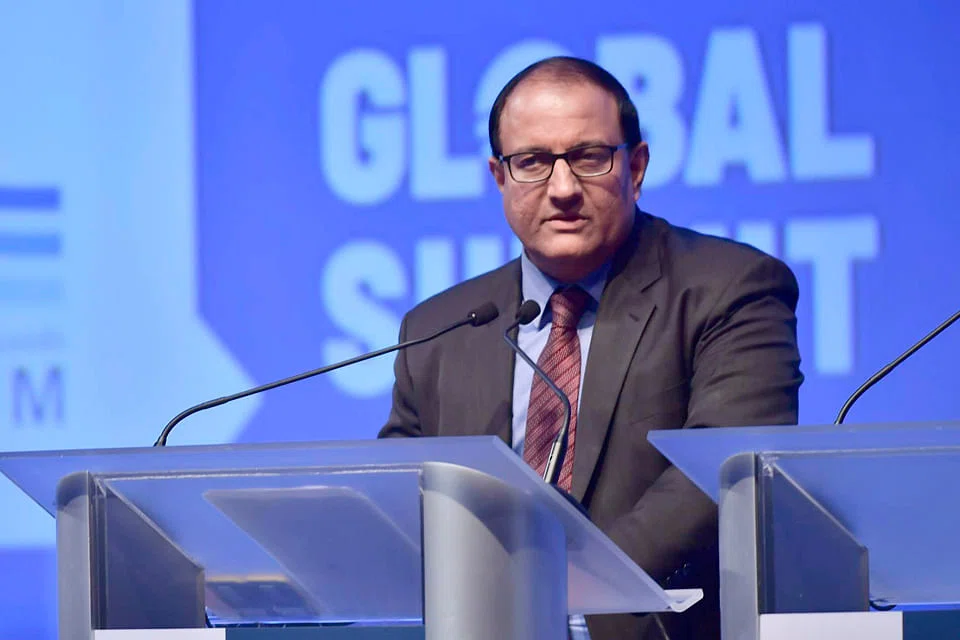
AS South-east Asia's Internet economy continues to grow, retail companies must transform digitally to meet changing consumer preferences, said Minister-in-charge of Trade Relations S Iswaran on June 13.
"The drivers of this growth are 600 million consumers with a median age below 30, who can potentially leapfrog the technology evolution curve and directly adopt smartphones and e-commerce as a way of life," he told the Consumer Goods Forum's 62nd Global Summit at Marina Bay Sands Expo and Convention Centre.
The region's Internet economy was estimated to be worth US$50 billion last year and is projected to swell to US$200 billion by 2025.
Local classifieds marketplace Carousell is one such company that has successfully leveraged the digital landscape, Mr Iswaran noted.
With an approach of using mobile classified ads instead of print, Carousell had tapped on the preferred engagement modality of consumers in SEA, where mobile accounted for 72 per cent of the overall e-commerce web traffic last year.
The company has since expanded across eight markets in the Asia-Pacific and hosts 144 million listings across a variety of categories.
But the reinvention code is not easy to crack, given the complexity and knowledge required for innovation in the digital era.
Large companies have "very strong capabilities" in this space, said Mr Iswaran, but the challenge lies in identifying the right ideas to channel their resources to.
"For small and medium enterprises (SMEs), the real challenge is to start getting them into the digital plane and work out how they can take advantage of these new opportunities."
A recent study by UOB revealed that local SMEs had ranked "help for digitisation" as the second-most important item on their wish list.
Several initiatives have been rolled out in Singapore to help retail companies in their shift towards the digital economy.
The Retail Centre of Excellence at Singapore Management University, for instance, aims to empower retail companies in the region through the sharing of knowledge, insights and learning points by experts.
Robinsons is a recent beneficiary of the SMEs Go Digital Programme - a S$80 million initiative to help traditional SMEs digitise their business operations.
Instead of having to manually deal with some 200 suppliers through a range of physical and electronic channels, Robinsons integrated all of them on a common e-procurement platform that has allowed them to improve their sales planning and inventory management.
But Mr Iswaran acknowledged that efforts to transform the industry are still "a work in progress". He identified data-centric approaches as uncharted ground. "We all know that data is the new oil in many ways, and we need to take a more open approach on how we can aggregate data into analysis."