

Singapore retailers rush advance orders to fill Christmas stockings on time
Claudia Tan HS &
Tay Peck Gek

RETAILERS here started stocking up their inventories as early as June amid port congestion and supply chain disruptions that are threatening to stymie the anticipated spike in demand ahead of the Christmas and festive season.
Some are even urging customers to make their pre-orders now and are warning of higher prices for select goods.
Supply chains, which are still reeling from the aftermath of the Covid-19 pandemic, are struggling to keep up with the booming consumer demand. These unresolved snags along with issues such as labour shortages and poor weather have led to severe backlogs at ports around the world.
"Early forecasts see the issue being exacerbated in the coming months, as supply chains build towards peak festive seasons with Christmas and New Year celebrations around the world," said Mitch Bittermann, executive vice president of e-commerce Asia at consultancy TMX.
"Unfortunately, we are unlikely to see the situation resolving until after the Lunar New Year period.
"Furthermore, new ship builds in the pipeline are not expected to come onto market until 2023, so current conditions might continue well into 2022."
Agreeing, Rahul Kapoor, vice president for maritime and trade at IHS Markit, pointed out that global supply chains are highly interlinked and remain stressed for now. Asean and China's Covid disruptions will continue to have repercussions across Asia Pacific, and everyone suffers the delays including Singapore, he said.
Against this backdrop, local retail players are rushing to fill their shelves with holiday merchandise though Bittermann said that this could worsen shipping delays and push freight costs higher.
"Bringing forward shipments will increase the demand for container movements in a market where demand is already outpacing supply, with more than 90 per cent of the global fleet already being utilised to service current demand," Bittermann said.
Kapoor added: "Given continued delays, many importers have tried to bring forward shipments earlier to avoid delays and get products in time for the holiday season."
IHS Markit global trade analytics suite showed Singapore imports amounted to US$33.1 billion in August, up 24.1 per cent year on year from US$26.6 billion.
"The best option for businesses would be to delay shipments until some equilibrium is coming into the market, but with increasing consumer demand as we head into the year-end holiday season, the reality is that businesses should expect to pay high freight rates to get their inventory," Bittermann added.
Games and toys retailer Play Nation, for instance, has already seen freight costs for shipping routes from the United Kingdom and United States increasing twice as much from the previous year.
Founder and managing director Wong Kai Jun said that goods now take twice as long to reach them as compared to before.
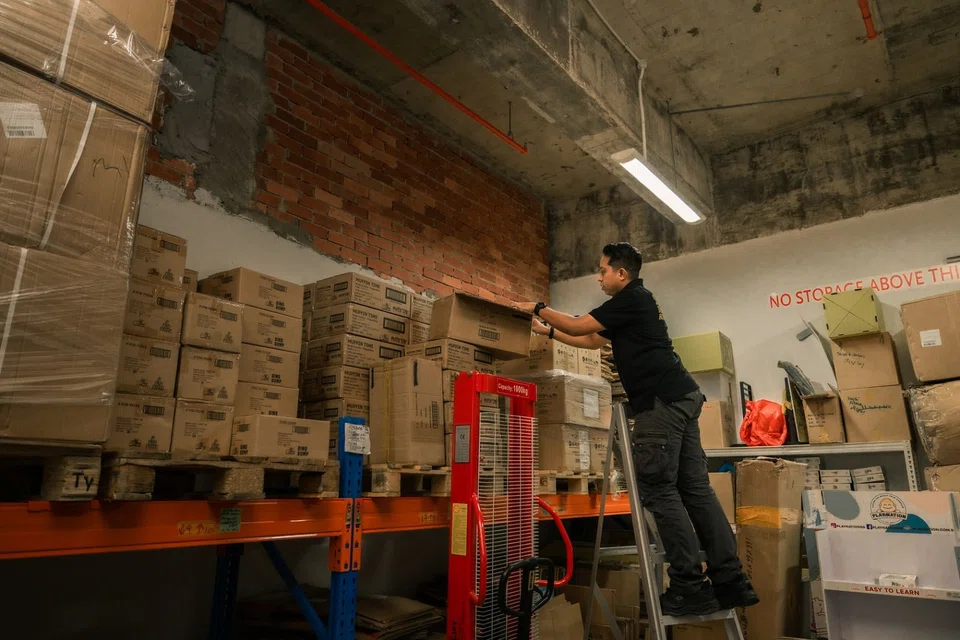
To avoid empty shelves mid-season, Play Nation has placed orders in advance and stocked up in larger quantities. Shipping of goods for the Christmas season commenced in June this year, compared with around August to September in previous years.
"We had to diversify our supply chain and get multiple suppliers for the same type of products across different countries to mitigate any potential disruption or shutting of ports in one country," Wong added.
Ban Leong Technologies, which distributes consumer electronics to local retailers, now has to place orders three to six months in advance. This compares with ordering just a month or two ahead during pre-pandemic times.
This comes as the group anticipates November and December to be the peak period for big discounts, especially with upcoming online festivals such as 11.11 and 12.12 which many electronics retailers participate in.
Electronics component shortages and prolonged port congestion have contributed to delays in shipments, said Ban Leong's managing director Ronald Teng, adding that the company has increased its stock holding to create a buffer for these bottlenecks.
"The usual delivery lead time from China to our warehouse is around one week, it can take up to 3 to 6 weeks these days," said Teng.
Over at local organic baby food retailer Little Blossom, the company had placed orders with its manufacturer one to two months in advance in anticipation of higher demand as the holiday season draws closer. Its sales doubled during the Christmas season last year due to the increase in demand for gift sets, said co-founder Kwek Yi Jun.
"We have anticipated the increase in demand due to the holiday period and planned for sufficient stocks," said Kwek.
The potential shipping delays are, however, potentially more troubling for local plant nurseries that import Christmas trees.
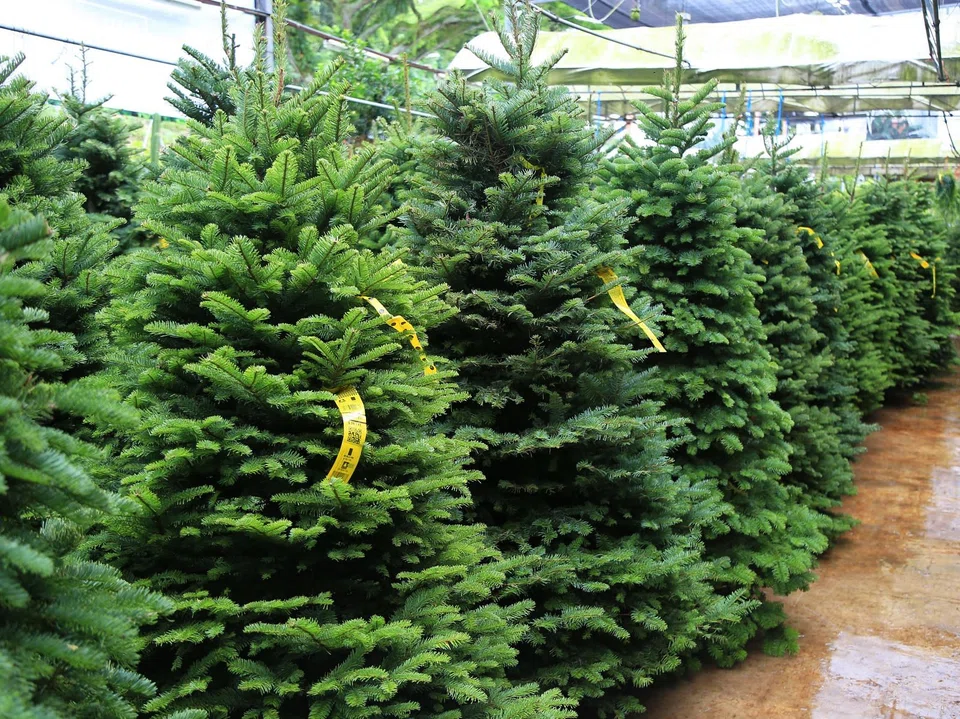
Prince's Landscape started pre-ordering Christmas trees a month earlier in July, in a move to bring forward its shipment arrival dates to meet its customer expectations. Its spokesperson stated that there may be delays in its shipments again, due to the global supply chain disruptions stemming from Covid-19. Due to the increase in shipment fees, the plant nursery has to increase its selling price accordingly, but it declined to disclose the quantum.
Far East Flora has placed its Christmas tree orders at its usual timeline of two to three months before December noting that as live products, Christmas trees should arrive fresh for the festive season.
While the plant nursery has yet to have been notified of any delays in its Christmas tree shipments, sales and marketing director Peter Cheok remains concerned about the timely arrival of these shipments given the limited sales window of the trees.
Shoppers too should be prepared to pay more for trees, said Cheok, adding that there could be a 20-40 per cent increase in the prices of Christmas trees.
Cheok also urged those who are looking for a live Christmas tree to pre-book them early in order to secure one for the holidays.
Shoppers are also encouraged to buy early this year to get their holiday essentials in time.
A Singapore Post spokesperson advised customers to shop and ship earlier this year in order to buffer additional time due to possible unforeseen delays in the global supply chain network.
"For instance, the shipping time for (SingPost's international shipping service) vPost to ship via air from 2 of our most popular markets, the United Kingdom and the United States, is 4 to 10 working days and 4 to 14 working days respectively, but customers should factor in another 4 to 5 working days to ensure that they receive their items before the holidays."
vPost offers shipping service for local shoppers to ship their online purchase from the US, the UK, Japan, China, Malaysia, Thailand, Taiwan, Australia and Indonesia.
The SingPost spokesperson said vPost is starting to experience a gradual increase in volume in recent weeks, an earlier start to the year-end peak season compared to past years. "With the recent news of shipping delays, we have prepared for the increase to be sharper in the weeks ahead," he said. "vPost has provided consistent delivery in accordance to our delivery timelines as we forecast capacities and pre-book freight space ahead of peak seasons."
Companies such as e-commerce giant Amazon, on other hand, have ramped up investments in its employees and technology in a bid to cushion the impact of supply shortages and lengthy shipping delays. For instance, it is using predictive and historical data to forecast orders earlier and assign them to facilities that are closer to demand.
"We've taken learnings from the past year into how we forecast, and are constantly adapting our approach to make sure we can get our customers the products they want, where and when they need them," said an Amazon spokesperson.
Meanwhile, the self-storage market is also adjusting to meet the needs of retailers, according to Danny Wong, executive officer and general manager of LHN Group which owns storage provider Work+Store.
"The Christmas period is generally the peak of the year for them, and we see them stocking up their inventories more and requesting bigger storage spaces for specific end-of-year sales events," said Wong, adding that demand for larger storage spaces to accommodate an increase in sales typically increases by about 10 per cent.
The implementation of holistic services and the integration of more technology within its facilities will provide users with increased efficiencies, said Wong.
Work+Store's latest location at Kallang Bahru, for instance, was designed specifically for e-commerce users, allowing them to store their goods there while performing order fulfullment duties all in one location to boost cost-efficiency and productivity, especially during the incoming peak period.
The occupancy rate at the Kallang Bahru Work+Store, which launched in August this year, is about 42 per cent. Noting the uptick in tenant queries recently, Wong is expecting the occupancy rate at Kallang Bahru to match the average occupancy rate of 80 per cent across the 10 Work+Store properties within the next six months.
"With the industry growing alongside the e-commerce market share, the need for a physical space for storage, along with the full suite of value-added services will become a norm. In the future, storage spaces will eventually evolve into dispatch centres," said Wong.
READ MORE:
TRENDING NOW

He built the Vingroup empire. Now South-east Asia’s richest man is handing some key roles to his sons
Quarter of Singtel special discounted shares sold ahead of CPF Board transfer

Why Tan Aik Keong of digital solutions specialist Agmo wants to make himself less indispensable

Asia needs new energy security architecture

