

Syngenta rejects US$45 billion takeover offer from Monsanto
 Add BT as a preferred source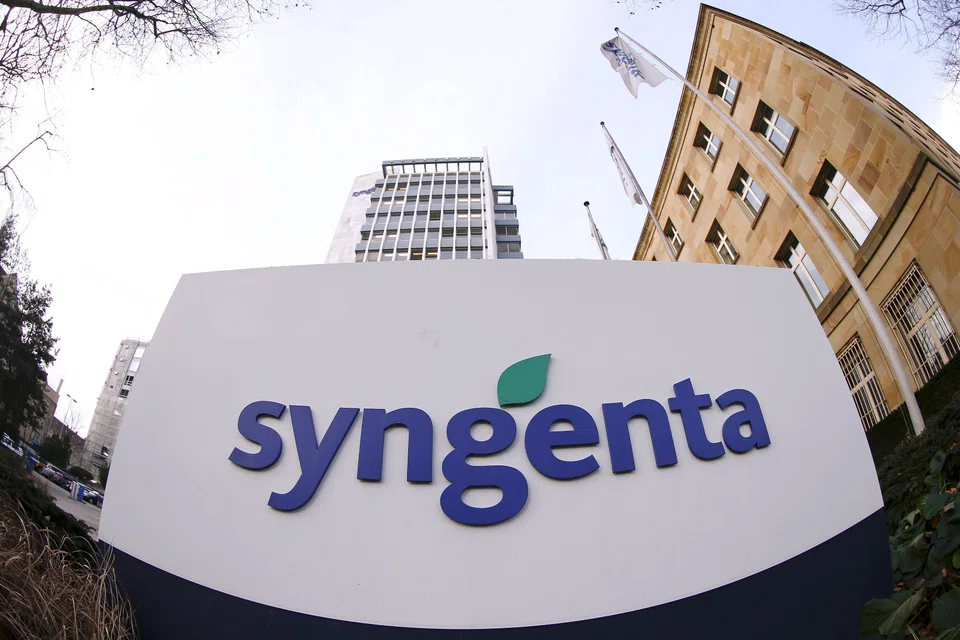
DeeperDive is a beta AI feature. Refer to full articles for the facts.
[LONDON] Syngenta AG, the world's largest maker of agrochemicals, rejected a 41.7 billion Swiss franc (S$60 billion) takeover offer from Monsanto Co because it undervalued the company and a merger would carry "significant" execution risks.
Monsanto's proposed an offer of 449 Swiss francs a share, with the cash part of the bid equal to 45 per cent, the Basel-based company said Friday in a statement.
The US maker of genetically-modified seeds and Round-Up weedkiller has timed its approach on Syngenta with a lull in Swiss company's performance amid currency moves and lower crop prices. Syngenta is betting that the benefits from grouping its products into specific crops - from seeds to herbicides - will accelerate, adding to extra sales from a slate of new technologies to be released into the market.
"Monsanto's proposal does not reflect the outstanding growth prospects of Syngenta's integrated strategy and the significant future value potential of the company's crop-focused innovation and market leading positions," chairman Michel Demare said in the statement.
"While Syngenta's valuation is currently affected by short term currency and commodity price movements, the business outlook is strong."
Tempting Syngenta to the negotiating table would result in a deal that ranks the biggest acquisition in the chemical industry and make Monsanto a formidable competitor to Bayer AG, BASF SE and Dow Chemical Co. Syngenta is the world's largest maker of crop chemicals whereas St Louis-based Monsanto is the largest maker of seeds and dominates the global market for genetically modified crops like corn and soybeans.
Navigate Asia in
a new global order
Get the insights delivered to your inbox.
In terms of potential antitrust issues, the largest business overlaps are the North American and Latin American herbicide markets as well as seeds in North America, according to Morgan Stanley analysts Paul Walsh and Charles Webb.
"The offer fundamentally undervalues Syngenta's prospects and underestimates the significant execution risks, including regulatory and public scrutiny at multiple levels in many countries," Mr Demare said.
The biggest deal targeting a chemical producer to date was the combination of Hoechst and Rhone-Poulenc SA, a more than US$20 billion deal that created drugmaker Aventis SA in 1999. The largest transaction among agricultural-chemical makers was the merger between Russian potash producers OAO Uralkali and OAO Silvinit in 2011, valued at less than US$10 billion.
BLOOMBERG
Share with us your feedback on BT's products and services
TRENDING NOW
Ministry of Home Affairs Permanent Secretary Pang Kin Keong to retire

Shelving S$5 billion office redevelopment plan proved ‘wise’ as geopolitical risks mount: OCBC chairman

Richard Eu on how core values, customers keep Singapore’s TCM chain Eu Yan Sang relevant

China pips the US if Asean is forced to choose, but analysts warn against reading it like a sports result

