

Tap runs dry for Singapore craft beer distributors, breweries as they get sidelined in new Covid-19 support measures
Claudia Tan HS
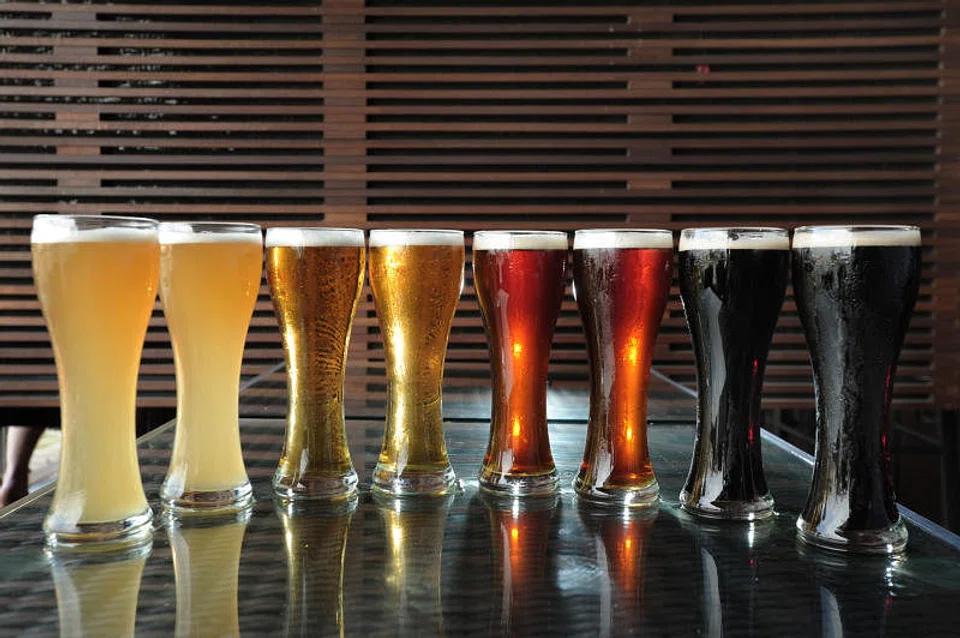
LOCAL craft beer distributors and breweries are reeling from the impact of Singapore's third dine-out ban as they continue to be sidelined by government support measures.
The government had on Friday rolled out a S$1.1 billion support package for workers and struggling businesses in the food and beverage (F&B), retail and other targeted sectors.
The new measures were, however, not applicable to most beer distributors and breweries given that they are not considered F&B players under the Singapore Standard Industrial Classification code.
Of 28 breweries and distributors polled by the committee formed to represent the Singapore craft beer industry, more than half do not expect to receive help from the job support scheme for the current heightened alert period. Meanwhile, 27 do not expect their private landlords to provide any rental relief during this period of time.
Distribution companies The Mad Tapper and Beerstyle Distribution as well as local breweries Alive Brewing Co and The 1925 Brewing Co were among those that are not eligible for any of the new measures announced.
"As an upstream business within the F&B industry, I am disappointed that we do not get the support that is level with what the F&B operators are getting," said Kasster Soh, owner of The Mad Tapper.
With distributors and breweries heavily reliant on business from F&B establishments, they are bracing for the fallout as Singapore returns to Phase 2 (Heightened Alert).
The Mad Tapper is already facing a 60 per cent drop in revenue following the ban on dining at F&B premises, which typically make up at least half of its total sales.
"When dine-ins are banned, these F&B operators see a sharp decline in sales which creates a knock-on effect to their upstream F&B suppliers such as us," said Mr Soh.
He added that with revenue taking a hit and impending cash flow issues, it puts The Mad Tapper's runway at "serious risk".
Over at Beerstyle Distribution, where kegs account for at least half of its shipments, business is expected to fall by about 50 per cent. Kegs are sold to F&B premises to serve draft beer.
"The fact is not many people would want to do takeaways for draft beers. It makes more sense to buy from off-premise establishments like supermarkets and bottle shops," said owner Winston Kwang, adding that they do not have any supermarket accounts.
Breweries too are impacted by fewer orders from F&B establishments including hotels, restaurants and bars. The 1925 Brewing Co and Alive Brewing have seen business drop drastically by 80 per cent and 70 per cent respectively.
"As a manufacturer of craft beer, the fall in revenue has resulted in challenges with generating free cash flow to service operating expenses such as rent, utilities, salaries and raw materials. Furthermore, our plan to acquire capital equipment that can improve productivity and save precious man-hours had to be put on hold," said Alive Brewing's owner Cheong Qing Yang.
In addition, industry players have to bear the costs of excess supply and disruptions to production schedules whenever Covid-19 restrictions are implemented unexpectedly.
Mr Kwang said that this has created a situation where supply does not match demand, which could mean having to throw out expired beers.
The 1925 Brewing's owner Yeo Eng Kuang said that with production schedules greatly affected by the unpredictable nature of Covid-19 measures, beers may not be produced in time to cater to customers once restrictions are lifted.
For the new kid on the block Alive Brewing, which entered the scene in 2020 at the height of the Covid-19 pandemic, it has been a challenge to grow its brand and business, said Mr Cheong.
"Whenever we experience some traction, the changes in dine-in restrictions seem to put a damper on the growing momentum," he said.
Against this backdrop, beer suppliers and manufacturers have turned to direct-to-consumer channels to cushion the impact of the tightened measures though results have been limited.
The 1925 Brewing's Mr Yeo said that while B2C (business-to-consumer) sales via online and other channels had created an alternative source of revenue, they have had to "work a lot harder and earn a lot less".
In the past, The 1925 Brewing could easily sell a 20 litre keg of beer to a bar, but it now takes additional manpower and packaging costs to sell the same amount of beer - equivalent to about 60 bottles - directly to consumers.
The Mad Tapper's Mr Soh has tried to ramp up sales at off-trade businesses such as supermarket and speciality grocers as well as tap direct-to-consumer sales channels.
"However the results are still insufficient as our premium portfolio is still extremely reliant on the on-trade segment," said Mr Soh. The on-trade market includes sales at physical premises such as bars and restaurants.
For Beerstyle Distribution, Mr Kwang said that he is stuck between a rock and a hard place.
"As a wholesaler, we cannot bring ourselves to compete directly with our retailers. What we try to do is to hold reward campaigns to incentivise purchases at our retailers," he said.
The craft beer industry had in a letter to ministries pleaded for equal treatment with the rest of the F&B industries on Thursday.
It noted that suppliers, while not as visible as food services, are suffering the full effects of the heightened alert.
"The same fixed costs of labour and rent affect us as well, and it is galling to have to constantly appeal to Iras (Inland Revenue Authority of Singapore) to be treated the same as food services for subsidies that will tide us through a lockdown that affects an entire F&B ecosystem," said the committee in the letter.
READ MORE:
TRENDING NOW

Once staunchly pro-China, Malaysian Chinese businesses are now distancing themselves from Beijing

Britain’s mansion tax shows the difficulty of targeting wealth

Three hats, one goal: How Ng Kian Swan runs sustainability at NUHS
COE review: The gap between luxury and mass-market cars isn’t the only one worth bridging

