

US retailers eye strong holiday season despite trade worries
 Add BT as a preferred source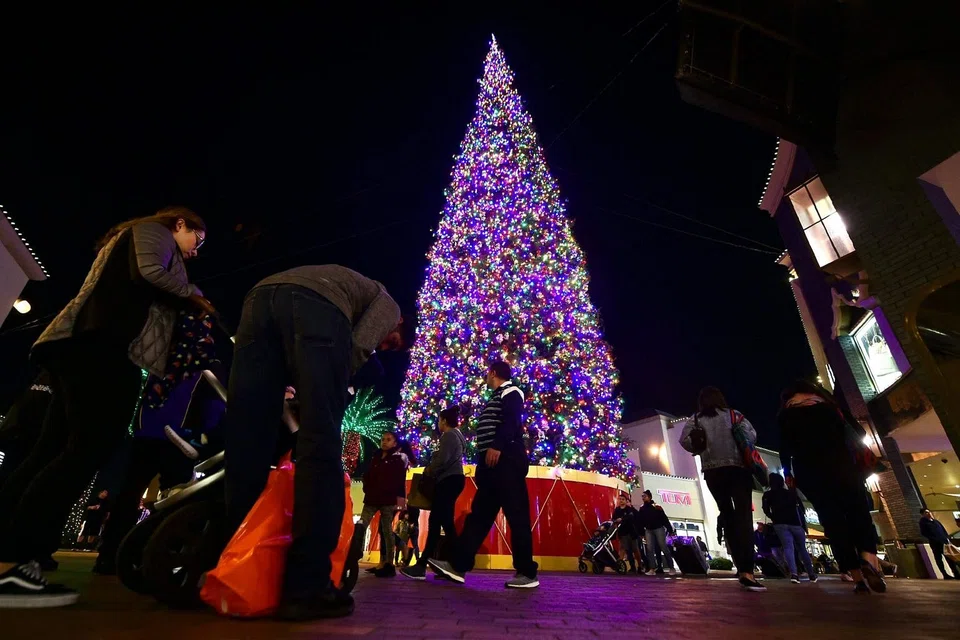
DeeperDive is a beta AI feature. Refer to full articles for the facts.
[NEW YORK] Despite the flurry of trade and political uncertainties hanging over the US economy, the National Retail Federation (NRF) on Thursday said it expects Americans to continue to spend and load up on gifts in a strong holiday shopping season.
Holiday retail sales in November and December are projected to rise between 3.8 and 4.2 per cent to as much as US$730.7 billion, the NRF said in their annual forecast.
Low US unemployment, rising wages and gasoline prices that are below the year-ago levels are behind the trade group's positive outlook.
"The household is in relatively good shape," said NRF chief economist Jack Kleinhenz.
Strong household spending has been a linchpin of the US economy throughout 2019 even as business investment has slowed amid myriad trade conflicts initiated by US President Donald Trump.
But US stocks have fallen sharply this week on the heels of economic reports showing weakening in the manufacturing and services sectors and lower hiring than expected in September.
Navigate Asia in
a new global order
Get the insights delivered to your inbox.
"The stock market is not the economy," Mr Kleinhenz said in a briefing with reporters. "As long as we see the job outlook look positive and wages continue to move along, I think consumers overall will see through this."
NRF officials praised the Trump administration decision to delay tariffs on some key Chinese goods such as toys and many electronics until mid-December to try to avoid harming consumers during the critical holiday shopping period.
However, NRF president Matthew Shay said tariffs should be seen as taxes on consumer, and another round of punitive duties on European goods announced by the White House on Wednesday was unwelcome.
Washington plans to impose 25 per cent tariffs starting Oct 18 on a host of products from the European Union in a trade dispute over subsidies for Airbus, including cheeses, Spanish olives and olive oil, whisky, and wool sweaters.
Retailers in many cases have taken steps to blunt the effect of tariffs on prices, whether through pressuring suppliers or accepting a hit to profits, so the impact has not been fully felt by consumers.
But Mr Shay said "there is a real cost to what we've done in the imposition of tariffs".
"There's been a calculus made that in the face of a strong and growing economy, you can sacrifice a little bit by imposing tariffs because the economy can sustain it," he said. "And the question is how long can an economy sustain it?"
AFP
Share with us your feedback on BT's products and services
TRENDING NOW

Vietnam acts fast to shield firms, households from fuel price surge

Beijing’s calculated silence on the Iran war
S-E Asia tourism takes hit from Middle East crisis, but intra-regional travel could spell hope

China pips the US if Asean is forced to choose, but analysts warn against reading it like a sports result

