With Robinsons closing, what lies ahead for its peers?
The pandemic, in accentuating the shortcomings of physical retail, may speed up their decline, say market observers
Singapore
THE imminent closure of Robinsons, one of the oldest homegrown names in Singapore, has put a question mark over whether other department stores may find themselves in its shoes, as they continue to fend off competition and e-commerce.
Particularly, the coronavirus pandemic, in underlining the shortcomings of physical retail, may speed up their decline, said market observers. Data from Euromonitor has shown that department store sales in Singapore are expected to fall by a five-year compounded annual growth rate of 1.7 per cent from S$2.6 billion in 2019 to S$2.3 billion in 2024, led by store and selling area contraction.
Yet, operators that spread themselves out over other businesses, such as property, instead of relying solely on the department store model may weather the dark clouds better, the observers said.
Department stores, originally started as one-stop shops, have lost their appeal as retail brands now have multiple ways to reach customers with the advent of e-commerce. Retail rents have also risen.
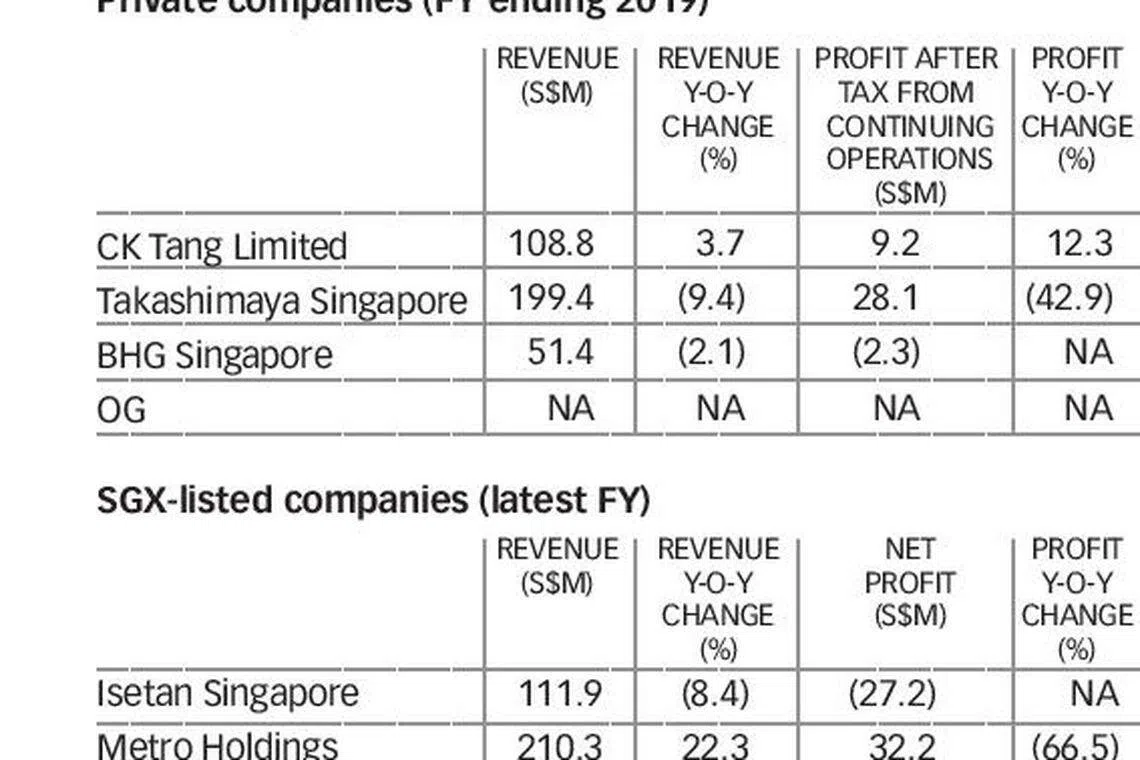
Such operators in Singapore thus appear to be struggling to stay competitive. BHG Singapore, for instance, fell into a loss after tax from continuing operations of S$2.3 million for the financial year ended 2019, after seeing profits narrow since 2016.
Lau Kong Cheen, senior marketing lecturer from the Singapore University of Social Sciences' School of Business, suggested that operators with diversified businesses, such as in property, could stand a better chance of survival.
Pointing to operators such as Metro Holdings, he said: "Quite a lot of the traditional departmental store business have already expanded into property business, particularly in malls and mixed used development."
Such players generate most of their profits through rents and profit shares from their retail tenants and, occasionally, through capital gains from property sales, Dr Lau noted.
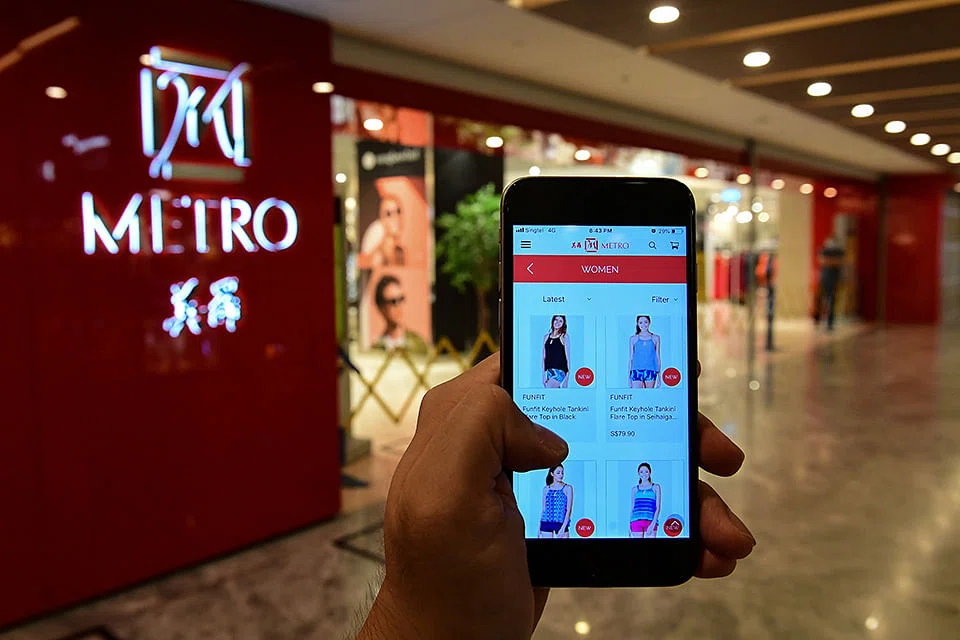
For example, Metro is today positioned as a property investment and development group, instead of a mere retailer. As at June 25, it has a portfolio of some 29 properties across Singapore, China, Indonesia, the UK and Australia.
The group's property segment has contributed significantly to the company's topline. For its latest financial year ended March 31, the revenue from its property division more than doubled to S$95.2 million compared with the year ago period, thanks to the sale of property rights for residential development properties in Jakarta.
In contrast, Metro's retail division in Singapore recorded an operating loss of S$200,000, although it was an improvement from the S$7.1 million operating loss a year ago.
That said, efforts to diversify weren't as rewarding for some.
Isetan Singapore, for instance, has made losses since 2018. This is even as it converted its space at Wisma Atria into an investment property to earn rental income, after ceasing its own retail activities at the shopping mall in 2015.
And in August, Isetan recorded a net loss of S$317,000 for the half year ended June 30, compared with a net profit of S$1.6 million in the same period a year earlier. This was mainly due to a decline in sales as well as impairment losses on financial assets.
It had also warned that the retail environment remains "very challenging" and that a material recovery is not expected in 2020.
Lee Nai Jia, deputy director of the Institute of Real Estate and Urban Studies said that the property business would traditionally offer some form of diversification as sales, particularly on the residential front, tend to move less closely in tandem with economic performance. But the property sector is also competitive, with margins squeezed by construction, land and marketing costs.
In addition, the pandemic has hit all sectors, including property, rendering the effect of diversification less obvious. "The key thing would be how much cash reserves the company has, and whether it can hold on throughout the pandemic," Dr Lee said.
Paul Chew, Phillip Securities' head of research, said that the pandemic has underlined the shortcomings of physical retail.
"It will be challenging and department stores may need to move away from more competitive segments such as fashion where shopping via e-commerce or speciality stores are more prevalent," Mr Chew said.
But it is not the dearth of department stores even as operators make their foray into new revenue streams.
Ethan Hsu, head of retail at Knight Frank Singapore, said that businesses that have both property and retail components can still be profitable if they are able to understand their consumer and meet their expectations.
However, department stores will need to "seriously reconsider their value proposition to their customers and introduce new elements to create a unique experiential concept that can excite and reinvigorate their customer base to return to the stores", he said.
Standout department stores are the ones that offer higher than average retail offerings across market segments as well as areas to hold events, said DBS analyst Alfie Yeo.
"We believe department stores with such offerings are able to attract and retain consumers better than others," he said.
Meanwhile, CGS-CIMB research head Lim Siew Khee said that department stores could still be relevant but on a smaller scale, or with a better use of space. "I think there is still a market for experiential concept stores," she added, pointing to Takashimaya Singapore's "distinctive Japanese angle" and luxury goods selection.
Additional reporting by Claudia Tan