

Argentina is nationalising one of world's top soy suppliers
 Add BT as a preferred source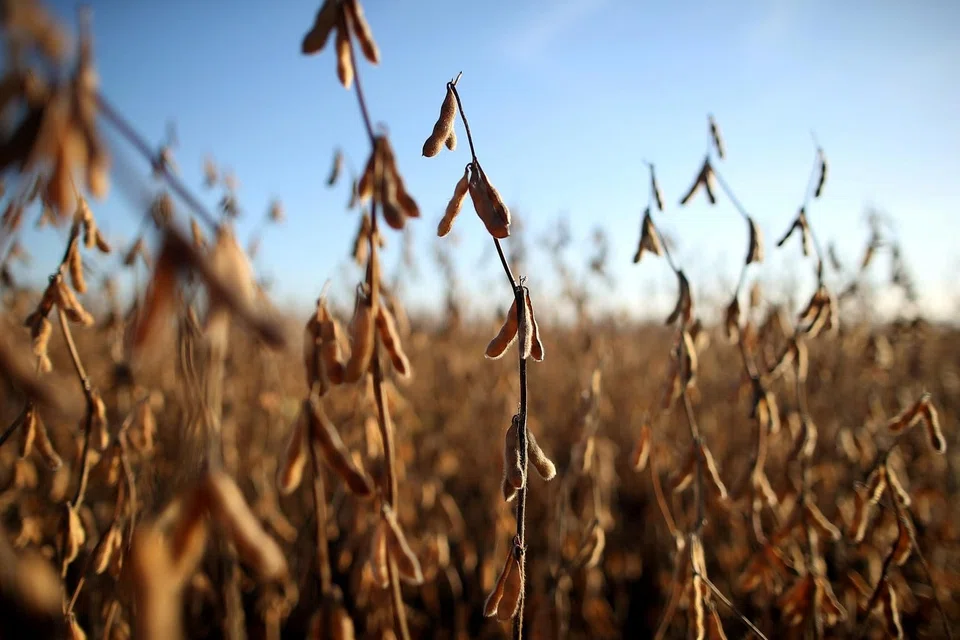
DeeperDive is a beta AI feature. Refer to full articles for the facts.
[BUENOS AIRES] Argentine President Alberto Fernandez dipped into the play book of his deputy, Cristina Fernandez de Kirchner, with a plan to seize crop trader Vicentin SAIC in a move that'll ring alarm bells in soy markets and among investors in the country.
Mr Fernandez's government will take control of Vicentin for the next 60 days as it seeks congressional approval to expropriate the agricultural powerhouse, which filed for bankruptcy last year after being caught out in currency swings.
"This is a statist vision for the 21st century," Production Minister Matias Kulfas said in an interview late Monday after the announcement. The company wasn't notified, he said.
Under the plan, all of Vicentin's assets -- the crown jewels of which are soy-processing plants that supply the world with meal for animal feed and cooking oil -- will be placed in a trust managed by the agriculture arm of state-run oil company YPF SA.
YPF Agro would then absorb Vicentin entirely, creating a state commodities giant with major hands in shale drilling, fuel dispensing and crop trading -- and even giving the government more clout in the currency market, Mr Kulfas said.
The move comes at a delicate time for Argentina, which is negotiating a restructuring of US$65 billion in overseas debt. It also revives memories of the 2012 nationalisation of YPF and other companies during the presidency of Ms Kirchner, and raises questions about how Argentina will lure private-sector investments to lift its economy off the floor.
Navigate Asia in
a new global order
Get the insights delivered to your inbox.
"History shows us that state interventions, in grain trading in particular, create severe distortions that end up deepening problems instead of solving them," the Argentine Rural Society said in a statement.
The main opposition coalition rejected the measure, calling it "illegal and unconstitutional."
The government contends that the repercussions of Vicentin's financial crisis on Argentina's farm industry were simply too big to ignore. The closely held firm is a major part of Argentina's US$20 billion-a-year crop export business, accounting for 7.4 million metric tons of oilseed-crush exports in 2019.
"There's a certain belief, especially among independent and small producers who have been quite damaged by Vicentin's failure, that the company needed to be saved in some way," said Juan Cruz Diaz, director of political consulting firm Cefeidas Group in Buenos Aires.
But to many observers, the nationalisation points to another issue: Who exactly is governing Argentina? Mr Fernandez, who's far from a free-marketeer but viewed as a moderate, or his deputy, Ms Kirchner, a figurehead for fervent supporters of Latin American leftism and nationalism.
Vicentin's fate has been closely tied to politics. The company expanded under the presidency of market-friendly Mauricio Macri and then fell into disarray when Mr Fernandez emerged as his likely replacement. Gabriel Delgado, an agriculture secretary under Kirchner, will lead the government's intervention.
The company defaulted on about US$1.5 billion of debt last year. A court in Santa Fe province, where the company is headquartered, has been overseeing a bankruptcy in a procedure that's similar to Chapter 11 in the U.S.
A big chunk of Vicentin's debt is owed to state-run Banco Nacion. But the expropriation plan was still a surprise to company executives, who've been in talks with existing partner Glencore Plc and other companies, a spokesman said.
"The chosen path fills us with uncertainty and concern," the company said in a statement.
Switzerland-based Glencore has a joint venture with Vicentin called Renova, which includes one of the world's biggest soy-crushing plants. Mr Fernandez said it was too soon to say how a new state partnership with Glencore would work.
Argentina is the largest exporter of soy meal for animal feed and soy cooking oil, and in recent years Vicentin has fended off multinationals to have the top share of those shipments.
BLOOMBERG
Decoding Asia newsletter: your guide to navigating Asia in a new global order. Sign up here to get Decoding Asia newsletter. Delivered to your inbox. Free.
Share with us your feedback on BT's products and services
TRENDING NOW
Air India asks Tata, Singapore Airlines for funds after US$2.4 billion loss

Beijing’s calculated silence on the Iran war

China pips the US if Asean is forced to choose, but analysts warn against reading it like a sports result

Richard Eu on how core values, customers keep Singapore’s TCM chain Eu Yan Sang relevant

