

Choa Chu Kang Waterworks now partly solar-powered
Singapore
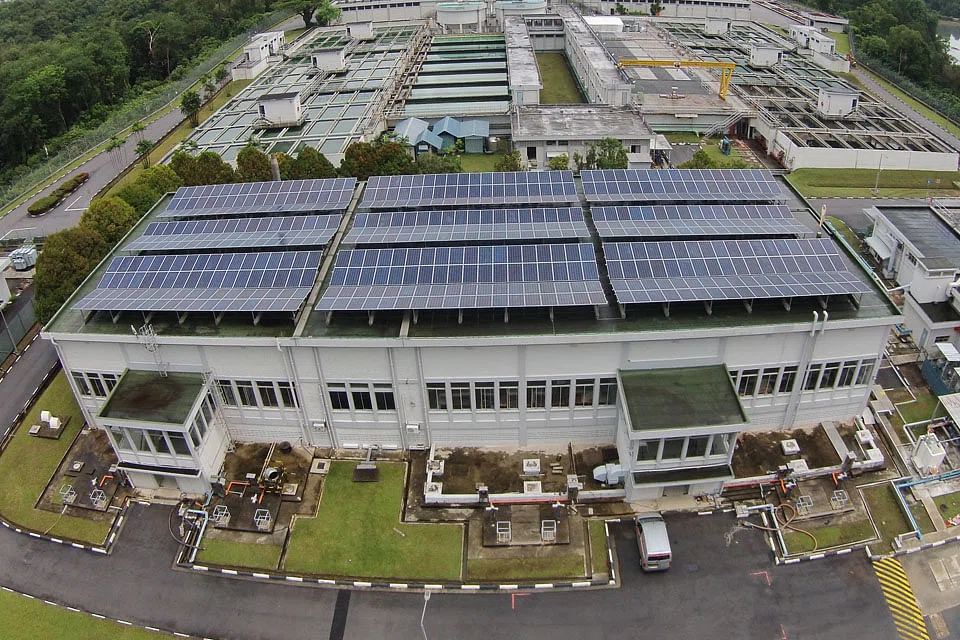
NATIONAL water agency PUB's waterworks in Choa Chu Kang is now partially powered by solar energy, with the installation of a 1 Megawatt peak (MWp) solar photovoltaic system in its compound.
More than 3,000 solar panels have been laid across the rooftops and clear water tanks at the waterworks, covering nearly 70 per cent of the plant's total surface area.
The power generated by the panels meet about 7 per cent of the plant's average daily needs, working out to more than 1.1 Gigawatt hours (GWh) of clean energy a year - roughly the amount of electricity 250 HDB households would use on average each year.
PUB's chief sustainability officer Tan Nguan Sen said that such a large-scale deployment of solar energy has been made possible by falling costs in recent years.
He declined to disclose PUB's cost savings for competition reasons, but indicated that the price per unit of solar energy was less than or equal to that of electricity generated the conventional way today.
Minister for the Environment and Water Resources Vivian Balakrishnan, who visited the waterworks, said: "The beauty of the project is that there are no capital costs to PUB upfront; we literally save from Day One."
He was referring to the arrangement under which the S$2.3 million in installation costs are borne by the contractor, which owns the solar panels. PUB pays only for each unit of electricity it consumes. This is called solar leasing, or a power purchase agreement (PPA).
The PPA at the Choa Chu Kang Waterworks will last for 20 years, after which it will be up for negotiation. PPAs are known to be one of the more popular business models for solar energy in Singapore.
Looking ahead, PUB plans to deploy photovoltaic systems at the Waterhub, Bedok Waterworks and Changi Water Reclamation Plant within the next year.
All its new and selected existing plants which are able to accommodate the panels will be partially run on solar power by 2020.
Beyond these projects on land, PUB has been working on a water-based, floating solar testbed at the Tengeh Reservoir; it is slated to call for a construction tender for supporting infrastructure by September.
These undertakings are in line with PUB's target of reducing the use of imported energy for water production by half in the next 10 years, said Dr Balakrishnan.






