

Coal market in danger of more company exits, stranded assets as challenges rise

Uma Devi
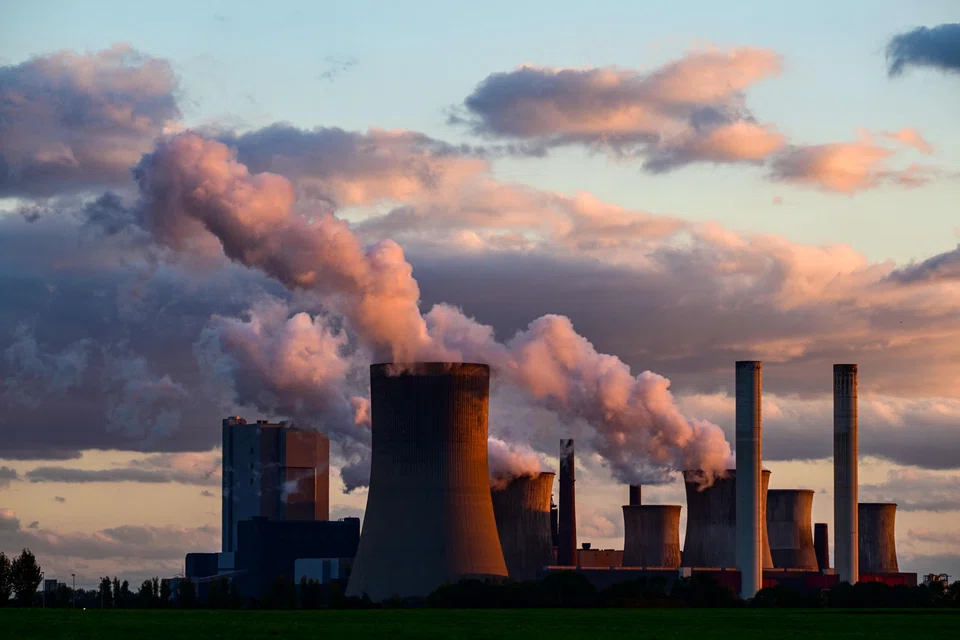
GOLDEN Energy and Resources’ (Gear) move to restructure or exit the thermal coal industry could be a sign of things to come, as the industry battles challenges such as banks halting the funding of coal companies and an increasing global focus on environmental, social and governance (ESG) factors.
Market watchers polled by The Business Times reckon the impact of banks ceasing funding for coal projects is likely to be severe, and financing for coal is becoming increasingly difficult.
Jigar Shah, head of sustainability research at Maybank Investment Banking Group (MIBG), said the lack of available funds could hurt coal producers’ expansion plans, and cause assets in the industry to become stranded.
However, he noted that existing coal plants are unlikely to be impacted much operationally, unless a major carbon tax is introduced.
Manish Gupta, senior analyst at commodities and energy consultancy Wood Mackenzie, noted that problems have already begun. He said interest rates are as high as 20 per cent for some coal projects. There is also a “shrinking of tenures” for long-term funding available to coal producers.
Although companies have generally been able to get funding from “alternative sources” such as private equity and end-users, these come with higher costs, he added.
To recap, Singapore-listed Gear on Nov 1 offered to exchange its outstanding US$285 million 8.5 per cent senior secured notes that are due in 2026 for new notes of the same value and coupon due 2027. The company said the reason for the exchange was to loosen “certain covenants currently in the indenture governing the existing notes” to allow the company to either restructure or exit – or both – “all or substantially all of its energy coal business”.
These relaxations include changes in the financial ratios in the debt covenant and other amendments to permit the company to restructure or exit all or substantially all of its energy coal business, in line with its plan to reduce exposure to energy coal, Gear said.
Moody’s Investors Service analyst Maisam Hasnain said that the segregation of Indonesian coal mine operator PT Golden Energy Mines (Gems) would result in a decline in Gear’s “scale and business diversity”.
“A potential segregation of Gems is consistent with Gear’s strategy to reduce its exposure to thermal coal. Nonetheless, metallurgical coal, while less acutely exposed to carbon transition risk than thermal coal, is still highly exposed to the risk,” he said.
Gear’s credit quality will then be anchored by the fundamental credit strength of its 64 per cent-owned Australian metallurgical coal subsidiary, Stanmore Resources, he added, meaning any operational or financial challenges at Stanmore will weaken Gear’s financial quality.
Projections from Moody’s assume a fall in metallurgical coal prices over the next one to two years, which would cut Stanmore’s earnings. Moody’s has opted to keep its B1 rating affirmation on Gear, as the company’s large cash balance and dividends from Stanmore will ensure good liquidity over the next few years.
Could other coal producers in South-east Asia be forced to restructure themselves, or exit the industry altogether?
For now, robust coal demand and high coal prices are helping to prop up companies’ earnings. But coal producers are already taking steps to diversify their business and revenue streams.
Fitch Ratings’ South-east Asia energy and utilities team noted that some companies have also utilised their “strong” cash flows from elevated coal prices to buy back outstanding bonds to reduce refinancing risks at the time of bond maturity.
A few thermal coal companies rated by Fitch have started diversification efforts or are planning to diversify to increase earnings contribution from non-thermal coal sectors, the analysts noted. However, they are expecting these transition plans to be effective over the medium to long term, with earnings from thermal coal remaining significant over the rating horizon.
Wood Mackenzie’s Gupta said some coal producers are seeking alternative revenue channels by venturing into renewable energy and nickel mining. Such moves, he said, appear to be based on individual company strategies and decarbonisation commitments.
MIBG’s Shah said companies are finding ways to restructure and transform into clean energy companies through a number of ways – including asset sales, privatisations, as well as stopping expansion in coal-based power and raising renewables capacities.
“Coal companies would transition towards renewables or clean energy sources over time. All utilities need to be net zero by 2050 and to achieve that, they would have to cease coal-based power production at some point in time,” he said.
However, the shift towards renewables might not be straightforward for coal producers, said Baldev Bhinder, managing director of Singapore-based law firm BlackStone & Gold.
While there are rising expectations from shareholders for companies around the world to take their sustainability initiatives seriously and move away from coal, he said there has historically been “less aversion to coal” in Asia.
“I suspect the coal debate this year will have different lenses as Europe resorts to fossils once again,” said Bhinder.
“Restructuring or divesting coal assets to another entity may help with investor optics, but it still doesn’t address the bottom line damage being caused. In that respect, it would be interesting to monitor early schemes like the energy transition mechanism and how successful they are in retiring coal-fired plants earlier.”
TRENDING NOW

GCash parent Mynt rises in market debut after South-east Asia’s top 2026 IPO

In the age of AI, what is a university education for?

Singapore to use ‘every legal and regulatory lever’ against companies linked to haze: Shanmugam
‘IPOs are not the only vehicle’: KKR heads for record exits even as firms stay private for longer

