

Electricity retailers in Singapore hike rates amid surge in spot prices

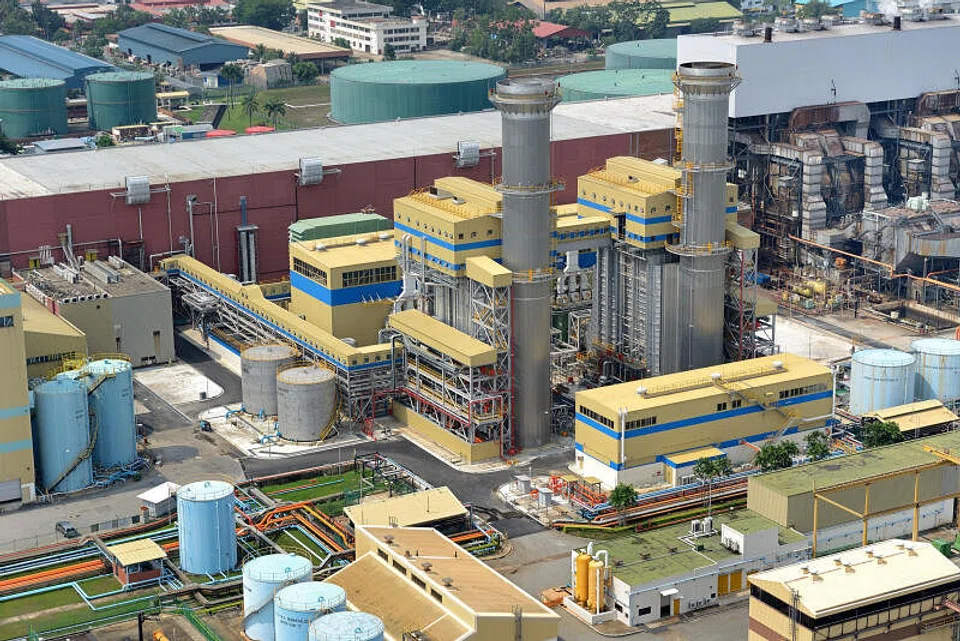
EXTRAORDINARY spikes in spot electricity prices recently have led Singapore's electricity retailers to pass the buck to new household customers by raising the prices of fixed-price plans under the city-state's Open Electricity Market (OEM).
If the prickly higher electricity prices persist, it could throw cold water over the chief appeal of the country's energy sector liberalisation, which is significantly cheaper power bills for residential users.
"Rates have gone up across the board for all retailers," said a top executive of a major electricity retailer resignedly, pointing fingers at the recent surge in electricity spot prices, whose root cause is still unclear and is being investigated by industry regulator Energy Market Authority (EMA).
"We have adjusted the price of our plans due to higher wholesale prices set by the gencos, higher hedging costs due to reduced liquidity in the futures market...," said Dallon Kay, president and chief executive of Diamond Energy, one of 12 electricity retailers for households in the city-state.
The top three players in Singapore's OEM - Keppel Electric, Geneco (owned by YTL PowerSeraya) and Tuas Power - have also raised their prices between some 10 per cent and 15 per cent for the 24-month fixed-plan packages over the same period. Collectively, the trio held a 57.5 per cent share of Singapore's residential market as at end-April 2021, according to the EMA website. All three companies declined to comment for this article.
Sembcorp Power's 12 and 24-month fixed price plans offered last month stood at 22.5 Singapore cents per kilowatt hour (kWh) versus 19.5 Singapore cents offered in June this year. That's about a 15 per cent hike.
When contacted, Sembcorp Power replied: "SembPower reviews its price offering regularly to maintain its competitiveness in the market and offer a variety of choices to customers. We adjusted our prices recently due to increasing oil prices and a local tariff rate increase."
Martin Lim, chief executive of Electrify, a Singapore-based retail marketplace for energy and peer-to-peer energy trading, attributed the increase in retail energy prices to the move by state-owned SP Group to hike tariffs by 3.8 per cent in the third quarter of this year due to higher fuel cost to generate power. Prior to the liberalisation of the residential energy market two years ago, SP held the monopoly in Singapore's retail electricity market.
"Although tariffs are not directly used by retailers when calculating their price point for energy packages, they do share similar points of references from the broader energy market such as cost of fuel, which means that fluctuations for tariffs and retail energy prices often move in the same direction. While retailers work towards offering the most competitive prices for consumers, they also have an obligation to remain profitable, limiting their ability to deviate too significantly from developments in the energy market," Mr Lim elaborated.
But some industry players say the factors driving the recent hike in OEM packages by retailers are not limited to higher fuel prices on the back of oil's price uplift this year but more so a confluence of other factors.
"Fuel cost is definitely a factor for both (SP's tariffs and retailers' packages). However, the USEP (Uniform Singapore Energy Price) increase driven by the gencos (generation companies) is higher than the effect of oil uplift," said a key executive of another electricity retailer. As the big gentailers own their own generating assets, they tend to be generally regarded as the "price setters" in the industry.
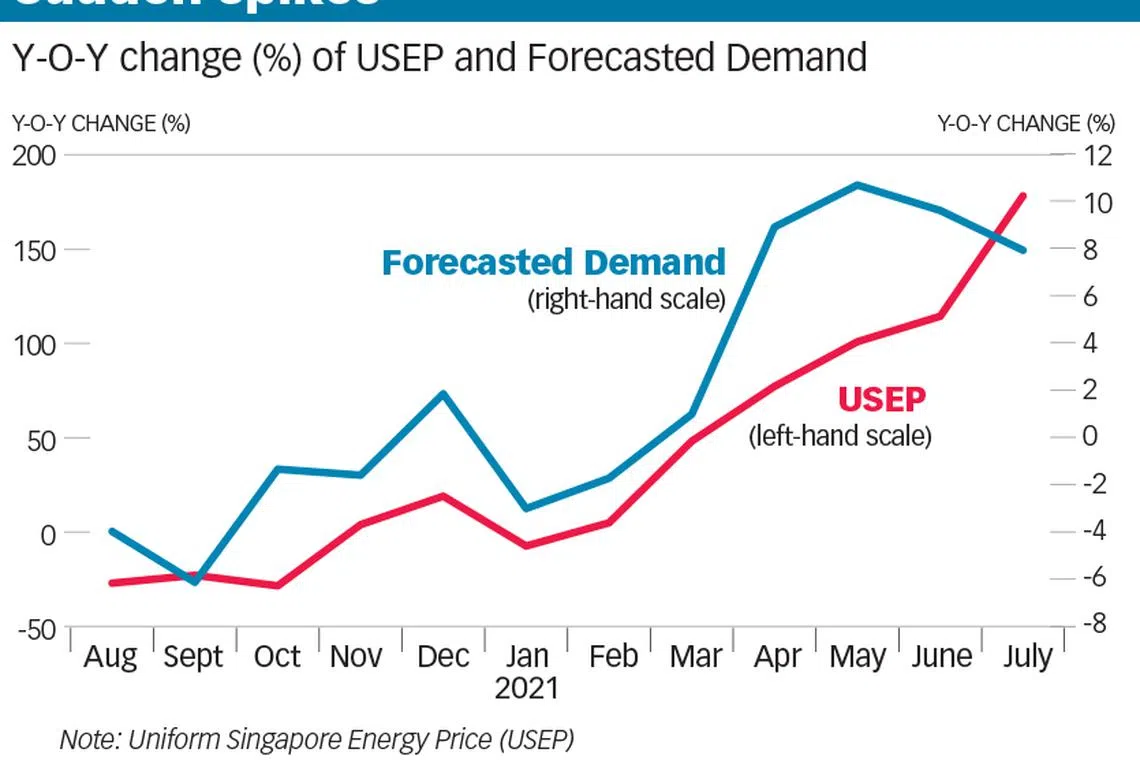
In an earlier report a couple of months back, BT reported that electricity spot prices have shot through the roof in July, confounding market players. The article also warned that if the trend persisted, business margins of electricity retailers, including IRs that do not generate their own electricity or may not have hedged adequately, could be hit and new consumers of fixed-price plans could see less attractively priced packages. Existing consumers however are protected from the sharp uptick, given a majority have picked stable fixed-price plans under the OEM.
In July, the monthly average of the USEP rose to a multi-year high of S$167.04 per MWh (megawatt-hour). The last time the monthly average USEP crossed the S$160/MWh mark was in July 2015, when it registered S$207.03/MWh, according to data provided by the Energy Market Company, the independent market operator of Singapore's wholesale electricity market.
USEP, which reflects the real price of electricity, varies half-hourly depending on prevailing supply-demand conditions in Singapore's wholesale market. Retail prices move in tandem with the USEP.
Then, the extreme price volatility had coincided with a planned gas curtailment of up to 20 per cent over a few days in late-July. The EMA said this was due to an incident at an upstream production facility, which had partially curtailed natural gas supply piped from West Natuna, Indonesia to Singapore. According to industry sources, there will be another gas curtailment exercise scheduled for mid-September.
But market observers contend that gas curtailment alone was unlikely to trigger the surge in electricity spot prices given that Singapore, which is 95 per cent fuelled by natural gas, has a robust and ample gas supply infrastructure. Also, while volatile prices are common in the city-state's competitive, real-time electricity market, given the shifting demand-supply forces, the recent sharp swings in electricity prices are beginning to raise plenty of questions.
On its part, EMA reassured industry players back in July that there was sufficient generation capacity and that it was reviewing the factors that drove the uptick in prices. Then again in early August, according to a source, the EMA informed the retailers that its "investigation into the high electricity prices observed during and after the gas curtailment event is ongoing" and that it will provide further updates when there is "pertinent development".
Some players suspect the recent uptrend in electricity prices could be partly led by an "opportunistic move" by some gencos, although to what extent this is the case is hard to ascertain. "There seems to be much more going on than the gas curtailment," lamented a key executive from another major retailer.
When contacted about the status of its investigation, the EMA declined comment.
Meanwhile, volatility has continued in the Singapore electricity market, according to Singapore-based energy broker James Whistler, the global energy head of Simpson Spence Young. "Historically, gas has been imported via pipelines from Indonesia and Malaysia with prices linked to oil, but we are increasingly seeing more Liquefied Natural Gas (LNG) imports into Singapore. The challenge with this is that LNG has become increasingly spot traded, and prices are highly volatile", he remarked.
Year to date, LNG spot prices have rallied due to high demand across Europe, South America as well as Asia owing to economic recovery and energy transition. This has caused the price of imported LNG to Singapore to rise significantly.
"This issue is highlighted when the cheaper pipeline-delivered gas is interrupted, as was the case recently. Electricity prices in Singapore skyrocketed," Mr Whistler said, adding: "Singapore could be experiencing the beginning of a paradigm shift towards sustained higher prices."
READ MORE: Confusion reigns as Singapore's electricity spot prices spike
TRENDING NOW

Once staunchly pro-China, Malaysian Chinese businesses are now distancing themselves from Beijing

Cliff Tan has 7 million followers and a 4-month waitlist. Why won’t he expand his business?

Grab CEO’s wife Chloe Tong on life with Anthony Tan and finding her purpose
Singapore F1 to proceed despite haze; no changes planned to outdoor entertainment

