For Asean, sustainability is key to unlocking development potential
THE recent Asean Summit held in Singapore saw robust discussions on issues of sustainable regional growth. Access to reliable, affordable infrastructure is key for countries to create jobs and grow sustainably.
As a region, Asean is diverse in many ways, with different capacities to fund infrastructure. Developing countries would need to spend 2 to 7 per cent of their gross domestic product (US$532 billion to US$1.6 trillion) per year for water, sanitation, electricity, transport and more.
To sustain economic growth and continue poverty reduction through greater integration, Asean will need to tackle the infrastructure gaps in the region's economies.
Infrastructure needs in the region remain significant, with varying levels of access and quality. For instance, less than 60 per cent of the population in Myanmar and Cambodia has access to electricity.
Overall piped water services are available in less than 60 per cent of Cambodia, Laos, Thailand and Vietnam.
In terms of rural roads, there is wide variation in accessibility from 30 to 60 per cent across Laos, Myanmar, Indonesia, Vietnam, and Malaysia.
Asean is making progress in bringing key stakeholders to the table, including through the Master Plan for ASEAN Connectivity 2025.
The World Bank Group, working from its Singapore Hub for Infrastructure and Urban Development, is providing technical support to the Asean Secretariat to help identify and develop projects that can boost economic, social and environmental connectivity.
The World Bank Group's Singapore Hub also partners Singapore's Centre for Liveable Cities, Urban Redevelopment Authority and national water agency PUB to facilitate the exchange of information and best practices for infrastructure development.
While many infrastructure projects are government-related, solely public-funded infrastructure will not be sustainable in view of the rising urbanisation and demographic changes.
In Asia, government financing has been the main source of infrastructure expenditure.
Given the limitations of public funding to meet significant investment needs, it is increasingly important to look towards the private sector.
Private investment volumes in infrastructure are slowly shifting to Asia.
In the first half of this year, East Asia and Pacific garnered 40 per cent of global private infrastructure investments - a 27 per cent increase from the same period last year.
This surge in private investment was led by road projects in China and power generation projects in Vietnam.
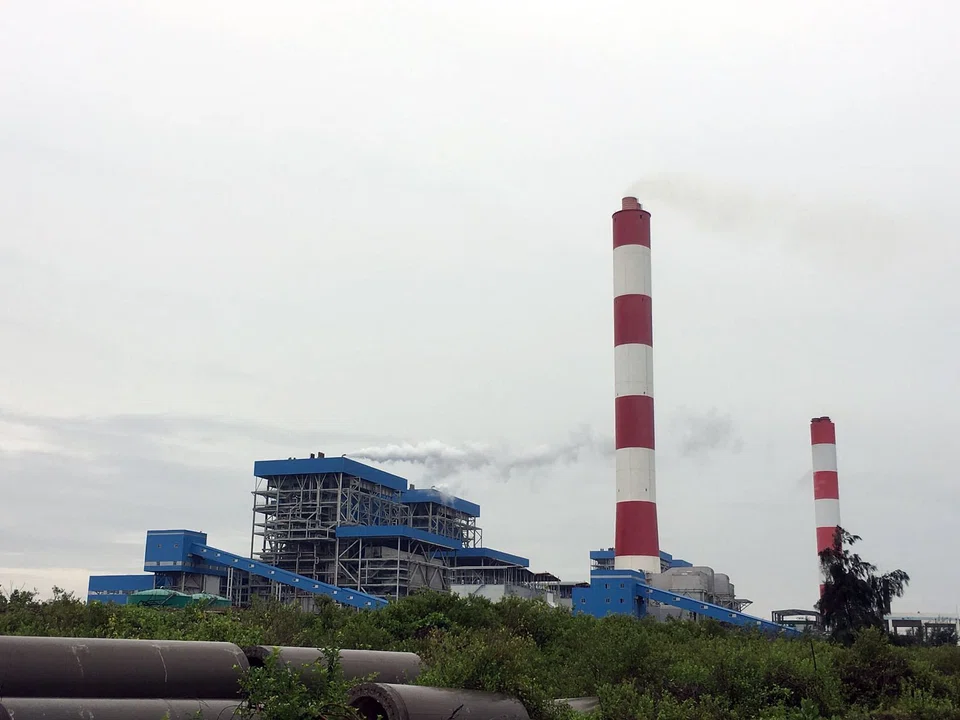
Vietnam's commitment to reducing its reliance on coal-fired power and dealing with environmental issues has resulted in an increased focus on investments in the renewable-energy sector.
This is an example of how private sector investments are influenced by policy and regulatory frameworks within a country.
A 2015 Preqin report found that the largest 100 regional investment institutions in Asia managed US$20 trillion worth of assets in total, but less than 1 per cent of that was allocated to infrastructure.
The numbers indicate that there is no lack of funds, but rather, a lack of project bankability. More than half of the infrastructure projects in Asia are not bankable or seen as attractive to investors.
Project bankability requires proper structuring and an enabling policy framework to ensure that risks are distributed well among the public and private sectors.
The World Bank Group, through a mix of advisory and financing operations, works closely with both governments and the private sector to identify key barriers to private investment and recommend solutions.
The Global Infrastructure Facility (GIF), a global collaborative platform among emerging countries, donor countries, multi-lateral development banks, and leading private infrastructure investors, was established to do this.
In Asia, GIF is supporting various projects including the preparation of solar auction programmes in Vietnam, India and Afghanistan, a geothermal risk mitigation facility in Indonesia, and an airport project in the Philippines.
Collectively, GIF's activities in Asia are expected to raise US$30 billion in combined public and private financing in infrastructure.
Industry players such as Infrastructure Asia also play a role. An organisation set up by Enterprise Singapore and the Monetary Authority of Singapore, Infrastructure Asia will serve as an integrator to convene industry expertise to collectively address regional-specific needs.
It is now actively meeting players from both the demand and supply side to understand their needs and challenges, and examine how local and international solution providers can come in during different stages of the infrastructure lifecycle to ensure sustainable project outcomes.
The World Bank Group is also partnering Infrastructure Asia to drive knowledge building and exchange within Asia to contribute to the countries' needs in capacity building.
Infrastructure is a long-term need. Engaging the private sector will be an important step in closing the gap between demand and supply.
From the micro-level of structuring bankable infrastructure projects to the macro-level of achieving sustainable growth in the region, sustainability will be key for Asean to continue to unlock its development potential.