

Gold, diamond demand trending up ahead of festivities
Market slowly reviving after sharp rise in marketing targeting Gen Y; pandemic fuelling sales as travel ceases
London
GLOBAL jewellers have rapidly adjusted marketing techniques to counter Covid-19, with the market slowly starting to see signs of revival.
There has been a sharp rise in online advertising to encourage buyers to experiment with purchases that they can see but not touch, feel and examine closely.
Ahead of the Chinese New Year and Valentine's Day gift-buying, jewellers around the world are feeling more confident.
Marketing is being concentrated on Gen Y - those aged 25 to 40 years old - who are moving into peak earnings and savings and investment, and likely to get married and start a family.
According to the latest available figures from data firm Statista, global jewellery demand totalled US$229 billion (S$304 billion) in 2019, with the biggest markets being the US, China, India and Japan.
According to several jewellery firms, online sales via Zoom boosted demand of items such as pendants and necklaces. Since people could not spend on travel because most of the world's borders remain shut due to the pandemic, they used spare cash to purchase luxury items such as designer jewellery.
The indications, however, are that in volume terms, global jewellery sales were well down in 2020. But the 20 per cent increase in gold prices boosted levels in value terms.
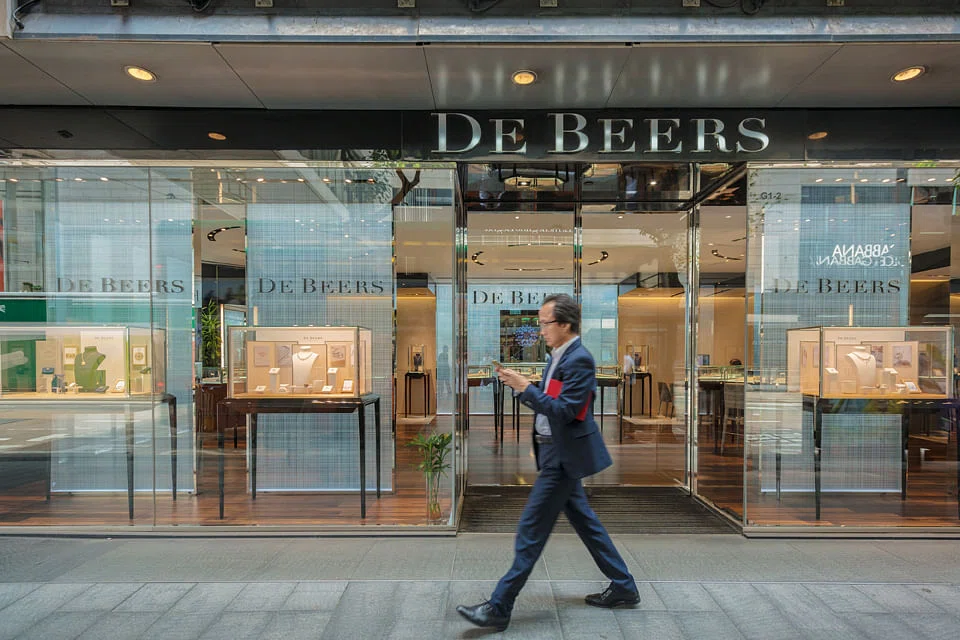
According to the World Gold Council (WGC), there was a serious slide in gold jewellery demand. Diamond miners De Beers, Alrosa and Antwerp gem dealers also report that there was a shaky time for producers, cutters and jewellers.
Similar to other businesses, the big dip in trade occurred in the second quarter of last year followed by a revival in the third quarter and then a nervy period when there were renewed lockdowns in the fourth quarter.
Several large jewellery companies failed in Europe and North America. A weak rupee which raised the prices of commodity imports, debt and lockdown, hurt Indian consumption but the consumer recovery in China raised jewellery sales there and helped stabilise turnover for miners and manufacturers.
The WGC, which promotes and researches gold on behalf of mining companies, said the volume of gold jewellery demand in 2020 dropped to 1,411 tonnes, its lowest annual level in two decades. Covid-19 and record prices were to blame.
The tonnage sold was 34 per cent lower than 2019 levels and although there was a recovery in the second half of 2020, the volume of tonnes sold remained weak.
In value terms, however, demand rose from an 11-year low of US$29.6 billion in the first six months of 2020 to US$51.6 billion in the second half.
Similar trends were evident with diamonds. De Beers reported that its sales of rough diamonds fell from US$5.39 billion in 2018 to US$4.04 billion in 2019 and then slumped to US$2.72 billion in 2020.
But after selling only US$916 million of gems in the first half of last year, sales doubled to $1.8 billion in the second half.
Diamond miner Alrosa experienced similar demand for its goods but both companies, the largest producers and distributors of rough, uncut diamonds, slashed production and intend to keep levels low in the coming year.
In this way, they aim to balance supply and demand so that they can lift prices.
If current signs are any indication, the strategy is beginning to work. Rapaport, the New York diamond dealing firm, said that according to its sources, both De Beers and Alrosa raised prices in their January 2021 sales.
They said that demand had improved because manufacturers were restocking after reasonable Christmas sales and "strong trading" ahead of the Lunar New Year holiday period that starts on Feb 12.
According to Rapaport's findings, De Beers raised prices by an average of 4 to 5 per cent and Alrosa by 6 to 7 per cent.
The larger rare diamonds achieved even higher increases than smaller gems.
In the fourth quarter of 2020, both companies begun reversing the price cuts that they made when the market was depressed, according to Rapaport. Diamond-cutting factories in India also raised polished production to full capacity as shortages emerged and retailers restocked, Rapaport said.
Some traders expressed concern that the surge in rough purchases could lead to an oversupply, as Chinese retailers have almost finished preparing their inventories for the Lunar New Year.
The World Platinum Investment Council, which promotes the metal for mines, said that demand has increased in China and Japan. Historically, people there have taken to platinum jewellery because the prices are relatively cheaper than gold.






