Singapore eyes push for renewables in clean energy import drive

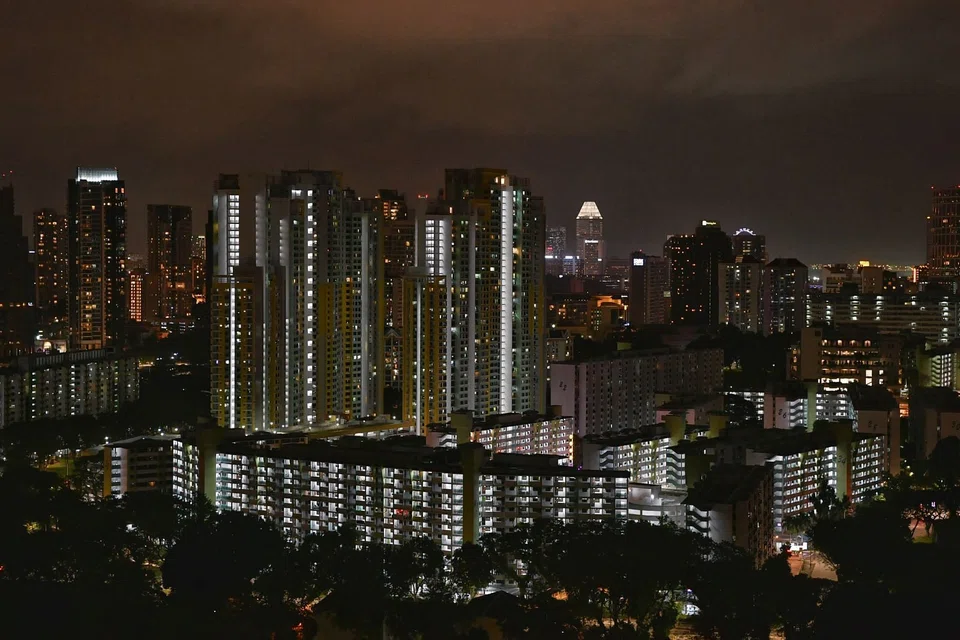
SINGAPORE'S power players are getting zealous on clean energy imports - a game-changer for the city-state's climate goals - even as the first of this big pivot could happen as soon as three months; that is, if a plan to import solar power from Malaysia works out to schedule.
Two key factors make renewable energy imports by Singapore, pressed for land and resources, a no-brainer - growing energy demand, which has recovered to pre-pandemic levels owing partly to industries with an insatiable appetite for power such as data centres, electric vehicles and agri-tech; and the urgency to cut carbon emissions as pledged under the Paris Agreement.
"These two reasons have given us a strong push to look at opportunities to explore and look for partners to import from other countries," Tuas Power chief operating officer Michael Wong told The Business Times.
Tuas Power, Singapore's largest electricity provider, has inked a preliminary pact to import 1,000 MW of solar energy from Indonesia. The estimated multi-billion dollar project, which will involve the construction of a roughly 50-km long undersea cable that could span from the Riau Islands to Tuas Power's station in Singapore's south-west, is subject to the conclusion of a feasibility study. If all goes well, the project could juice up in 2026.
"From a distance perspective, we have to be realistic - go for the low-hanging fruit. When I heard about Australia, I was doubtful. That's how we came up with Indonesia. At the end, Australia will (still) also have to go through Indonesian waters (to export energy to Singapore)," he continued.
In the works is Sun Cable's colossal US$30 billion project to supply solar energy to Singapore from Australia's outback via high-voltage undersea cables. The plan got a step closer after it received the nod from the Indonesian government last month for the subsea cable route through the archipelago. If it pans out, the project will be the largest solar farm and battery storage facility in history.
The power sector in the Republic accounts for 40 per cent of total carbon emissions, hence it's natural for electricity generation companies (gencos) to lead the charge to import green energy.
Singapore is also working hard to generate its own clean energy, from leveraging roof top and reservoir space for solar panels, to sussing out low-carbon solutions such as hydrogen and carbon capture technologies. But without imports, it would be tough to meet decarbonisation targets.
Keppel Electric, another leading genco, last month said it is exploring opportunities to import hydropower - a key renewable energy source in South-east Asia, apart from solar, wind and bioenergy - from Laos. It aims to do that via Thailand and Malaysia, using existing interconnectors.
On its part, Keppel Corp is on a quest to halve carbon emissions by 2030 and hit net zero by 2050. Cindy Lim, chief executive of Keppel Infrastructure Holdings, which wholly owns Keppel Electric, said: "Singapore is a small country with limited access to renewable energy. Besides the LTMS-PIP (Lao PDR-Thailand-Malaysia-Singapore Power Integration Project), we will also explore other importation opportunities to allow Singapore to tap renewable and low-carbon energy sources from the region".
Imports are also key as these will aid Singapore to meet the decarbonisation goals of industrial bigwigs based here.
"Given that Singapore cannot be self-sufficient in renewable energy, it has to depend on imports. If that is not an option, Singapore is at risk of losing its industrial sector," Lux Research's senior analyst Runeel Daliah pointed out.
Pandemic-led curbs last year crushed energy demand. But it has since bounced back with demand anticipated to grow at a compound annual growth rate of between 2.5 and 3 per cent a year.
"I would say these are very conservative expectations," said Wong. Based on such projections, the city-state will need to import at least 3,000 megawatts by 2030, a majority if not all, will be made up of renewable energy sources," he added.
Amid a global push for clean and sustainable energy and the wider move towards a net-zero carbon future, Singapore - which is almost entirely (96 per cent) powered by natural gas - hopes to ratchet up solar capacity to 2 GWp (gigawatt-peak) by 2030. As at end-March 2020, its solar installed capacity stood at 384.1 MWp.
Closer afoot is a gleefully-anticipated two-year trial project led by the Energy Market Authority (EMA) to import 100 MW from Malaysia into Singapore via the existing interconnector. The project is expected to start from Jan 1 2022.
"These trials are important as they allow EMA to assess and refine the technical and regulatory frameworks for importing electricity into Singapore," said EMA.
Tuas Power is one of the key contenders. Wong said: "We have submitted our proposal to EMA and waiting. If we can get the green light, that will be our first (RE import) project. We are working with solar power suppliers in Malaysia for this."
There is competition, for sure. Sunseap Group, a key solar energy provider, said in March that it has joined hands with Malaysia's national utility Tenaga Nasional no less, to bid for the job.
"It's only 3 months away and is an exciting development, which the market desperately needs and is looking forward to," remarked Andrew Koscharsky, chief commercial officer of iSwitch Energy, Singapore's largest independent electricity retailer.
Indeed, it's in character for Singapore, which imports all its natural gas to power up, to turn to imports of renewables even as it taps its technological prowess to generate its own.
"It (clean energy imports) is absolutely a trend which we're going to continue to see. It's an important tool, at least for now, until Singapore can develop at scale things like green hydrogen, and perhaps more hydrogen-powered power generation. That's probably somewhere in the future still," said Irina Akentjeva, partner at international law firm Herbert Smith Freehills.
Activity is bursting across the region in the renewables space in varying degrees and forms. Geothermal power is a key source in the Philippines and Indonesia, while Malaysia offers up a mix of hydro, solar and bioenergy. Vietnam is big on wind and solar sources.
"The challenges in some of these jurisdictions include comparatively low tariffs. So, if you are looking to develop a renewable power project, and sell the power to the grid, that can be challenging from an economic perspective.
"That is why the existing interconnectors that enable energy to be imported into Singapore, allow (exporting) companies... to take advantage of the higher comparative tariffs and get the project on an overall basis into a more economically feasible position," Akentjeva added.
Being import-reliant comes with its fair share of challenges. "It does open up Singapore to fluctuations in market prices and also geopolitical risk. But Singapore has always relied on imports of natural gas to power electricity generation, and it maintains very good relations with neighbours. It's a tried and tested method and I think those risks are properly mitigated," said Akentjeva.
Given the "associated challenges" of clean energy imports, EMA said it is studying its technical and economic feasibility.
Experiences elsewhere in the region may be one gauge. Indonesia's West Kalimantan province has been importing energy from hydropower-blessed Sarawak in East Malaysia; Thailand and Vietnam import hydro energy from Laos.
There are "regional disconnects", said Dale Hardcastle, partner and co-director of Bain & Company's global sustainability innovation centre. "Some countries have more land, while others have more demand and capital, and others in between. The pathway to a more connected grid will therefore require cross-border investments and infrastructure, which will take time. The recent moves by Keppel and others suggest the promise of more such investment over time, but it is likely to occur step-by-step," he noted.
Singapore-based KPMG's head of infrastructure advisory Sharad Somani cites three broad challenges - grid connectivity, regulatory clarity, and long-term power import strategy.
Tuas Power's Wong expects regulatory hurdles to be the biggest challenge, this more so as technology wise, subsea cables are a proven method. For one, the project's fate hinges on the go-ahead from regulators from all sides. A decision will also need to be made on whether the project will be managed from the source or in Singapore, which has its fair share of challenges in the event of upstream hiccups.
He added: "There is always going to be a balance between the pros and cons."