

Singapore refineries starting to cut output amid pandemic pains
Production runs are down 25% from pre-Covid-19 levels; more pain could come, but demand is improving, crude supply easing

Mindy Tan
Singapore
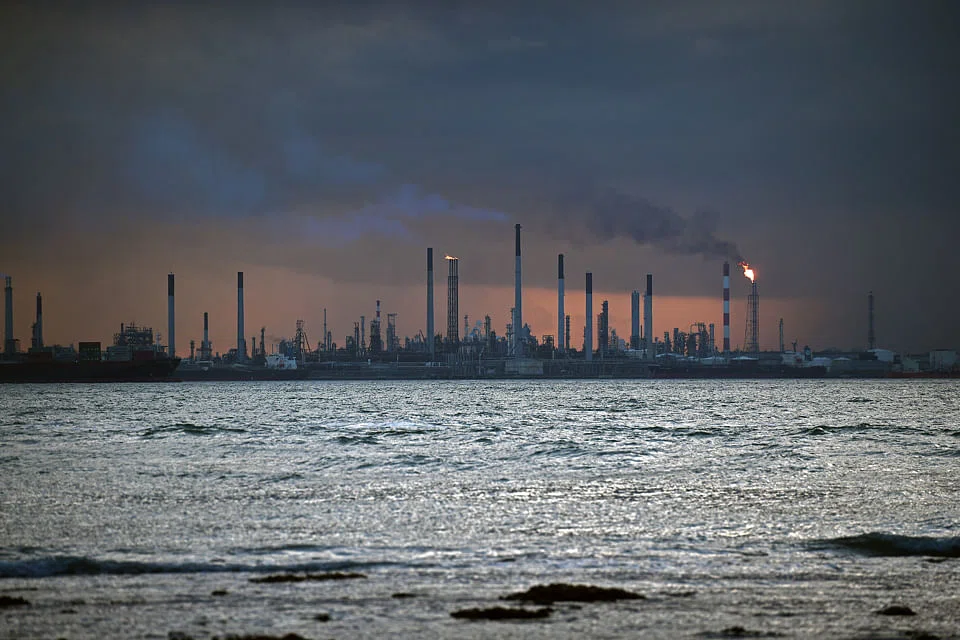
REFINERIES in Singapore have started to cut output and bring forward maintenance shutdowns amid plunging demand as the world remains mired in the Covid-19 pandemic and volatility grips the oil market.
Harrison Cheng, associate director at Control Risks noted that one major refinery brought forward maintenance plans by a month from May to April, reportedly because of declining product margins. Another which supplies aviation fuel to several international airports and airlines across Asia has reportedly reduced its operating rate due to poor refining margins.
Production runs are estimated to have dropped to well below 900,000 barrels per day (bpd) in April due to weaker demand in Asia and poor refining margins, pointed out Kang Wu, head of global demand and Asia analytics at S&P Global Platts. This is 25 per cent lower than pre-Covid-19 levels; in December 2019, Singapore processed a little over 1.2 million bpd of crude oil.
"Singapore refineries face an even tougher situation than refineries in other Asian countries because Singapore is an oil product trading hub and local refineries are major suppliers," he said.
Earlier this month, S&P Global Platts reported market sources saying that Singapore Refining Company in April reduced the operating rate at its 290,000 bpd refinery on Jurong Island due to poor refining margins, as the global novel coronavirus pandemic has slashed oil product demand.
According to a report published by BP Statistical Review of World Energy 2019, the Asia-Pacific region has the largest oil refining capacity in the world, processing 34.75 million bpd. Singapore ranks fifth with a refinery capacity of 1.51 million bpd.
According to the Internation Energy Agency's Oil Market Report, the peak decline for global refining activity has shifted to May, as the April throughput estimate was revised up on new data and higher demand.
"In Q2, global runs are expected to fall by 13.4 million bpd year on year, with 2020 average throughput down by 6.2 million bpd," it stated.
Even as analysts highlight the challenging situation, refineries here say they remain focused on providing energy supplies. A Neste Singapore spokesperson said that its refinery's utilisation has not been impacted and added that it has an upcoming planned shutdown starting in June, mainly for maintenance purposes which will last for about a month.
This planned shutdown was earlier communicated in October 2019 in its Interim Report January to September 2019, where it said it has scheduled the next catalyst change at the Singapore refinery in the second quarter of 2020.
A Shell spokesperson meanwhile said that "like the rest of the energy industry, we are faced with the reduction in demand of fuels and chemical products and are adapting our production to this reality".
Chevron and ExxonMobil spokespersons said they continue to maintain critical operations.
"Two of our (Singapore's) key refined petroleum export markets are Malaysia and Indonesia, so what happens there in terms of demand will also in some way affect how soon the refineries here can recover," noted Control Risks's Mr Cheng.
"The prospects of recovery for Malaysia are a little more positive at the moment, though the movement control order (MCO) imposed since mid-March has seriously affected refiners there due to demand destruction."
Given that the MCO will remain in place until June 9, with the possibility of an extension, interstate travel will remain prohibited and consequently continue to suppress automotive fuel consumption, he added.
Malaysia also has not lifted curbs on international travel even as domestic flights have been allowed to resume since late April, which suggests that it will take time for jet fuel demand to recover more robustly there.
Roger Diwan, vice-president financial services, IHS Markit said globally, oil markets can expect more pain to come in the weeks and months ahead as they face an uphill battle back to "normal".
But adjustments could come in Q2. The balancing process is already underway: shut-ins of supply, managed or unmanaged, have started to materialise in April and May, and 13-15 million bpd of crude production will likely be removed from the supply stack in the next two months while demand is showing some improvement.
"It may be hard to comprehend now. But barring a second wave of the pandemic, nearly all pre-Covid demand could return in the second half of 2021. If that transpires, it could even lead to a market squeeze in the medium-term as supply destruction hinders the ability of supply to keep up with recovering demand," he said.
TRENDING NOW

Looking beyond looming CEO succession, should UOB potentially pursue a transformative merger?

Once staunchly pro-China, Malaysian Chinese businesses are now distancing themselves from Beijing

Family offices ‘kept captive’ by relationship managers turn to independent advisers, direct deals
MAS holds monetary policy settings, pausing after two straight tightenings

