

Sun goes down on Singapore's first solar power firm Sun Electric
Anita Gabriel
Singapore
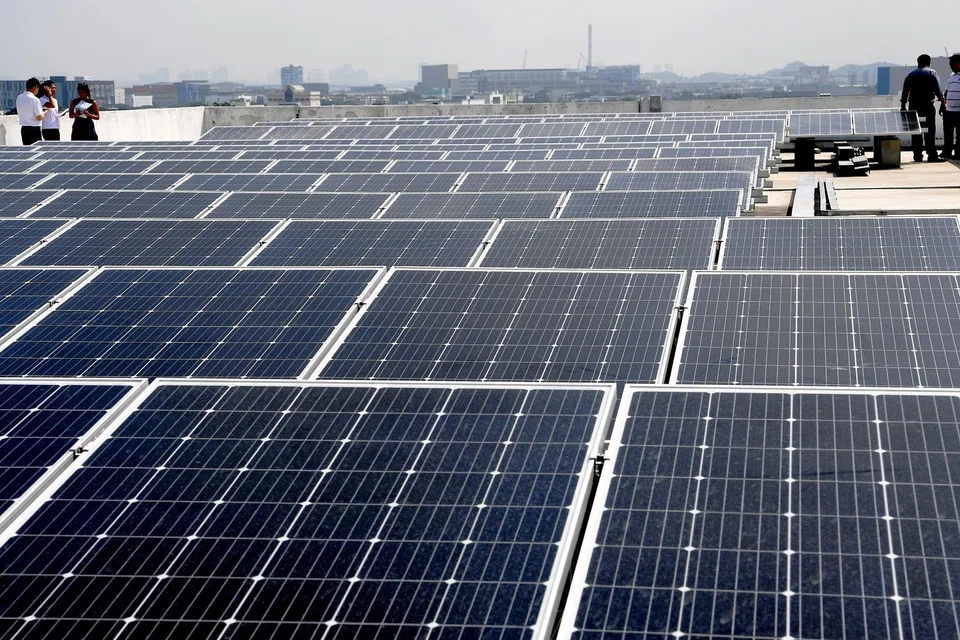
THE sun has set on Singapore's first licensed solar energy retailer Sun Electric Power (SEP).
The electricity retailer for mid-size and large businesses is under liquidation after commodity house RCMA Asia won the bid in court to wind up the firm in September, The Business Times has learnt. (see amendment note)
RCMA pushed to wind up the firm on the basis that SEP was unable to pay some S$7.5 million, which mostly entailed "incentive payments" for assuming SEP's market making role in the electricity futures market, as it was cash flow and balance sheet insolvent, according to court documents.
SEP has filed an appeal against the court order and BT understands that the court granted a conditional stay to SEP at a hearing last week. A search on the Accounting and Corporate Regulatory Authority (Acra) indicated the company's status as "in liquidation".
The imminent collapse of SEP, once deemed an up-and-coming "clean-tech" solar energy company, is the culmination of a winding and protracted legal battle that began in February 2018 when RCMA launched a legal action against the firm to claim the monies owed. Court documents reveal that SEP has a S$1 million counterclaim against RCMA, which is a unit of global commodity house RCMA Group, parent company of iSwitch.
iSwitch is one of Singapore's 12 electricity retailers and, at 14 per cent as at March 2020, commands the third-largest market share under Singapore's liberalisation of the power sector that began two years ago and went full throttle nationwide in May 2019. According to the Energy Market Authority's (EMA) website, 46 per cent and 43 per cent of household and business accounts respectively have switched out of SP Services - the incumbent - to a retailer, as at end-March.
While SEP participated in the April 2018's soft launch of the Open Electricity Market (OEM) in Jurong, it had not been part of the nationwide agenda to open up the sector.
When contacted by BT, the EMA said that SEP had "only contracted household and small business consumers during that period" and that it currently has fewer than 20 household and business consumers. The industry regulator reiterated that there are consumer safeguards should a retailer exit the retail electricity market and hence, consumers' electricity supply will not be disrupted.
"...affected households and small businesses with an AMC (average monthly consumption) of less than 4MWh (megawatt-hour) will be transferred to SP Group to buy electricity at the regulated tariff rate. They can choose to switch to a new retailer of their choice thereafter," the spokesperson elaborated.
SEP's struggles are well known in Singapore's oft-construed small and crowded electricity sector. The solar company is part of the Sun Electric Group that was founded and is led by Canadian and Singapore resident Matthew Peloso. In September, Mr Peloso was held in contempt of court - with penalties - for breaching an injunction order after he withdrew funds from SEP's bank account to extend a loan to a related entity.
When contacted by BT, Mr Peloso said: "The company is strong, and has many customers. The Sun Electric Power Pte Ltd company has applied and obtained the stay and the winding up is under appeal. It can continue to grow."
The group as well as Mr Peloso have been dogged by claims and contractual disputes as far back as 2016. Last year, the court dismissed SEP's bid to place the firm under interim judicial management and judicial management on the basis that such a route was unlikely to better realise SEP's assets versus a winding up.
Then, in December 2019, Agritrade International and private equity firm Hector Capital announced that they acquired a 51 per cent stake in SEP's parent Sun Electric for an undisclosed sum. According to reports, Agritrade, a Singapore commodity trader that was wound up this year after it defaulted on loans and was hit by fraud allegations, was already facing a cash crunch around the time of the SEP investment.
Within a fortnight following that deal, RCMA applied for SEP to be wound up and made EMA a non-party to the application.
RCMA and SEP had inked a pact for the former to assume SEP's market making obligations in exchange for a 70 per cent share of the incentive payments that SEP would get from SP Services. Under the "forward sales contract scheme", SEP, as a market maker, was required to trade electricity futures and, in return, receive incentive payments from SP Services, the national utility.
In his grounds of decision dated Sept 30 for the winding-up order, High Court Justice Tan Siong Thye said SEP's balance sheet "depicted a discouraging state of affairs" with total liabilities, including contingent liabilities, of S$10.4 million dwarfing its total assets of some S$290,000.
Justice Tan also expressed serious doubts over the veracity and reliability of a "one-page balance sheet" that was provided by Mr Peloso that purportedly showed SEP's financial standing as at end-June 2020 and indicated an about-turn to support the company's contention that it was solvent.
There were more grave matters. RCMA cited alleged suspicious circumstances relating to SEP's funds, more specifically the garnishment of an account held with DBS by a UAE firm Kashish Worldwide, which had entered into a trading contract with SEP.
A liquidator, it said, would be able to determine if there had been any fraud by SEP's management and ensure appropriate action to benefit creditors.
Kashish's application to garnish SEP's DBS account in Feb 2019, which it successfully obtained, followed three transfers by Mr Peloso totalling S$6.09 million between November and December 2018 from an OCBC account held by SEP to the DBS one. These transfers ultimately led to the diminishing of the funds despite the injunction, remarked Justice Tan, who also pointed out that Mr Peloso, SEP's sole director, played a significant role in enabling Kashish to garnish the DBS account.
"...I also found disconcerting, the ease with which the funds were garnished from the DBS account. The entire process only took three months...," he said, adding that the circumstances were "highly suspicious". Hence, he added that the "lack of probity in the conduct and management of the company's affairs justified a winding-up."
SEP's woes could once again renew doubts over the survivability of electricity retailers, more so independent retailers, in a small market such as Singapore. But one industry player said: "The collapse of SEP does not have anything to do with the wider industry. This is such unusual circumstances for a small company."
Amendment note: In an earlier version, it was mentioned that SEP is the developer of solar rooftops for Singapore's industrial landlord JTC Corp. The contract with JTC is in fact undertaken by a related entity, Sun Electric Energy Assets Pte Ltd and not SEP. Both companies are under the Sun Electric Group.
TRENDING NOW

If Europe goes to war, the fallout will be felt in East Asia

Philippines’ FDI slowdown exposes uneven investment prospects across S-E Asia
Who are some of the longest-serving CEOs among Singapore’s blue-chip companies?

Debt funding for S-E Asia startups ticks up as it gets tough to raise money via exits, equity

