

Trump says Opec+ planning to cut production by 20 million barrels per day
 Add BT as a preferred source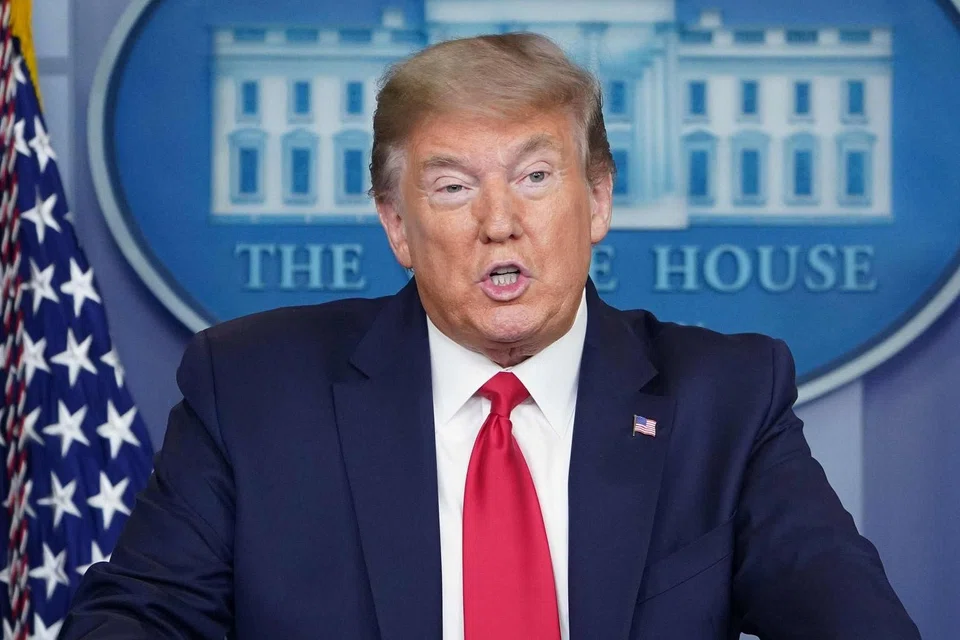
DeeperDive is a beta AI feature. Refer to full articles for the facts.
[WASHINGTON] Top global oil producers are considering slashing output by 20 million barrels a day under the terms of a deal to boost prices, US President Donald Trump said on Monday.
Mr Trump's remarks came after Opec producers and their allies agreed on Sunday to cut production by 9.7 million barrels a day, which some analysts feared would be too little to stem the damage from the combination of plunging demand amid the coronavirus pandemic and a price war between Russia and Saudi Arabia.
"Having been involved in the negotiations, to put it mildly, the number that Opec+ is looking to cut is 20 Million Barrels a day, not the 10 Million that is generally being reported," Mr Trump tweeted.
"Thank you to all of those who worked with me on getting this very big business back on track, in particular Russia and Saudi Arabia."
Yet traders remained nervous about a supply glut, and the US benchmark WTI oil price finished down 1.5 per cent at US$22.41 in New York trading, while Brent ended up 0.8 per cent at US$31.74.
Opec members dominated by Saudi Arabia and other producers led by Russia have been negotiating a deal to cut production and support prices for days.
Navigate Asia in
a new global order
Get the insights delivered to your inbox.
Mexico balked at an agreement on Friday, leading Mr Trump to step in and say the US would help Mexico meet its end of the bargain.
After a Sunday videoconference, the top producers agreed to slash daily production by 9.7 million barrels from May, according to Mexican Energy Minister Rocio Nahle, down from the 10 million barrels a day envisioned earlier.
The agreement between the Vienna-based Organization of the Petroleum Exporting Countries and non-Opec producers foresees deep output cuts in May and June followed by a gradual rise in production until April 2022.
But with demand down by about 25 million barrels per day and North American producers shutting down their rigs because they don't have space to store their crude, Dan Pickering, chief investment officer at Pickering Energy Partners, told AFP the deal's benefits are likely to be seen only later in the year.
"The reality is things are bad. They are going to stay bad for a couple of months," he said.
NOT ENOUGH?
Mr Trump cheered the agreement on Sunday, calling it a "great deal for all" and saying it would "save hundreds of thousands of energy jobs in the United States."
With countries putting their populations under lockdown, the coronavirus pandemic has caused an economic decline and a global demand slump that has sent oil prices to two-decade lows.
Meanwhile, Russia and Saudi Arabia ramped up output in a price war to hold on to market share and undercut US shale producers.
Calling Mr Trump's tweet "aspirational," analyst Andy Lipow said the market reaction to the Opec+ deal has been "muted," as uncertainty remains over the degree to which producers will comply with the cuts.
"Lots of questions... remain, as far as compliance and ultimately how much oil is actually taken off the market," he said. "Any increase in prices over the next few months is going to encourage producers to keep on producing."
Storage tanks have also rapidly filled up, and Mr Lipow said markets are watching major economies like China and India to see whether they will make more purchases for their national reserves to free up capacity.
Trump announced last month the US would buy "large quantities of crude oil" for storage in the Strategic Petroleum Reserve.
Producers have resigned themselves to tough times, with Russian Energy Minister Alexander Novak saying he did not expect oil markets to recover before "end of the year, in the best case," according to Russian news agency TASS.
Saudi Arabia's Energy Minister Prince Abdulaziz bin Salman suggested on Monday further cuts could come when Opec meets in June.
"Flexibility and pragmatism will enable us to continue do more if we have to," he told Bloomberg. "We have to watch what's happening with demand destruction or demand improvement, depending on how things evolve."
AFP
Decoding Asia newsletter: your guide to navigating Asia in a new global order. Sign up here to get Decoding Asia newsletter. Delivered to your inbox. Free.
Share with us your feedback on BT's products and services
TRENDING NOW

Ministry of Home Affairs Permanent Secretary Pang Kin Keong to retire
Shelving S$5 billion office redevelopment plan proved ‘wise’ as geopolitical risks mount: OCBC chairman

Richard Eu on how core values, customers keep Singapore’s TCM chain Eu Yan Sang relevant

China pips the US if Asean is forced to choose, but analysts warn against reading it like a sports result

