

World Bank, IMF push for carbon pricing
New York
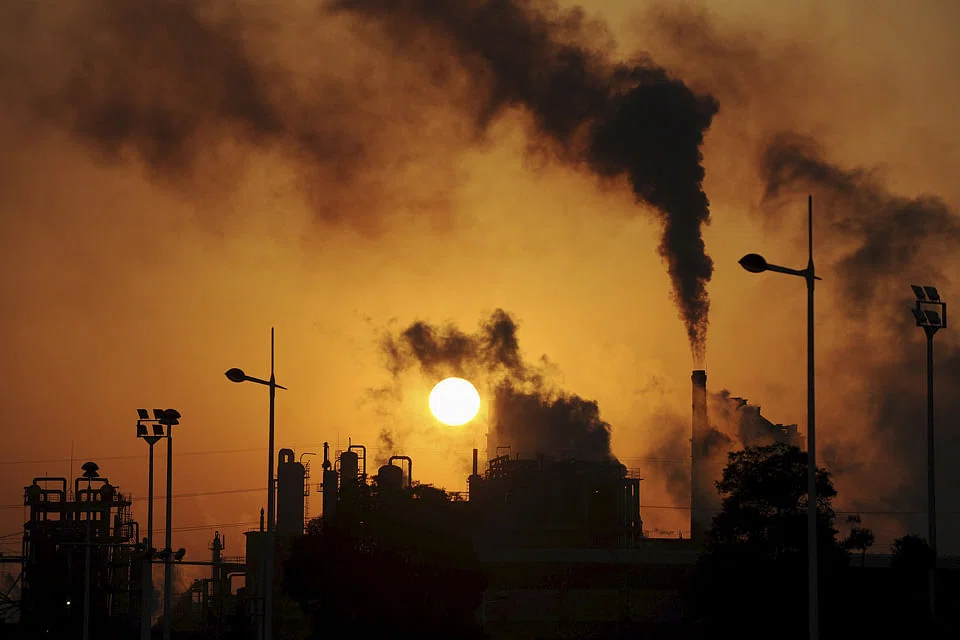
THE World Bank and International Monetary Fund (IMF) are pressing governments to impose a price tag on planet-warming carbon dioxide emissions, using economic leverage and technical assistance that institutions like the United Nations cannot muster.
The campaign by two of the largest international lenders comes as world leaders have begun to sign the Paris agreement on climate change, the UN accord that is supposed to commit nearly every country to take action to reduce emissions of greenhouse gases. The document opened for signatures on Friday and will remain open for a year.
But the leaders of the World Bank, the IMF and other major global institutions said that cutting emissions enough to stave off the worst effects of climate change will not be possible unless all fossil fuel polluters are forced to pay for the carbon dioxide that they emit.
"There is now an overwhelmingly obvious scientific consensus that the more carbon pollution we put into the air, the more impact it has on warming the massive melting of the Arctic, the cycles of droughts and flooding, the die-offs of coral reefs," the World Bank's president, Jim Yong Kim, said in an interview. "And to our economists, who have been studying this for quite some time, there is an equally obvious consensus that putting a price on carbon pollution is by far the most powerful and efficient way to reduce emissions." He added: "We strongly urge people to prepare for the carbon pricing that is to come."
The World Bank's central mission is to alleviate global poverty, and in a twist on that mission, bank leaders have identified climate change as a key driver of poverty. A World Bank report last year concluded that climate change could beggar 100 million more people by 2030.
"We cannot poison the planet and thrive," Mr Kim said at the adoption of the Paris agreement in December.
To press that case, the bank has created a Carbon Finance Unit to give financial and technical assistance to countries that are creating a system to put a price on carbon. This is usually set up as a tax on fossil fuels such as coal and oil or as a "cap-and-trade" system that sets limits on overall carbon emissions then allows companies to buy and sell emission allotments sold by the government.
The bank is already working with 18 countries with emerging economies, including China, which has received an US$8 million grant to develop what is expected to be the world's largest cap-and-trade programme. South Africa and Chile have received similar grants, and World Bank officials are meeting with the governments of Ethiopia, Ivory Coast and Panama to help them create carbon pricing systems.
Under the Paris agreement, all countries submitted plans to reduce their carbon emissions, and they are required to update and strengthen those plans over the coming years. Already, about 90 countries have included some form of carbon pricing in their plans. The World Bank has reviewed those UN plans, hoping eventually to link the systems into a global carbon trading market.
"We've now got carbon pricing on the radar screen in a way it hasn't been before," said John Roome, the senior director for climate change programmes at the World Bank Group. "We're moving from why to how."
The IMF, often seen as the world's lender of last resort, is also consulting and advising countries on how best to introduce carbon pricing, in part as a way for struggling nations to raise more revenue.
"We can't make a loan conditional on carbon pricing, but for a country facing a large deficit, we could recommend that they use carbon pricing as a way to simultaneously meet their pledges in Paris and close their deficit," said Ian Parry, principal environmental fiscal policy expert at the IMF.
Any policy that drives up the cost of fossil fuels can be expected to generate intense opposition. In the United States, voters - especially in the depleted middle class - are leery of the economic pain, and political groups funded by the billionaire brothers Charles and David Koch stand in the way.
"It's frustrating to watch unelected bureaucrats like the World Bank and other institutions try to leverage their power to force elected leaders to take actions that harm their citizens," said Tim Phillips, the president of Americans for Prosperity, a Koch-backed advocacy group.
About 40 countries, including the 28 members of the European Union, along with 23 cities, states and regions around the world, have introduced carbon pricing policies. They cover about 12 per cent of the world's carbon pollution.
Last week, the World Bank, the IMF, the Organisation for Economic Cooperation and Development, and the heads of state of Canada, Chile, Ethiopia, France, Germany and Mexico released a statement calling for more carbon pricing. Their goal is to reach enough countries to cover 25 percent of the world's carbon emissions by 2020 and 50 per cent of emissions by 2030.
"Our government has heard loud and clear that Canadians care about standing up for our environment and our livelihoods," Prime Minister Justin Trudeau of Canada said.
Four of Canada's 13 provinces and territories already have some form of carbon pricing, and Mr Trudeau hopes to enact a national plan. NYT
TRENDING NOW

SoftBank’s Son plans US$50 billion Malaysia tech outlay: Anwar Ibrahim
Singapore expects all parties to honour commitments, says PM Wong after Indonesia cuts gas exports
Gas Supply may pursue remedies if contract breached following Indonesia’s export cuts: Tan See Leng

Why the biggest business decision about AI isn’t which model to choose

