

40% of issuers required to make climate disclosures in FY2024 fully met SGX requirements: review
36% of issuers provided all 11 disclosures recommended under the TCFD framework

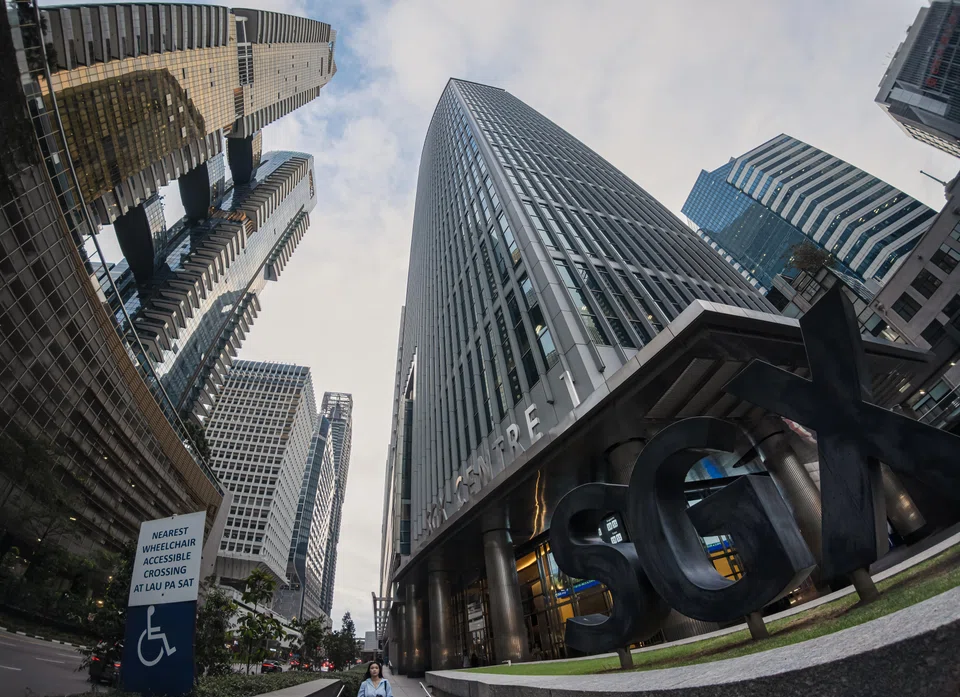
[SINGAPORE] Among listed companies mandated to report climate-related disclosures for their 2024 financial year, about 40 per cent fully met regulatory requirements set by the Singapore Exchange Regulation (SGX RegCo).
This was an improvement from 31 per cent in the previous year, according to a review conducted by SGX RegCo and the National University of Singapore Business School’s Centre for Governance and Sustainability (CGS).
The review, which was released on Tuesday (Apr 7), assessed the state of climate reporting for FY2024 by looking through the sustainability reports of 499 listed companies that were available as at Jul 31 last year.
For this period, a company is considered to have fully satisfied sustainability reporting requirements if it provides all 11 disclosures recommended under a framework developed by the Task Force on Climate-Related Financial Disclosures (TCFD).
Among the 499 companies – which included other issuers that were allowed to opt out of these disclosures with an explanation – about 36 per cent of issuers provided all 11 disclosures, while 62 per cent provided at least 10.
SGX RegCo had previously laid out a phased approach by which different sectors would gradually be made to meet these requirements. Issuers in the finance, energy, transportation, materials and buildings, as well as agriculture, food and forest products industries were mandated to make these disclosures for FY2024.
However, Singapore’s sustainability reporting regime is transitioning to mandatory reporting based on standards issued by the International Sustainability Standards Board (ISSB), starting with Straits Times Index (STI) constituents from FY2025. This means that the first sustainability reports aligned with the new reporting requirements will only be released this year.
Since the TCFD framework forms a major basis of the ISSB standards, CGS director Professor Lawrence Loh told The Business Times that companies that made all 11 recommended TCFD disclosures would be well-placed to align with the new reporting requirements.
Close to 70 per cent of issuers are also already publishing their sustainability reports at the same time as their annual reports, which is part of the new reporting requirements. This indicates a broad alignment with SGX RegCo’s regulatory direction.
SEE ALSO






The review also highlighted that 63 per cent of STI constituents have begun incorporating ISSB standards in their reporting. This compares with 45 per cent of non-STI issuers with a market cap of over S$1 billion, and 15 per cent of non-STI issuers with a market cap of below S$1 billion.
SGX RegCo and the Accounting and Corporate Regulatory Authority previously announced in August last year that they were adopting a phased approach in implementing ISSB reporting requirements, as most companies were not equipped to meet the original timeline.
While STI constituents still had to comply from FY2025, the requirements were pushed back to FY2028 for non-STI constituents with a market cap of S$1 billion and above, and to FY2030 for companies below that market cap.
Prof Loh said that the momentum for ISSB reporting is very strong for STI constituents, while large companies outside the index are also making good progress.
He also noted that the report does not provide a full picture, as the state of sustainability is currently in transition. Still, the interim results indicate that companies’ readiness is generally favourable. “This whole study suggests there is no let up in our momentum for climate transition despite the anti-climate stance in the United States,” he said.
“This transition gels very well with the ongoing Iran energy crisis. It gets our companies prepared for the climate transition – to reduce emissions, to reduce reliance especially on fossil fuels. Our progress aligns with the challenges from the Middle East crisis,” he added.
Across all 499 issuers, the average number of TCFD disclosures provided increased to nine, up from eight in 2024. This suggests improvement in reporting capability across the market.
Among the four pillars under the TCFD framework – governance, strategy, risk management, as well as metrics and targets – the review found that recommendations under governance (98 per cent) and metrics and targets (98 per cent) were the most widely disclosed, similar to last year’s review.
“This suggests that establishing robust governance structures and defining meaningful, trackable metrics and targets are typically the initial steps issuers take to strengthen their climate reporting practices. These elements form the foundation for improved management oversight and more effective strategic planning,” read the report.
The strategy pillar is the next most widely disclosed at 92 per cent, and showed the greatest year-on-year improvement from 78 per cent in the previous review.
“This growth suggests that more issuers are moving beyond governance and metrics to embedding climate-related considerations into their strategic planning and providing more decision-useful information to stakeholders,” the report said.
“By integrating climate-related issues into their strategies, issuers are better positioned to mitigate risks and identify opportunities that drive long-term value creation.”
Decoding Asia newsletter: your guide to navigating Asia in a new global order. Sign up here to get Decoding Asia newsletter. Delivered to your inbox. Free.
Copyright SPH Media. All rights reserved.






