Adaptation financing to gain momentum in 2026: sustainability analysts
This follows call from UN to treble such financing by 2035

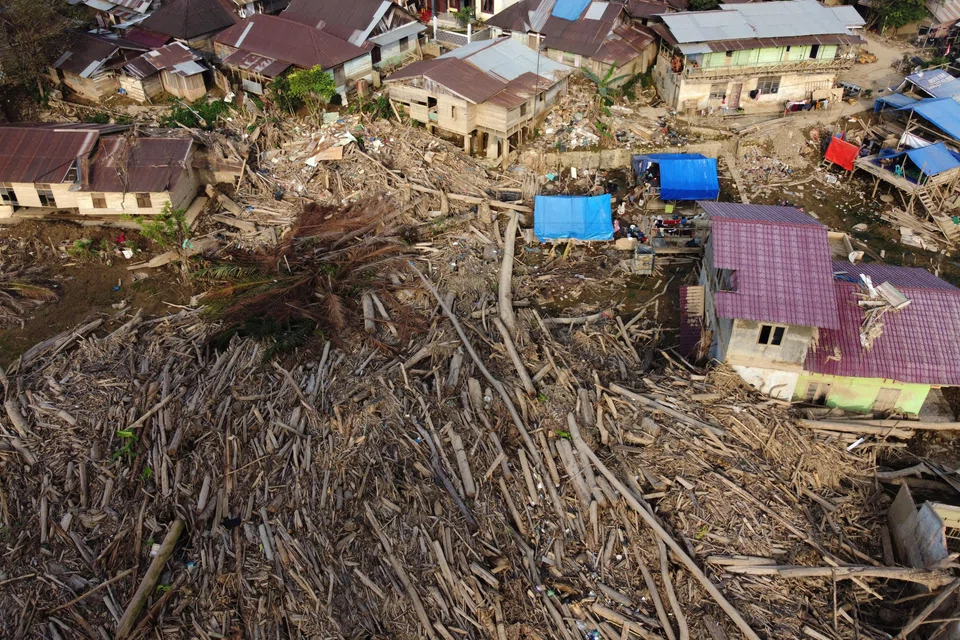
[SINGAPORE] With the physical risks of climate change becoming more apparent, sustainability professionals are expecting a greater focus on adaptation financing in 2026.
This comes amid projections that these physical risks are likely to intensify. The United Nations Climate Change Conference last year, or COP30, had also concluded with a call to treble adaptation finance to US$120 billion by 2035, alongside the adoption of indicators to measure countries’ progress.
This provides measurable metrics for climate adaptation, and provides a framework for governments and businesses to integrate adaptation into national plans and private investment strategies, said Sharad Somani, partner and head of ESG (environmental, social and governance) consulting at KPMG.
“Finance commitments to treble adaptation finance by 2035 also signal strong momentum for funding resilience-focused projects. As a result, we anticipate a greater need for governments and the private sector to structure more adaptation projects and tap into diverse finance options to meet growing demand,” he added.
Climate adaptation refers to measures aimed at helping society prepare better for, and reduce vulnerabilities to, climate impacts, such as investing in flood protection or heat-resistant buildings.
Often seen as the poorer cousin of climate mitigation, adaptation measures are often underinvested as governments and private investors tend to focus more on designing policy and deploying capital towards reducing greenhouse gas emissions.
Climate adaptation
The greater focus on adaptation could mean that companies which already have a good understanding of their climate-related risks and opportunities may now widen their scope to start managing their exposure to nature, as well as their reliance on it, said Fang Eu-Lin, sustainability and climate change practice leader at PwC Singapore.
Having greater awareness of nature means that companies would have a more comprehensive view of their sustainability-related risks and opportunities. This could help them frame more effective corporate responses to maintain and enhance enterprise value.
“Climate and nature are closely related, and understanding the latter can help inform one’s understanding of suitable climate-adaptation solutions that can enhance business resilience,” noted Fang.
Nonetheless, scaling adaptation financing remains challenging. The underinvestment is often the result of a lack of commercial financial models.
“Adaptation investments can be longer-tailed, and often involve potentially avoided losses; so the business case may not always be clear. However, applying suitable blended financing structures may help to reduce those risks and scale adaptation investments,” added Fang.
Somani noted that, besides adaptation financing, companies could also be seeking competitive advantages by strengthening their supply chains and infrastructure for climate resilience.
Building up cross-domain talent in sustainability reporting, and using artificial intelligence (AI) for sustainability solutions could also be other areas that companies may focus on this year.
Making real progress on several areas of sustainability is expected to continue in 2026. These include aggressively cutting emissions; financing the transition; disclosing impacts transparently; protecting nature; and ensuring that the transition is equitable, said Praveen Tekchandani, Asean co-leader and Singapore leader for climate change and sustainability services at EY.
“These priorities reflect both the lessons of 2025 – a year of mixed climate progress and new challenges – and the region’s longer-term sustainability commitments,” he added.
Sustainability investing to persist
Despite the several challenges that stood in the way of climate action in 2025, particularly the roll-back of climate policies in the United States as well the imposition of tariffs, Tekchandani expects investor interest in sustainable assets and corporate decarbonisation in Asia to hold in 2026.
“Most governments in Asean have maintained or even increased their climate ambitions, sending a clear message that the transition is irreversible,” he pointed out.
Investors would continue to consider climate resilience in their investments – focusing on companies that have succeeded in decarbonisation, and demanding greater accountability to ensure that their investment is effective.
Companies also recognise that long-term value and market access is increasingly dependent on aligning their business models with global climate goals – whether it is to satisfy customers, comply with trading-partner regulations, or reduce climate risks to operations.
In addition to the pullback in climate action, the rapid adoption of AI and the need for critical minerals have led many companies and policymakers to re-prioritise their sustainability initiatives and investments, said Somani.
However, organisations that still recognise ESG risk as integral to enterprise risk management will continue to embed best practices in sustainability across their value chain. This safeguards long-term profitability and competitiveness through risk mitigation, supply-chain resilience and value creation.
Forward-looking entities will also use the year to strengthen their ESG data quality and reporting capabilities.
“These early investments will position businesses to meet future compliance requirements, manage stakeholder expectations, and proactively address emerging challenges,” Somani added.
Nonetheless, Fang noted that factors such as reduced or delayed climate policy, such as the reduction of carbon taxes, may hold back some firms from implementing their decarbonisation strategies. This may lower the pressure on high-emitting companies to cut back their emissions, and may even enhance the relative appeal of fossil fuels.
“Should there be more ambiguity around subsidies or incentives related to decarbonisation, this could affect the number of climate-related and decarbonisation solutions moving from concept to implementation,” she said.
She added that the roll-back or delay of sustainability-reporting requirements would limit the availability of sustainability-related information and have an impact on investment decisions, as investors typically rely on such data to inform how they allocate their capital.
Singapore announced last year that it would delay the sustainability-reporting requirements for small and medium-sized listed companies by five years. While the carbon tax rate would increase to S$45 per tonne of carbon dioxide equivalent this year from S$25, the government is also providing allowances for certain high-emitting companies that compete globally.
Sustainability analysts said that it was critical that policymakers focus on ensuring that long-term climate goals are on track, even as they address short-term energy security and economic needs.
Somani said that embracing new technologies, improving energy efficiency and strengthening supply-chain resilience, while planning for contingencies and incorporating redundancies, will be essential for long-term sustainability.
And governments can deploy a mix of fiscal and policy tools, including tax incentives, subsidies and blended finance, to encourage companies to adopt these strategies in a calibrated manner, he added.
Tekchandani noted that maintaining clear climate commitments and avoiding policy reversals would give businesses and investors confidence in the direction of travel. Implementing supportive regulations and incentives that drive the low-carbon transition would be key to the longer-term development of a sustainable economy, he added.