AI-driven oceantech is the most investable path in ocean financing: Mark Dalio

The OceanX founder and co-CEO believes such investments might bring about outsize economic and environmental impact

Summarise
Janice Lim
Published Mon, Jan 5, 2026 · 07:00 AM
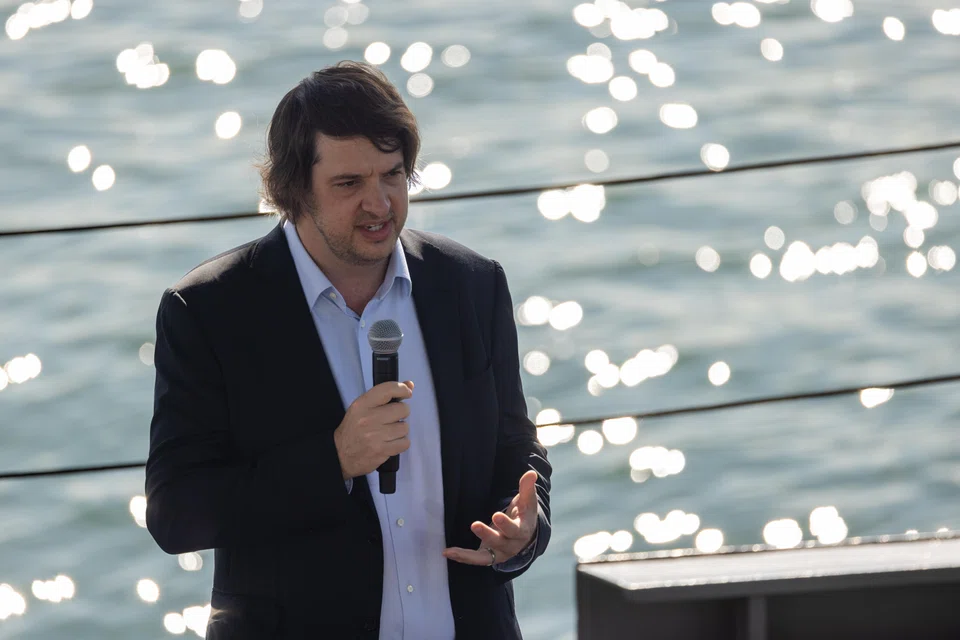
    • Mark Dalio, founder and co-CEO of OceanX, sees investing in technologies that support better data collection, processing and synthesising as opportunities that are easier to get traction on.
    • Mark Dalio, founder and co-CEO of OceanX, sees investing in technologies that support better data collection, processing and synthesising as opportunities that are easier to get traction on. PHOTO: OCEANX

    [SINGAPORE] The Earth’s oceans are severely underfunded across every domain – be it aquaculture, maritime transportation, ocean conservation or coastal and marine tourism.

    But if Mark Dalio, the founder and co-chief executive officer of the non-profit ocean exploration initiative OceanX, could prioritise one area of investment, it would be investing in technologies that improve how ocean data is collected, processed and synthesised – particularly through the use of artificial intelligence (AI).

    He believes such investments might bring about outsize economic and environmental impact.

    “The big thing that the oceans need is how to collect better data,” said Dalio in an interview with The Business Times. “That’s the tooling, that’s the data collection process, and then how to synthesise that data.

    “If that was world-leading, there’s so many knock-down effects, and there’s so many innovative things that would come out of that.”

    While many aspects of ocean financing are currently not commercially viable or are difficult to scale, Dalio sees investing in technologies that support better data collection, processing and synthesising as opportunities that are easier to get traction on.

    These include backing startups or incubators working on innovative technologies, such as deploying autonomous vehicles underwater to support large-scale data collection.

    Or it could also be through AI applications in oceantech, as it helps lower barriers for scientists managing and interpreting vast amounts of ocean data.

    Despite growing interest in AI in most sectors of the economy, the ocean sector remains an afterthought for many investors and technology developers, said Dalio.

    “To some degree, the researchers and the ocean scientific community have always been getting almost like the last bit of talent,” he said. “There are talented people there, but it’s almost like the last thought of to get involved in from an AI and data perspective.”

    He added: “I think AI could be applied in many different areas with regard to the oceans, that could actually spawn a whole bunch of interesting, innovative tech companies.”

    Dalio acknowledged that investments in oceantech would not channel large volumes of capital into the oceans on their own, but said they could still help young companies grow and scale – and potentially branch out into adjacent technologies over time.

    Besides oceans being largely “out of sight, out of mind” for most people, one of the greatest obstacles to more capital flowing towards oceans is the lack of data and knowledge.

    More raw data is required to help power the development of the blue economy sector, including blue carbon credits, which refer to credits generated from the sequestration or storing of carbon in marine ecosystems, said Dalio.

    He added that once the market infrastructure for the blue economy and blue carbon credits is set up, financing will begin to flow, driven by demand for these credits.

    This is especially crucial for South-east Asia as a region with a pressing need for sustainable financing, and significant potential to generate blue carbon credits given its rich marine ecosystem.

    Beyond catalysing innovation, better ocean data could also support better policymaking.

    While OceanX is not a policy organisation, Dalio noted that the data it collects can help governments formulate policies that support long-term ocean health. Its vessel, a non-profit initiative of Dalio Philanthropies, is currently conducting a multi-year scientific mission in South-east Asia.

    “The data that we collect can help inform the countries on decision-making and policy, in order to make sure that the (ocean’s) health continues to grow, which then means that there are a number of economic drivers that are attached to that,” he said, citing as an example the fishery industry.

    Another example is mangrove conservation in Indonesia.

    “If we can unlock these credits for them, and if we can unlock these financing mechanisms, then it will be a huge economic driver for them that will then allow them, in countries like that, to encourage them to make reproductive areas, to conserve portions of their oceans and their environment,” said Dalio.

    He noted that as a region with one of the most biodiverse waters in the world, the most unexplored, as well as the most vulnerable to the impacts of climate change, South-east Asia can support innovation and startups on oceantech solutions that other parts of the world might not be able to.

    “I think there’s still a lot of growth opportunities, a lot of expansion, and with the right collaborations between countries in Asean,” he said.

    He added that there is also potentially room for “collaborations between Europe or US or South America or Middle East… that can almost bring people together in a way that can have bigger ways of giving back to the oceans”.

    “The oceans don’t have any boundaries. The animals don’t know the boundaries. They go between countries all the time,” Dalio concluded.

    “We need to hopefully bring countries together in Asean to collaborate, to learn from each other, and to steward the health of the oceans. If we do that in the oceans… hopefully that then spills out to more collaborations across the region.”