

Airlines’ carbon offsetting scheme is at least a US$1.6 billion opportunity for Asean: report
The opportunity set could go up to US$8.5 billion

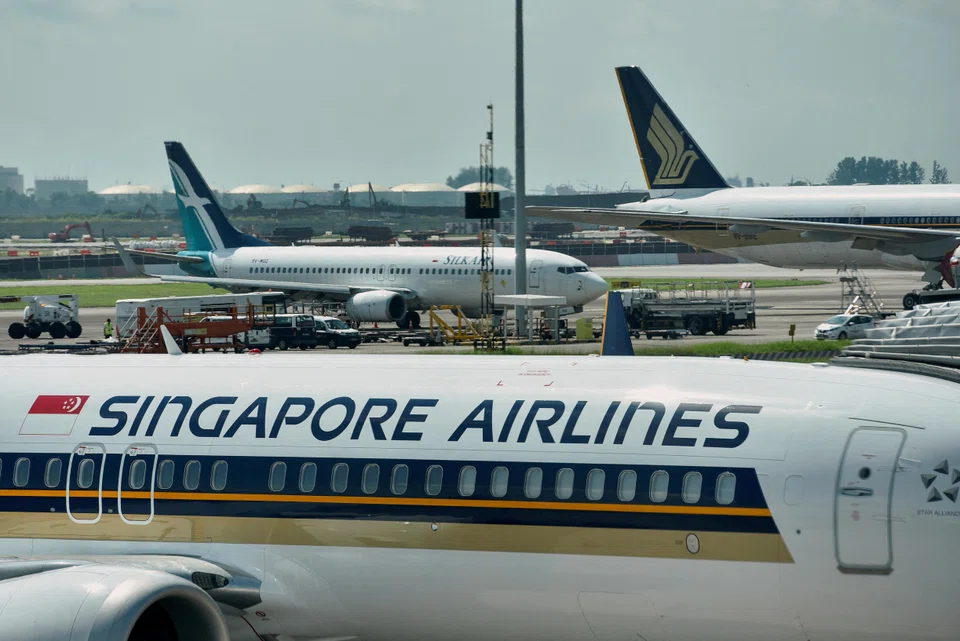
[SINGAPORE] An international carbon offsetting scheme for the aviation sector could provide at least US$1.6 billion in economic value for Asean over the next decade, a report released on Wednesday (Jul 1) showed.
The opportunity set could go up to US$8.5 billion, assuming all carbon projects in the pipeline meet the standards set out by the International Civil Aviation Organization and get the necessary government authorisations.
The report was authored by aircraft manufacturer Boeing, Temasek-backed decarbonisation investment platform GenZero and carbon procurement platform Abatable.
Regulatory requirements for airlines to offset emissions under the Carbon Offsetting and Reduction Scheme for International Aviation (Corsia) are set to get more stringent.
Global demand for these credits is therefore expected to rise sharply, especially as airlines will soon be subjected to the second phase of Corsia’s compliance period.
Under the first phase, airlines from member countries that voluntarily participated in the scheme have to offset 85 per cent of their emissions growth for the years 2024 to 2026 from their 2019 levels. They must do so by January 2028.
The second phase mandates that all airlines offset their emissions for the years between 2027 and 2035.
The opportunity set
On the supply side, the report noted that Asean has a significant opportunity to be a supplier of Corsia-eligible credits.
Carbon projects at three different stages were examined to determine the opportunity size for the region.
SEE ALSO

The first stage includes carbon projects that are already generating Corsia-eligible credits. This means that the credits not only meet Corsia’s requirements, but also have a letter of authorisation by the host country that allows these credits to be used by airlines to offset their emissions.
The authorisation is required under Article 6 of the Paris Agreement – the chapter governing international carbon trading rules – which stipulates that the country selling the credits will have to increase its reported emissions by the amount it has transferred to the country that bought the credits, to avoid double counting.
There are 57 projects globally that have issued 36.6 million Corsia-eligible credits, with four projects in South-east Asia: two in Laos, and two in Cambodia.
These form the second-largest source of supply at 2.6 million credits, or 7.1 per cent of the global total, as at June.
A single project in Guyana accounts for 68 per cent of the global supply.
Credits that have been issued from the South-east Asia projects during the first phase are estimated to have an economic value of between US$26 million and US$59 million, based on market prices. Yet, they account for just 1.3 per cent of expected demand, the report noted.
The four projects are expected to issue an additional six million to 20 million Corsia-eligible credits by the end of the second phase, bringing additional value of between US$63 million and US$460 million.
The second group of projects includes those that have met Corsia requirements, but do not have the authorisation yet for their credits to be Corsia-eligible.
Such credits are typically sold in the voluntary carbon market as they do not come with corresponding adjustments.
The report showed that there are 1,435 such projects, which have issued a total of 338 million credits thus far.
Among them, 54 projects in Asean have collectively issued 18.2 million credits in eight countries: Cambodia, Laos, Malaysia, Myanmar, the Philippines, Singapore, Thailand and Vietnam.
Assuming these credits had been authorised to be Corsia-eligible, the economic value of these projects would be an estimated US$182 million to US$419 million.
The 54 projects could generate an additional five million to 26 million Corsia-eligible credits by 2035 for the second phase, which could drive further economic value of between US$50 million and US$598 million.
The third group comprises carbon projects that are still in the pipeline.
Asean hosts 100 of such projects, the report noted, adding that these have met Corsia requirements in principle, but have not issued credits that have been verified. Still, they could do so over the next decade and be used by airlines to meet their compliance needs.
These 100 projects could issue between 133 million and 302 million Crosia-eligible credits by 2035 and generate between US$1.3 billion and US$7 billion of economic value.
Taking into account the lower-bound and higher-bound estimates on credit prices and volumes of current and forecast supply, the economic opportunity from these three types of carbon projects could together generate between US$1.6 billion and US$8.5 billion for Asean by 2035.
Higher demand
Global demand for Corsia-eligible credits is expected to come in between 201 million and 219 million credits during the first phase, before rising sharply to between 1.25 billion and 1.8 billion in the second phase.
Airlines from the Asia-Pacific joining the scheme in the second phase are expected to add significant demand, making the region the second-largest source of demand for Corsia-eligible credits, behind Europe.
Demand from Asean airlines is concentrated in three countries: Singapore, Thailand and Indonesia.
Together, they are estimated to account for more than 95 per cent of the region’s Corsia offset requirements in both phases.
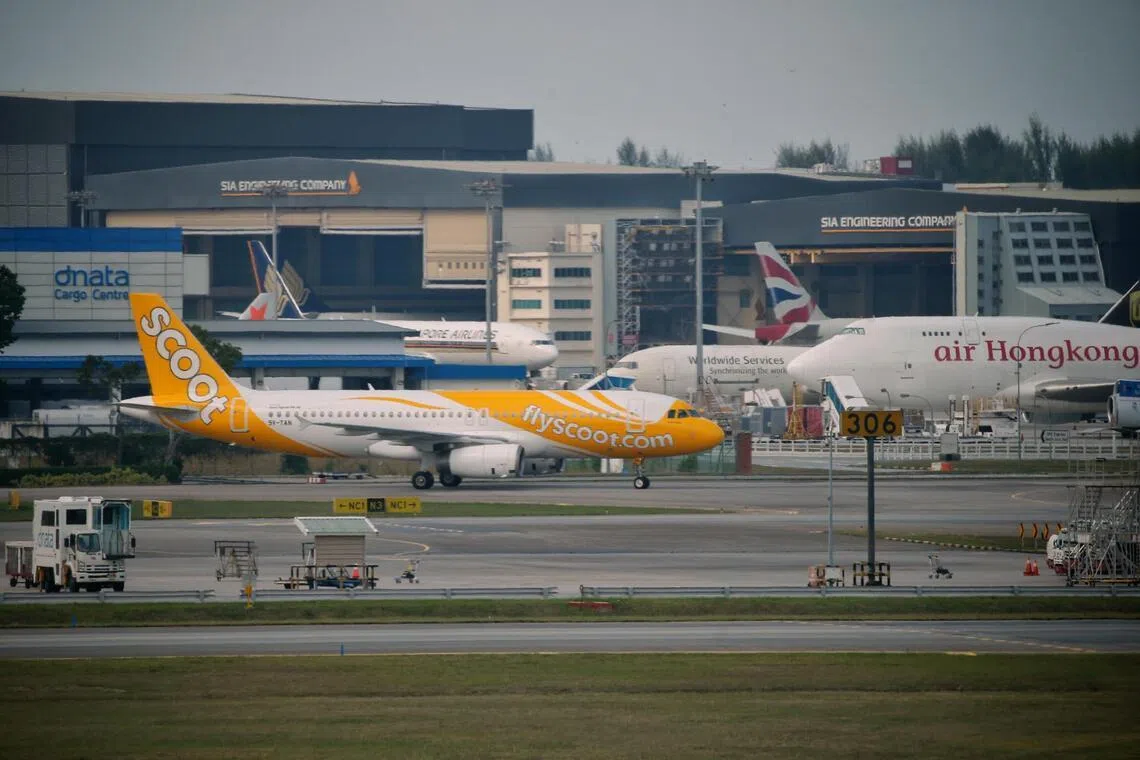
Just four airlines – Singapore Airlines, Thai Airways, Scoot, and Garuda Indonesia – make up around 75 per cent of expected demand from Asean-based carriers in the two phases.
The report flagged the authorisation of carbon credits by host countries to be used to meet Corsia’s compliance requirements as a major factor limiting additional Corsia-eligible credits from becoming available.
Within Asean, just 2.6 million credits are Corsia-eligible. In contrast, the expected demand from Asean airlines during Corsia’s first phase is up to 18 million credits.
Decoding Asia newsletter: your guide to navigating Asia in a new global order. Sign up here to get Decoding Asia newsletter. Delivered to your inbox. Free.
Copyright SPH Media. All rights reserved.
TRENDING NOW

Once staunchly pro-China, Malaysian Chinese businesses are now distancing themselves from Beijing

Looking beyond looming CEO succession, should UOB potentially pursue a transformative merger?

Could stablecoins be the future of money?

Grab CEO’s wife Chloe Tong on life with Anthony Tan and finding her purpose

