



Asean’s tourism sector could contribute to region’s sustainable aviation fuel development, says Airbus
This is relevant for the region, considering that a few countries have consistently been ranked among the top global travel destinations
 Add BT as a preferred source
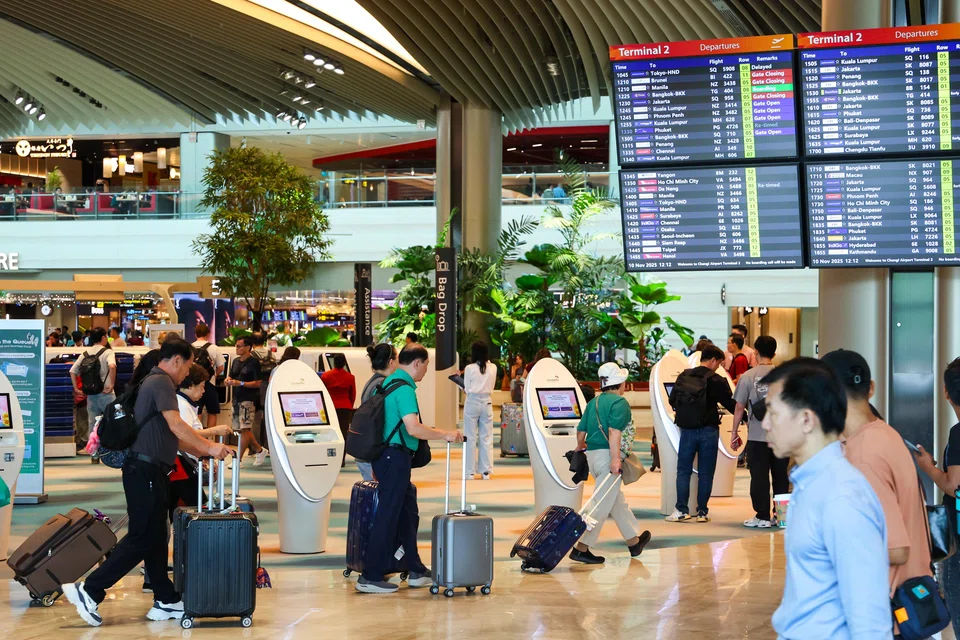
[SINGAPORE] Discussions about the challenge of scaling the deployment of sustainable aviation fuel cost-effectively have often been centred on the aviation sector. But a critical voice missing from this conversation is actually the tourism industry.
It is “the big, very quiet guy in the room that is not saying anything about decarbonisation in air travel”, said Julien Manhes, head of sustainable aviation fuels and carbon dioxide removal at aircraft manufacturer Airbus.
Business travel also makes up a sizeable albeit minor portion of air travel. But within this space, corporates, especially those from Europe, have started participating in voluntary sustainable aviation fuel programmes as an avenue to reduce their Scope 3 emissions. Such companies pay a higher price for flights that partially run on this fuel; the higher fare is a means of sharing the costs of the greener fuel with the airline.
Tourism sector’s role
Including the tourism sector in the discussions over sustainable aviation fuel is especially relevant for South-east Asia, considering that a few countries in the region have consistently been ranked among the top travel destinations globally.
With countries such as Thailand and Malaysia getting more than 30 million visitors a year, having their tourism sectors contribute to the development of a local industry based on this fuel would lead to a virtuous circle.
“Your tourism gets cleaner, and it is also paying for the country to become energy-independent, because you’re using your local resources to build for an energy system that you don’t have today, because you’re relying on crude oil,” said Manhes.
“When you look at the bigger picture, you see that every sector is working in its silo. Sustainable aviation fuel can be very transversal, because you can apply (it in) the tourism industry, the transport industry, the agriculture industry and energy industry,” he added.
He noted that, ultimately, it is in the interest of governments to enact policies and regulations to build up its own fuel industry and scale its deployment.
Enabling policies
Sustainable aviation fuel has been touted as one of the critical solutions for the eventual decarbonisation of the aviation sector. The International Civil Aviation Organization (ICAO) has committed a long-term aspirational goal for the sector, to achieve net zero by 2050. It currently accounts for about 3 per cent of global carbon emissions.
SEE ALSO
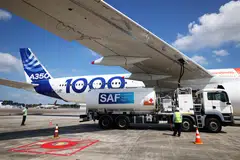

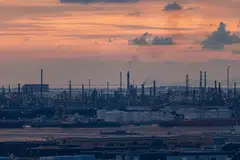
However, the use of such fuel by airlines has remained nascent, as costs remain prohibitive.
According to Manhes, sustainable aviation fuel, which is made by processing waste oils, fats and agricultural residues, is currently still about three times more expensive than conventional jet fuel on average, though the price difference varies across the different markets.
In addition to high costs, the lack of a benchmark pricing, limited supply due to few dedicated production facilities, and undeveloped logistical infrastructure for the transportation and storage of the greener fuel have hampered demand.
“It’s not a question of a feedstock availability. There is feedstock availability, there is production capability. We need demand policies to prime the pump,” pointed out Manhes.

Singapore has taken the first steps in creating demand by mandating that outbound passenger and cargo flights from the aviation hub will have to pay a levy amount that is based on the volume of sustainable aviation fuel needed to meet its 1 per cent target usage and the premium over regular jet fuel. This requirement will come into effect from October this year.
The city-state also announced that its procurement agency – known as the Singapore Sustainable Aviation Fuel Company – will carry out the first test of its national procurement system this year in a trial with nine companies.
To build a regional market for sustainable aviation fuel in South-east Asia, it would be ideal if other countries in Asean could also move at a similar pace as Singapore to activate demand, noted Manhes.
The region already has a distinct advantage in that it is abundant in the feedstock resources that go into manufacturing the greener fuel.
“The other (countries) shouldn’t be lagging behind too much. So there shouldn’t be an outlier one way or another. So what I’m describing here is a sort of a liquid market, where everybody’s working with the same rules,” he said.
In addition, there is a need to harmonise sustainability standards across the region. Ideally, markets should adopt the standards set by ICAO, known as Corsia, which stands for Carbon Offsetting and Reduction Scheme for International Aviation.
“If you want to make a liquid market, then you need to facilitate transfer of fuel between those countries,” he added.
Developing such a market would also enable the use of a book-and-claim system, allowing fuel produced in Malaysia, for example, to be claimed by airline customers in Singapore.
Working with the region
As an aircraft manufacturer targeting for all its aircraft to run on 100 per cent sustainable aviation fuel by 2030, Airbus is collaborating with companies to boost both the supply and demand of the fuel, said Manhes.
Airbus and Australian national carrier Qantas have invested in a company that will develop Australia’s first sustainable aviation fuel facility.
Manhes added that Airbus is also working with other sustainable aviation fuel producers in the wider Asia-Pacific region that are looking to develop new technologies or new feedstocks.
On the demand side, it has established a voluntary programme for the more environmentally friendly fuel with French airline Air France and is having similar conversations with Asian carriers.
“It’s always a matter of chicken and egg. But... ticket distributors, they see demand. They get people from small and medium-sized enterprises, big corporates, calling and saying, ‘Hey, how can I reduce my CO2 footprint?’”
Decoding Asia newsletter: your guide to navigating Asia in a new global order. Sign up here to get Decoding Asia newsletter. Delivered to your inbox. Free.
Copyright SPH Media. All rights reserved.
TRENDING NOW

Singapore Kitchen CEO, senior manager charged with alleged fraud, falsifying accounts; both to stay in jobs for now
Profit with purpose: Kim Choo Kueh Chang’s pivot from public listing to protecting heritage
HSBC, AIA, Prudential shares slide after report of Hong Kong bank account curbs

How the ultra-rich buy property

