



Asian companies to face annual costs of US$336 billion from climate risks by 2030: report
Only 20% of these companies have estimated the financial implications of physical climate risk
 Add BT as a preferred source
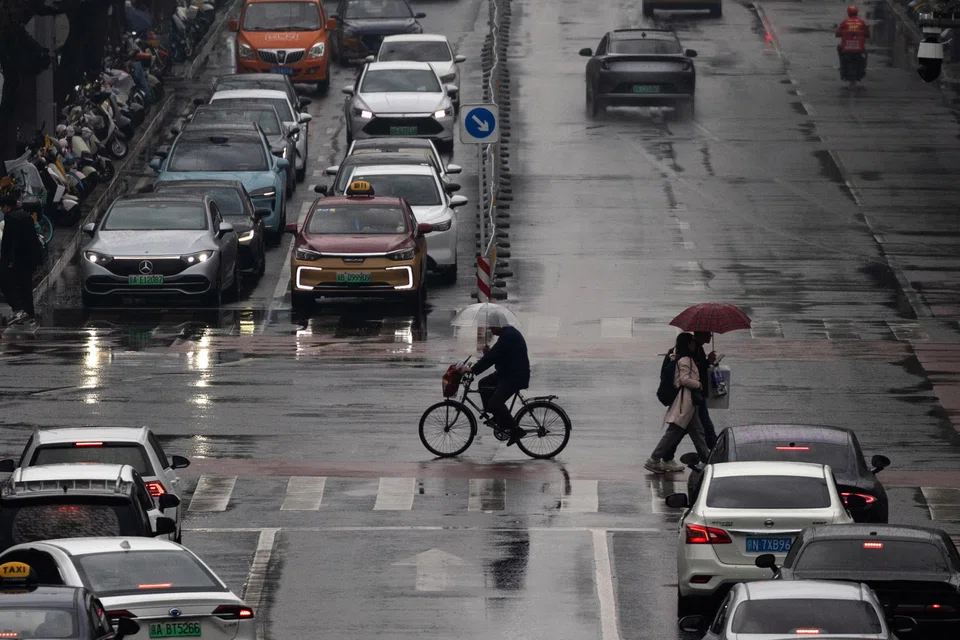
[SINGAPORE] Companies listed in Asia are projected to face US$336 billion in annual costs arising from physical climate risks by 2030. That figure is expected to rise to US$477 billion by 2050, indicated a report on Monday (May 18) by the impact investing platform Centre for Impact Investing and Practices, an impact investing platform under Temasek Trust.
However, only 20 per cent of these companies have estimated the financial implications of physical climate risk, noted the report which was released at a conference organised by Temasek Trust, the philanthropic arm of Singapore investment company Temasek.
The report, which focused on climate adaptation and resilience in Asia, also noted that the region will account for 75 per cent of the global adaptation financing gap by 2030.
It estimates that the annual funding required for climate adaptation is about US$205 billion until 2030. However, current flows stand at just some US$19 billion.
While most financing for climate adaptation are from governments, about 15 to 20 per cent of these financing needs can be met by the private sector, noted the report.
The huge amount of needs requires prioritising solutions that addresses Asia’s most material and recurring climate risks, and are also investable.
The report identified about 250 priority solutions across nine sectors, including infrastructure, energy, agriculture, water and health.
Separately, McKinsey also released another report on Tuesday on the same topic on climate adaptation in South-east Asia.
It noted that the region faces a US$25 billion shortfall in funding needed for climate adaptation measures to reach developed-market standards.
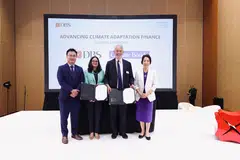

The report estimates that South-east Asia spends about US$12 billion each year on the 20 adaptation measures assessed in the study. The measures include mangroves, air conditioning, flood proofing, irrigation and early warning systems.
Of this sum, about US$8.6 billion goes towards heat protection, while US$2.2 billion is for flood protection.
However, to adapt to standards typically established in developed economies exposed to extreme weather events today, the region would require total annual spending of about US$37 billion.
Assuming a trajectory where global warming goes up by 2 deg Celsius by 2050, the investment needed goes up to US$84 billion a year as the impacts of climate hazards will be more extensive.
Under such a scenario, maintaining the present levels of protection will require annual spending to rise to US$28 billion, from the current US$12 billion.
Economic growth across the region could increase the capacity for adaptation, as more people would be able to afford air conditioning and richer cities would build more robust flood protection.
But the report stated that economic growth alone is likely to be insufficient as only about 46 per cent of future investment needs until 2050 would be covered. This is even if adaptation spending grows in line with gross domestic product.
“Economic development can support adaptation through improving the ability to finance resilience. Embedding resilience considerations into development actions could ensure that infrastructure, housing and physical assets continue to function effectively in a future climate,” said the report.
“But failing to adapt could limit growth, by not safeguarding productivity and not protecting vulnerable communities and industrial assets that are increasingly exposed to climate hazards,” it added.
Decoding Asia newsletter: your guide to navigating Asia in a new global order. Sign up here to get Decoding Asia newsletter. Delivered to your inbox. Free.
Copyright SPH Media. All rights reserved.
TRENDING NOW
Singapore private housing is ‘decoupling’ from HDB market as buyer pools diverge: NUS survey

Simba’s 5G spectrum hurdle may accelerate Singapore’s telco market reset

Yen hits 40-year low in historic slide that’s rattled Japan

Malaysian tycoon Vincent Tan’s sell-downs point to pruning rather than an exit plan

