



Blending developed and emerging-market assets draws more private capital to South-east Asia’s energy transition
This is what Clifford Capital has found after seven years of issuing infrastructure asset-backed securities

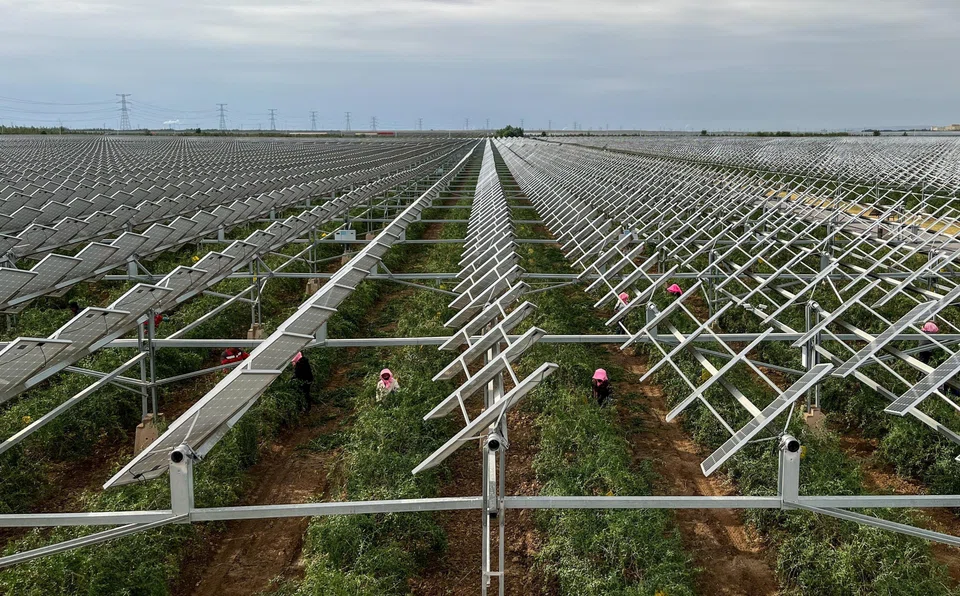
[SINGAPORE] Bundling infrastructure assets from developed markets with those of emerging markets has been able to attract more private investors towards funding the low-carbon transition in South-east Asia, said Clifford Capital’s group chief executive officer Murli Maiya.
This was what the infrastructure credit platform, which is partially owned by Singapore investment company Temasek, found after seven years of issuing infrastructure asset-backed securities (IABS).
“What we’ve discovered is that the way to try and get more capital flowing into this part of the world is by mixing it with more capital that funds assets in other parts of the world that are more developed. So the combination of those two is allowing us to actually scale up a lot,” said Maiya in an interview with The Business Times.
“So we’ve actually proven that it’s possible to bring institutional capital into infrastructure in emerging markets at scales that people haven’t actually looked at before,” he added.
Scaling financial innovation
Though not a new instrument, IABS is gaining traction as one of several financing instruments that can channel institutional capital into the energy transition happening across emerging Asia, including South-east Asia.
IABS is structured by securitising a mix of infrastructure loans. The first one was issued in 2018 with a pre-assembled portfolio worth US$458 million by Clifford Capital’s subsidiary Bayfront Infrastructure Capital.
Besides consisting of loans predominantly originating from emerging markets, the infrastructure projects were also mainly fossil fuel-based.
Today, the niche but growing financial product is increasingly blended with assets from both developed and emerging markets. Clifford Capital has sold more than US$1.4 billion of the fixed-income instrument in 2025, of which about 30 per cent are developed market assets while capital flowing to emerging market assets is about US$1 billion.
The platform is the largest issuer of infrastructure collateralised loan obligations as at November 2025.
Sustainable infrastructure projects also account for a growing share of the portfolio of projects in more recent IABS issuances by Clifford Capital.
“Five years ago, pretty much 100 per cent of our energy portfolio was fossil fuel-based. Today, overwhelmingly, it is renewables-based. Our growth in what we would call sustainable infrastructure financing over the last two-and-a half years has grown 83 per cent. So we have significantly increased the amount of money that we put behind sustainable infrastructure,” said Maiya.
Institutional investors, multilateral development banks and regulators have been exploring innovative financing mechanisms that can help bridge the immense net-zero financing gap in this region.
According to a South-east Asia green economy report by Temasek and its partners released in 2025, there is an annual funding gap of about US$50 billion that six Asean markets – Indonesia, Malaysia, the Philippines, Singapore, Thailand and Vietnam – have to address, for them to meet their stated climate pledges by 2030.
Besides IABS, the financial sector and policymakers are also working on deploying blended finance and transition credits to mobilise capital towards the low-carbon transition in the region.
Transition credits refer to a new class of carbon credits generated when a coal plant is shut for early retirement and replaced with renewable energy, and is currently being piloted at a coal plant in the Philippines.
While blended finance is not new and has historically been used to fund development projects, sustainable finance professionals are exploring how it can be structured to de-risk energy-transition projects in emerging markets and attract private capital.
One of the blended finance initiatives is by the Monetary Authority of Singapore (MAS), which has launched the Financing Asia’s Transition Partnership (Fast-P). It aims to mobilise a total of US$5 billion in public, private and philanthropic capital. One of out of three funds under the programme achieved its first close of US$510 million in September 2025.
But what is key to all these efforts to come up with novel ways of financing the development of sustainable infrastructure in South-east Asia is making sure that they can be scaled, pointed out Maiya.
“Everything that we do in infrastructure finance ultimately has to meet the test of ‘Is this scalable? Is it replicable?’. If you do it once and then never again, it doesn’t really move anything,” he said.
“South-east Asia, by 2030, needs to invest US$1.1 trillion in sustainable infrastructure; (but) at the end of 2025, the amount of investment is less than 5 per cent of what is required,” he added.
“So we start 2026 with a US$240 billion deficit. We’ll start 2027 with a US$500 billion deficit. So if you can’t scale this, you are (just) scratching the surface. The IABS product, which has taken us seven years to build – it’s only scaling now.”
Blending developed and emerging-market infrastructure assets has been found to be an avenue to scale IABS, and Maiya believes that the product should be able to scale significantly over the next several years.
He added that the other financial innovations being explored currently will also take “many years” to get to a point where they are scalable.
Given the immense transition needs facing South-east Asia – which are both a challenge and an opportunity – Temasek’s chief sustainability officer Park Kyung-ah said that all the available financial toolkits that could open up the aperture of the market are needed.
This is especially so given that the real and perceived risks have changed with cost of capital becoming more expensive in recent years.
The evolution of blended finance mechanisms from a project-by-project basis to a platform approach has allowed for more replicability, allowing for more capital to be mobilised and deployed.
Besides MAS’ Fast-P initiative, Park pointed out that a climate resilience fund for emerging markets – which pooled money from insurance companies as well as the International Finance Corporation – managed by the infrastructure arm of BlackRock also recently achieved its first close of US$340 million.
Sustainable debt products, which have become mainstream, are also being applied to a broader set of opportunities. These include climate resilience bonds, as well as debt-for-nature swaps.
To scale up such relatively novel forms of financing, institutional investors need to be comfortable and familiar with the asset class and the markets they are investing in.
The instruments should be structured in a way such that there is “a more targeted approach to the risk-adjusted return spectrum, where one can ultimately tranche (the investment) so that it looks different in terms of the risk-adjusted returns”, said Park, who was also at the same interview.
Being able to pull these things together and make it easy is important, given that it is not just about return on the right risk-adjusted investments, she noted. “Return on effort is (also) a key point of innovation. And I think you need to see more of this to come in infrastructure and sustainable infrastructure.”
In addition to financial innovation, there is also a need for systems innovation, said Park.
This can be in the form of integrating renewable energy with battery storage and an updated grid that can handle the intermittency of renewables. It can also be in how public, private and philanthropic sources of capital form partnerships.
Park said: “Radical systems innovation around the different financial toolkits, but being able to bring different participants and in a way that is very complementary, I think, is also very key.”
Need for more enabling policies
The need for financial innovation to steer capital towards the low-carbon transition in South-east Asia is partly a result of a policy environment that is not stable enough for investors.
This is especially the case for infrastructure assets, as these require long-duration capital and, therefore, consistent policies across long periods of time.
Investors tend to pay even more attention to policy stability when it comes to investing in sustainable infrastructure in emerging markets, due to the lack of familiarity, systemic challenges, as well as the higher costs of capital.
“Whether it’s sustainable infrastructure or conventional infrastructure, the only real major difference is that conventional infrastructure systems, for the most part, have been around for much longer,” she added.
In some markets, the balance is further skewed as fossil-fuel subsidies are policy incentives that have become very entrenched.
Park noted that governments are generally moving in the right direction when it comes to setting the right polices to enable more private capital investment, as they also recognise that the low-carbon transition is where the opportunities are in the future.
However, the challenge is that sustainable infrastructure needs to be scaled at a good clip, “ideally in a more accelerated fashion, given the urgency of the climate issue”, noted Park.
“Mobilising that capital to meet that big need is still very much work in progress,” she added.
TRENDING NOW

Grab CEO’s wife Chloe Tong on life with Anthony Tan and finding her purpose
Stocks to watch: DBS, DFI Retail, Frasers Property, Clint, ESR-Reit, Centurion, Coliwoo
DFI Retail to bag US$340 million, Starbucks business in Asia in deal with Maxim’s Caterers
Green fuels, autonomous ships: How Singapore is future-proofing its shipping industry

