

Budget 2026: Singapore to draw up its first national climate adaptation plan
The completed plan will be released in 2027

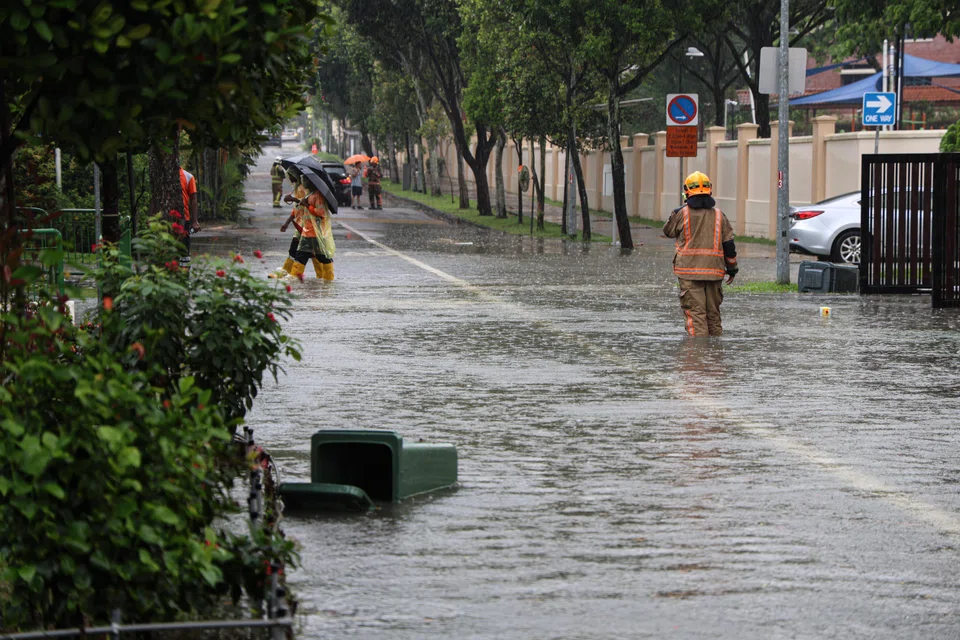
[SINGAPORE] Singapore will be developing its first national adaptation plan that will lay out the city-state’s long-term strategies to be a climate-ready nation, said Sustainability and the Environment Minister Grace Fu on Tuesday (Mar 3).
While the nation-state has set out a blueprint to reduce its carbon emissions in pursuit of its 2050 net-zero target, it does not yet have an equivalent, overarching programme for climate adaptation, even though several adaptation measures – including coastal protection plans – have already been announced.
Climate adaptation refers to measures aimed at helping society prepare better for, and reduce vulnerabilities to, climate impacts.
It has often been seen as the poorer cousin of climate mitigation, as governments and private investors have been focusing more on designing policy and deploying capital towards containing such effects through the reduction of greenhouse-gas emissions.
However, as the effects of climate change are becoming more intense, Fu said that Singapore “must prepare our infrastructure, businesses and people today to be resilient in a climate-impaired future”.
The national adaptation plan will involve a comprehensive review of Singapore’s adaptation measures in key domains such as heat resilience, coastal and flood resilience, as well as water and food resilience, said Fu, who was speaking at the ministry’s Committee of Supply debate in Parliament.

She added that 2026 will be designated as the year of climate adaptation. The completed national adaptation plan will be released in 2027.
The government will take the lead in the national climate adaptation efforts by identifying climate risks, developing long-term adaptation strategies and investing in infrastructure protection where necessary. While the public sector spearheads adaptation efforts, it will also encourage the private sector to follow.
“The private sector will see climate risks as business risks, and incorporate climate adaptation as part of their core business strategy. By conducting risk assessments, protecting workers, investing in infrastructure, diversifying supply chains, and insuring against climate hazards, companies can protect themselves from larger losses and reassure their investors,” Fu added.
SEE ALSO




“Businesses must be able to ride through extreme weather events and resume operations as quickly as possible. Those who innovate and adapt will thrive in the future.”
The government will conduct a series of engagements, including focus group discussions and a public exhibition, to get inputs from the public on the national adaptation plan.
“These engagements cover why climate adaptation is important to all of us, and why we need to prepare now. We hope people can share their experiences dealing with the impacts of climate change, and their ideas on how they can also play a part in Singapore’s adaptation efforts,” said Fu.
“By tapping the collective minds of citizens, businesses and civil society, we will enhance our nation’s climate resilience to safeguard our way of life, including those with more needs – the elderly, the young and lower-income households.
“For businesses, we will engage and partner our industries in developing adaptation strategies that are tailored to their business needs.”
Heat resilience
On heat resilience, Senior Minister of State for Sustainability and the Environment Janil Puthucheary said during the same debate on Tuesday that the ministry has a new policy office focusing on heat resilience.
It will bring together efforts across various agencies, including the Ministry of National Development, the Ministry of Health, the Ministry of Manpower, and the Ministry of Social and Family Development.
The policy office will develop an action plan on heat resilience in the infrastructure, health, economic and social sectors. The objective is for the action plan to identify priority areas and develop measures to address them, including by extending proven solutions to other sectors.
Puthucheary said: “Some issues that we will need to deal with include which areas, sectors or population segments are most at risk, and how can we further support these groups? What additional research is needed for sectors to develop effective, tailored measures? How do we balance the need for additional cooling against the need to meet our emission targets?”
Besides tightening coordination across government, the new office will also, through relevant agencies, engage businesses and communities on these important issues, and explore building heat resilience.
Under this new initiative, a heat resilience research and development programme will be launched under the Research, Innovation and Enteprise 2030, which is Singapore’s five-year plan to strengthen its research and innovation ecosystem.
The programme will focus on advancing capabilities and investments in heat resilience research through infrastructure interventions, as well as on understanding and managing the impact of heat on society.
As part of this research programme, the government will also launch a S$40 million funding initiative, which will research emerging areas such as heat impacts and community heat resilience.
This includes devoting more resources to study and protect those who are more vulnerable to heat, such as the elderly, the very young, and those who are more exposed to heat, such as outdoor workers.
The new office will also lead international engagements and collaborations on heat resilience, which will coordinate the sharing of the city-state’s efforts on this front, as well as the learning of other countries’ best practices, said Puthucheary.
Decoding Asia newsletter: your guide to navigating Asia in a new global order. Sign up here to get Decoding Asia newsletter. Delivered to your inbox. Free.
Copyright SPH Media. All rights reserved.
TRENDING NOW

Britain’s mansion tax shows the difficulty of targeting wealth

Once staunchly pro-China, Malaysian Chinese businesses are now distancing themselves from Beijing

The only common thing in S-E Asia is that we all eat rice: Cisco’s Asean president

Singapore data centre operator DayOne opts for US IPO at likely US$20 billion valuation

