Capital allocation in Asia remains the same despite EDP Renewables exiting several markets
The renewables energy company says it will invest up to US$2 billion in the region by 2030

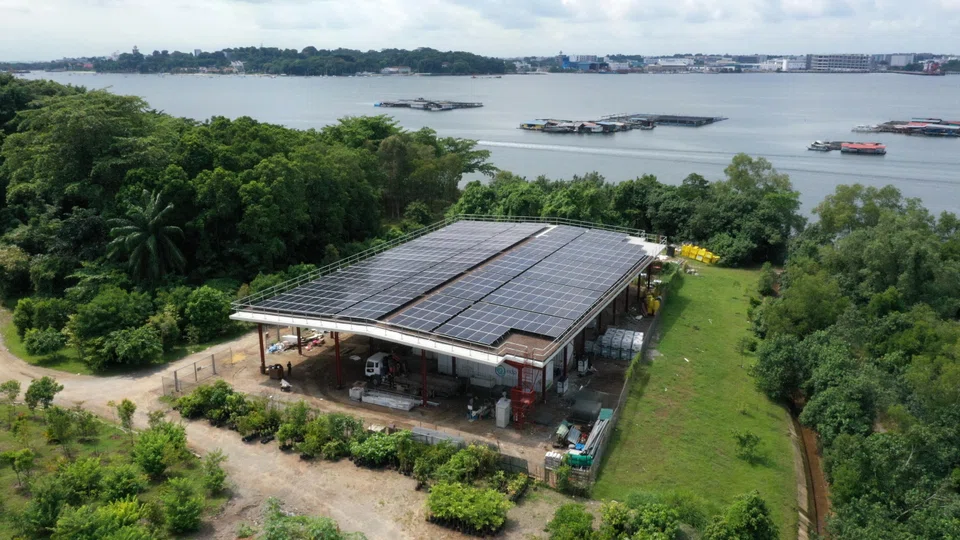
[SINGAPORE] Despite exiting from several markets in Asia earlier this year, renewable energy player EDP Renewables said that it has not reduced its capital allocation to the region.
The company is still looking to invest up to US$2 billion in the region by 2030, which translates to renewables capacity of around 1.7 gigawatt-peak.
However, those funds will be largely concentrated in growing its projects in Australia, Japan and Singapore, said its Asia-Pacific chief executive officer Miguel Fonseca in a news briefing last month.
EDP Renewables originally entered nine markets in Asia-Pacific when it bought over Singapore-based player Sunseap for S$1.1 billion in 2022. The number then grew to 11 markets when it expanded to Indonesia and Australia.
However, the Spain-based company announced that it was exiting five of them and will pivot towards high-growth markets. Besides Australia, Japan and Singapore, it also remains in China, Taiwan and Vietnam.
Fonseca said that the revenues the company was expecting from the region when it first acquired Sunseap are in line with what it has achieved currently.
'%3e%3cpath%20d='M12.1475%2025.5262C13.7713%2025.4295%2014.94%2023.913%2014.94%2021.8832C14.94%2019.5359%2013.474%2018.093%2011.5917%2018.093C11.3745%2018.093%2010.9582%2018.093%2010.8393%2018.1413V25.2086L11.8891%2025.5745C11.8891%2025.5745%2012.207%2025.5262%2012.1475%2025.5262ZM11.4934%2017.6281C13.2567%2017.6281%2014.3843%2016.4292%2014.3843%2014.4501C14.3843%2012.372%2013.275%2011.2973%2011.4339%2011.2973H10.8393V17.6305H11.4934V17.6281ZM6.66078%2025.6482L7.39265%2025.5492C8.02617%2025.4502%208.26403%2025.3053%208.26403%2025.1097V11.6149C8.26403%2011.4193%208.1451%2011.3709%207.23484%2011.249L6.68137%2011.173L6.6219%2010.7588H11.9508C15.7153%2010.7588%2017.0624%2012.0797%2017.0624%2014.1578C17.0624%2015.9666%2015.7748%2017.1909%2013.4969%2017.6305V17.7041C16.111%2017.948%2017.6571%2019.5382%2017.6571%2021.7636C17.6571%2024.3318%2015.8937%2026.0417%2012.1109%2026.0417H6.60132L6.66078%2025.6482Z'%20fill='%232B2B2B'/%3e%3cpath%20d='M20.6287%2025.6505L21.5596%2025.5515C22.1725%2025.4779%2022.4104%2025.3076%2022.4104%2025.112V11.249H21.9346C20.073%2011.3479%2018.982%2013.0095%2018.408%2014.6227L18.1907%2015.5018H17.6555L18.1701%2010.7588H29.3837L29.6421%2015.4787H29.1664L28.9491%2014.6227C28.3728%2012.8645%2027.3047%2011.2743%2025.5002%2011.249H24.9856V25.1856C24.9856%2025.3812%2025.1251%2025.4548%2025.9965%2025.5515L26.7695%2025.6505L26.829%2026.0417H20.5693L20.6287%2025.6505Z'%20fill='%232B2B2B'/%3e%3c/g%3e%3cdefs%3e%3cclipPath%20id='clip0_5242_21648'%3e%3crect%20width='24'%20height='16.8'%20fill='white'%20transform='translate(6%2010)'/%3e%3c/clipPath%3e%3c/defs%3e%3c/svg%3e)
However, the company decided to take a different path by focusing on fewer markets.
“These markets (we exited from) were too risky, too long term, not producing results, and we are better off investing more where we can and getting better economies of scale... So it’s not about what we were investing in these markets in terms of resources or capital. We are re-allocating, and so it’s trying to get faster to a greater scale,” said Fonseca.
“The strategy is now is... to gain scale and double the installed capacity in the markets that are already identified. And that capital appetite and share from the group is already relevant and growing,” he added.
SEE ALSO



Pedro Vasconcelos, executive board member of the EDP Group, said the main reason for exiting these markets is that the regulatory structure does not support the large-scale development of renewable energy.
There were significant layers of protection for local players in some markets, through limiting foreign ownerships or having a high local content requirement in solar manufacturing.
Bureaucratic processes in getting land permits, and the lack of certainty and predictability around these permits, difficulties in hedging funds that had been invested in equipment, as well as being able to monetise the energy being produced at a high enough price, were other factors Fonseca cited.
Compounded with the issue of higher interest rates than before it entered this region, thereby increasing the threshold of acceptable projects, the company did not have the confidence to commit to 30-year investments.
There is “a huge opportunity to not just decarbonise for the sake of decarbonising, but for the sake of introducing competitiveness”, said Vasconcelos. “We haven’t yet seen it... Something hasn’t clicked yet, but the potential is, for sure, there.”
While the company still believes in the potential of the region, it had initially thought that it would have come sooner.
Citing data from energy think tank Ember as well as the International Energy Agency, the company noted that clean energy growth in South-east Asia has been lagging behind other regions, despite a huge increase in energy demand.
“We thought it actually could have been sooner. Maybe interest rates didn’t help. Maybe gas prices alleviating from the peaks of 2021, 2022 helped buy time for some of these markets. We cannot forget that they have a lot of legacy industries, such as coal and coal mining in Indonesia,” said Vasconcelos.
That being said, both executives said that they will continue to monitor renewable energy developments in these markets, and will “jump back in” if the regulatory environment changes to introduce more market-based incentives.
“The renewables opportunity is significant... It’s simply a question of time. There is still a lot of protectionism, barriers in the process, the market is not fully working, you need to have more foreign investment, more marketplace transactions – but it will come,” said Vasconcelos.
If a second stage of capital deployment does emerge, the hope is that these other markets will be ready for EDP Renewables to invest in.
The company will likely need to find other avenues to expand into, as growth in Australia and Singapore will likely stabilise by then, said Fonseca.
“It’s a consensus from the market that the region will grow the most in terms of delta deployments between this decade and the next decade,” he added.
Decoding Asia newsletter: your guide to navigating Asia in a new global order. Sign up here to get Decoding Asia newsletter. Delivered to your inbox. Free.
Copyright SPH Media. All rights reserved.