

China’s emissions fell last year in first decline since 2022
A key signal will come in March, when officials release the country’s next five-year plan
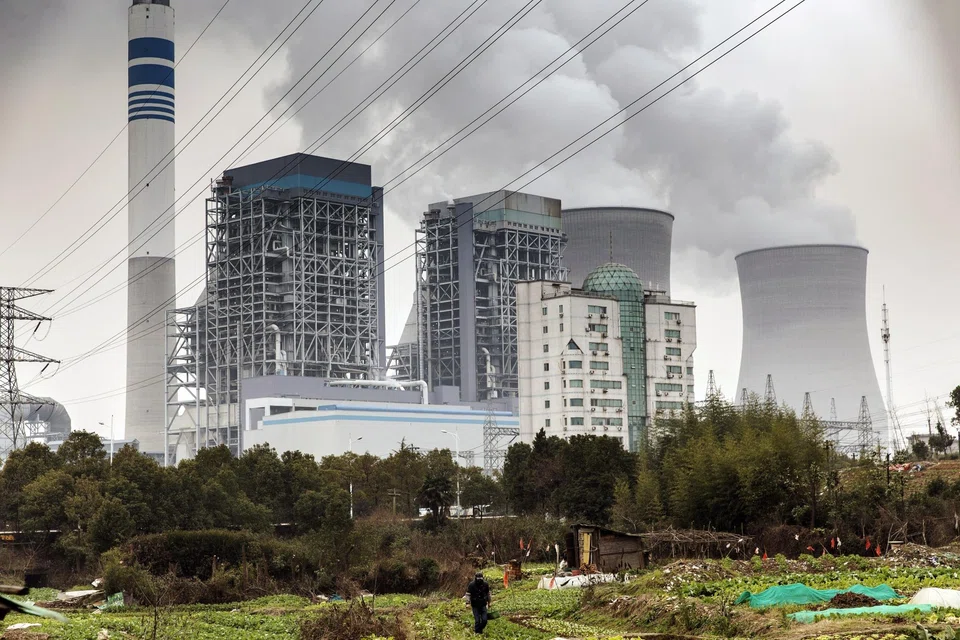
[WASHINGTON] China’s carbon dioxide emissions fell 0.3 per cent in 2025, the first annual decline since Covid-19 era restrictions in 2022 – and more importantly, a reduction that’s happened even as energy demand growth remains strong.
The drop, outlined in an analysis by the Centre for Research on Energy and Clean Air (Crea) for Carbon Brief, was driven by a fall in emissions across nearly all major sectors, including power, where a banner year for renewables drove down coal consumption despite the continued build-out of thermal power stations.
Last year, China for the first time covered all of its additional power demand growth with carbon-free sources, and added enough energy storage capacity to account for the increase in peak demand, said Lauri Myllyvirta, lead analyst for Crea. That’s created more options to avoid blackouts without resorting to fossil fuels, he said.
While small, the projected decline, which could be confirmed with analysis of energy consumption data expected to be released later this month, is a notable milestone in China’s efforts to halt the rapid growth in its climate footprint. It also underscores the prospect that wind, solar and batteries – all key exports for China – can support economic expansion in emerging economies without increasing pollution.
Even so, it’s too soon to judge whether China’s carbon emissions, which account for about a third of the global total, have definitively peaked. President Xi Jinping has only committed to reaching that turning point before 2030, and China continues to pursue an all-of-the-above energy strategy, which means the nation’s emissions could yet rebound, Myllyvirta said.
A key signal will come in March, when officials release the country’s next five-year plan. In order to meet the 2030 goals set out in the Paris Agreement, China will need to reduce emissions per unit of GDP by 23 per cent, according to Myllyvirta, a large leap in ambition from the 12 per cent reduction the nation has recorded over the past half-decade.



Another sector to watch is the country’s chemical industry. While emissions fell across power, metals production, cement and transport, there was a large jump from a surge of new plants using coal and oil to produce plastics and other advanced materials. BLOOMBERG
Decoding Asia newsletter: your guide to navigating Asia in a new global order. Sign up here to get Decoding Asia newsletter. Delivered to your inbox. Free.
Share with us your feedback on BT's products and services
TRENDING NOW

IOI Properties and CapitaLand Investment closer to acquiring One Raffles Place in joint bid

OCBC sheds S$8 billion in value as shares close nearly 6% down; analysts cautious on banks

Grab CEO’s wife Chloe Tong on life with Anthony Tan and finding her purpose

Crystal Jade closes four more outlets, cuts 120 jobs ahead of proposed sale

