

Climate urgency will push South-east Asia to confront fuel subsidies, LNG, offsets


Wong Pei Ting &
Janice Lim
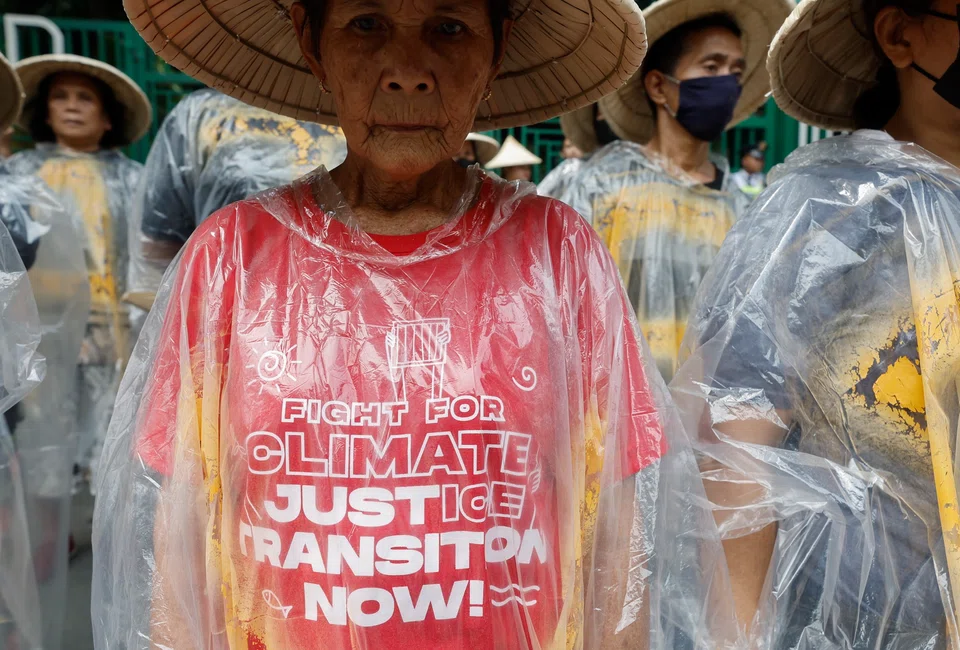
HEIGHTENED debate over fossil-fuel subsidies, liquefied natural gas (LNG) as a transition fuel and the role of carbon offsets lie ahead for coal-dependent South-east Asia, observers told The Business Times (BT) in the wake of a key climate “stocktake” report.
The recently released synthesis report for the Paris Agreement’s first global stocktake found that global greenhouse-gas emission curbs are far short of mitigation pathways to avert catastrophic temperature levels. The report, which will set the tone for negotiations at the upcoming 28th United Nations Climate Change Conference (COP28) in Dubai in late November and early December, called for urgent climate action.
Policy changes
Fast-tracking policymaking on energy transition plans, increasing climate ambitions and targets, and ensuring ambitions translate to actions are some important policy moves that governments need to make, observers told BT.
Given the rapidly narrowing window to limit warming – as warned by the synthesis report – some decarbonising measures may have to be drastic and unpopular, in the form of higher carbon taxes or new financing limits on carbon-intensive sectors for instance, said environmental lawyer Joseph Chun.
Mandating that a certain amount of renewable energy capacity is built every year, as well as applying contracts for difference in clean-energy projects – where the government will guarantee to pay the shortfall for clean-energy prices to the project developer if the agreed market price is not met – are also some policy innovations that could push the momentum forward, said Charlie Knaggs, regional decarbonisation partner at sustainability consultancy ERM.
Observers also offered some suggestions that would involve the slaughtering of some sacred cows. A major one would be to eliminate fossil-fuel subsidies – a hot potato issue for several South-east Asian governments, including Indonesia, Malaysia, the Philippines, Thailand and Vietnam.
According to the International Energy Agency, fossil-fuel subsidies in this region were worth US$35 billion in 2018. That amount has probably ballooned, given that fossil-based energy prices have shot up in the last two years as a result of the Russia-Ukraine war.
“As a very first step, fossil-fuel subsidies need to be removed because that creates a distorted playing field,” said Knaggs.
Danielle Yeow, climate change law and policy lead at the National University of Singapore’s Centre for International Law, said the road to making this a reality can’t be seen as a “single issue”.
“It’s probably tied up with many political issues and trade-offs in the overall package. The questions will be: What are the alternatives available at scale? At cost?”
Expectations should be tampered with the reality that the coming climate talks are set to happen in the Middle East, a part of the world that relies heavily on fossil-fuel exports, she added.
Bain & Company’s global head of sustainability and responsibility Jenny Davis-Peccoud said fossil-fuel subsidies will be a “very difficult line to walk” depending on whom the changes affect, and how.
Given that domestic politics and national interest will continue to drive countries’ agendas, Yeow believes that negotiation at the global level will lead to incremental progress.
“What we will see will be punctuated by unilateral, domestic, regional, plurilateral initiatives that will try to push the agenda, (and) push the envelope a little bit further,” she added.
Beyond domestic policies, governments and companies in South-east Asia should also watch out for policies in other regions that may set up trade barriers to protect the development of greener industries in other countries.
Given that tax breaks are being offered by the US through the Inflation Reduction Act, manufacturers’ and investors’ attention will shift to that market and away from South-east Asia, at least in the short term, Knaggs noted.
Elsewhere in Europe, the carbon border adjustment mechanism (CBAM), which comes into force on Oct 1, will apply higher tariffs on certain carbon-intensive imports, including iron, steel, aluminium and cement.
Davis-Peccoud said another potentially impactful European Union development is its new deforestation regulation, which covers seven commodities – cattle, cocoa, coffee, oil palm, rubber, soya, and wood – as well as products derived from them.
“Every country needs to then decide their own kind of positioning,” Davis-Peccoud said. Noting that Singapore has always been open to creating trade links, “presumably they’ll be looking to do that in this arena as well”, she said.
Energy transition
Besides tried-and-tested renewable energy options such as solar and wind, the transition focus could lead to greater acceptability around LNG as a transition fuel.
Already, EY’s Asia-Pacific oil and gas leader Sanjeev Gupta reported seeing increased investments in specialised import LNG terminals and re-gasification facilities in the region. LNG is seen as a key alternative that is “considerably easier to source”, despite greater emphasis on solar, wind and hydropower, he added.
Amid low gas prices, countries such as Japan, South Korea and India were also moved to shift their power generation capacity to LNG-based energy production, Gupta added.
But Chun warned that the transition from coal to gas – the “path of least resistance” in the short term – will not remain credible in the medium and long term. Building new LNG terminals today is a commitment to locking in decades of tomorrow’s emissions.
“Transitioning from coal then to gas and then to renewables is going to unduly delay the transition, including through wasted investment in infrastructure for gas and further entrenching certain path dependencies,” he said.
Sharad Somani, partner and head of KPMG ESG at KPMG in Singapore, said energy transition pathways for South-east Asia will have to consider all options carefully and incorporate a portfolio approach to avoid “single-point failure risk”.
While LNG will continue to be the transition fuel for the foreseeable future, green hydrogen, biofuels and renewable energy storage solutions will continue to be piloted, developed, and implemented at utility scale, he said.
Acceptability of nuclear power, such as small modular reactors, may also increase as safety and security issues get addressed, he noted.
With these other options, countries in South-east Asia should continue to collaborate, and look into connecting transmission infrastructure, power trade and regional strategy for developing generation, transmission and storage infrastructure development, he pointed out.
Carbon offsets
While controversial, industry observers say carbon credits are also another important tool in the arsenal, though they should be reserved to offset unavoidable emissions.
The synthesis report made no mention of voluntary carbon markets, but observers recognised its role in channelling funds towards stopping deforestation and protecting natural carbon sinks.
Davis-Peccoud said ongoing issues with quality, additionality and verification do not make forest carbon credits a lost cause, as “climate models assume a certain amount of forest and that we need more”. “What we really need is to double down on putting the kind of policies and infrastructure in place that will ensure that they operate effectively,” she said.
To operationalise Article 6 of the Paris Agreement, which allows countries to transfer offsets while avoiding double counting, MetaVerse Green Exchange executive chairman Bo Bai said more needs to be done to drive an interconnected infrastructure for national carbon registries. This is critical to ensure that countries can retain ownership rights of the carbon credits generated from local projects.
Financial benefits, especially for emerging economies, are “very real”, he added, citing the International Emissions Trading Association’s (Ieta) findings that Article 6 could lead to cost savings of US$250 billion annually by 2030, US$350 billion by 2050 and nearly US$1 trillion in 2100.
Ieta chief executive Dirk Forrister has said that if these savings are reinvested in mitigation, Article 6 could deliver an extra five billion tonnes per year of reductions in 2030.






