

Common standards needed to boost trade in renewable energy certificates
Such certs help companies sign offtake deals with green power producers in Asean: EMA official

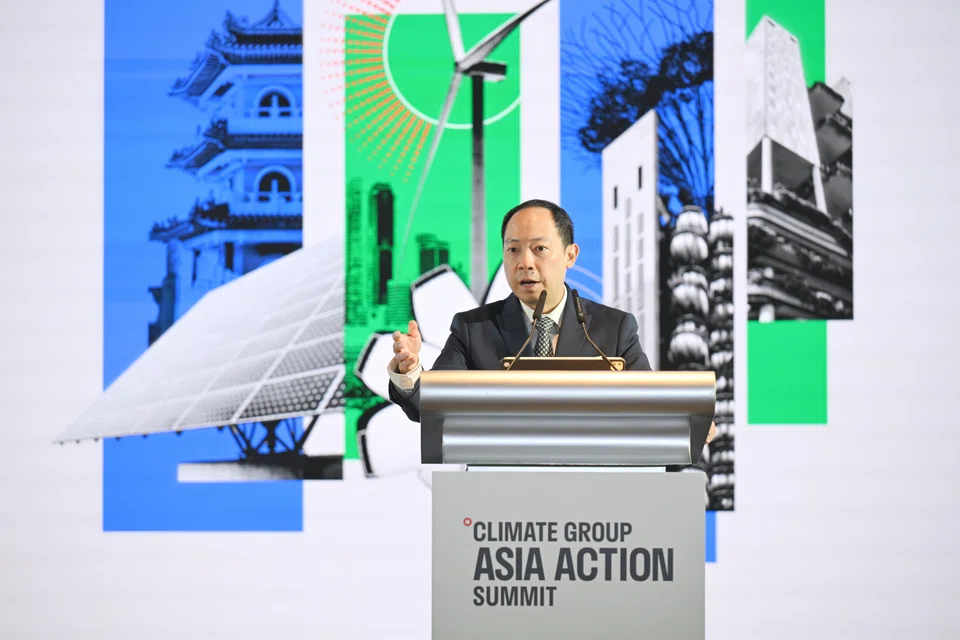
[SINGAPORE] The lack of standards around the cross-border trade of renewable energy certificates (RECs) is a key barrier preventing companies from signing offtake agreements with low-carbon electricity producers around South-east Asia, said Low Xin Wei, assistant chief executive for the markets and systems division at the Energy Market Authority.
This means that there is a lack of additional revenue for these electricity importers, with which the Singapore government is looking to ink electricity import contracts to meet its net-zero targets.
He said that major international standards, such as the Greenhouse Gas Protocol, do not explicitly recognise the cross-border trade of RECs as a valid form of renewable energy procurement.
The only exceptions are in the European Union and North America, where markets have been harmonised, said Low at a climate conference on Thursday (May 8).
RECs are tradeable assets that are issued when 1 megawatt-hour of electricity is generated and delivered to the electricity grid from a renewable energy resource.
Companies can purchase these certificates to reduce their Scope 2 emissions, which are emissions arising from their use of electricity generated from power stations.
'%3e%3cpath%20d='M12.1475%2025.5262C13.7713%2025.4295%2014.94%2023.913%2014.94%2021.8832C14.94%2019.5359%2013.474%2018.093%2011.5917%2018.093C11.3745%2018.093%2010.9582%2018.093%2010.8393%2018.1413V25.2086L11.8891%2025.5745C11.8891%2025.5745%2012.207%2025.5262%2012.1475%2025.5262ZM11.4934%2017.6281C13.2567%2017.6281%2014.3843%2016.4292%2014.3843%2014.4501C14.3843%2012.372%2013.275%2011.2973%2011.4339%2011.2973H10.8393V17.6305H11.4934V17.6281ZM6.66078%2025.6482L7.39265%2025.5492C8.02617%2025.4502%208.26403%2025.3053%208.26403%2025.1097V11.6149C8.26403%2011.4193%208.1451%2011.3709%207.23484%2011.249L6.68137%2011.173L6.6219%2010.7588H11.9508C15.7153%2010.7588%2017.0624%2012.0797%2017.0624%2014.1578C17.0624%2015.9666%2015.7748%2017.1909%2013.4969%2017.6305V17.7041C16.111%2017.948%2017.6571%2019.5382%2017.6571%2021.7636C17.6571%2024.3318%2015.8937%2026.0417%2012.1109%2026.0417H6.60132L6.66078%2025.6482Z'%20fill='%232B2B2B'/%3e%3cpath%20d='M20.6287%2025.6505L21.5596%2025.5515C22.1725%2025.4779%2022.4104%2025.3076%2022.4104%2025.112V11.249H21.9346C20.073%2011.3479%2018.982%2013.0095%2018.408%2014.6227L18.1907%2015.5018H17.6555L18.1701%2010.7588H29.3837L29.6421%2015.4787H29.1664L28.9491%2014.6227C28.3728%2012.8645%2027.3047%2011.2743%2025.5002%2011.249H24.9856V25.1856C24.9856%2025.3812%2025.1251%2025.4548%2025.9965%2025.5515L26.7695%2025.6505L26.829%2026.0417H20.5693L20.6287%2025.6505Z'%20fill='%232B2B2B'/%3e%3c/g%3e%3cdefs%3e%3cclipPath%20id='clip0_5242_21648'%3e%3crect%20width='24'%20height='16.8'%20fill='white'%20transform='translate(6%2010)'/%3e%3c/clipPath%3e%3c/defs%3e%3c/svg%3e)
Given that Singapore has limited renewable energy resources, the amount of RECs that can be generated locally is constrained. There would only be a small pool of such certificates for companies to buy to offset their Scope 2 emissions.
The Ministry of Trade and Industry previously announced that plans to establish a cross-border trading framework were under way.
Low also said that there is a need to continue with concrete, small steps to make the Asean power grid a reality, starting with bilateral projects.
SEE ALSO

“Low-hanging fruits would be those which make use of existing interconnectors.”
This includes the Lao PDR-Thailand-Malaysia-Singapore Power Integration Project – a cross-border electricity trade that imports hydropower from Laos to Singapore – as well as the Energy Exchange Malaysia, a platform to facilitate cross-border electricity sales focused on renewable energy.
Decoding Asia newsletter: your guide to navigating Asia in a new global order. Sign up here to get Decoding Asia newsletter. Delivered to your inbox. Free.
Copyright SPH Media. All rights reserved.
TRENDING NOW

Once staunchly pro-China, Malaysian Chinese businesses are now distancing themselves from Beijing

Looking beyond looming CEO succession, should UOB potentially pursue a transformative merger?

Could stablecoins be the future of money?

Grab CEO’s wife Chloe Tong on life with Anthony Tan and finding her purpose

