

Competing for capital: Estonia’s cleantech sector adapts to rising national security priorities
Its startups in the field say their tech can boost energy resilience and support the low-carbon transition

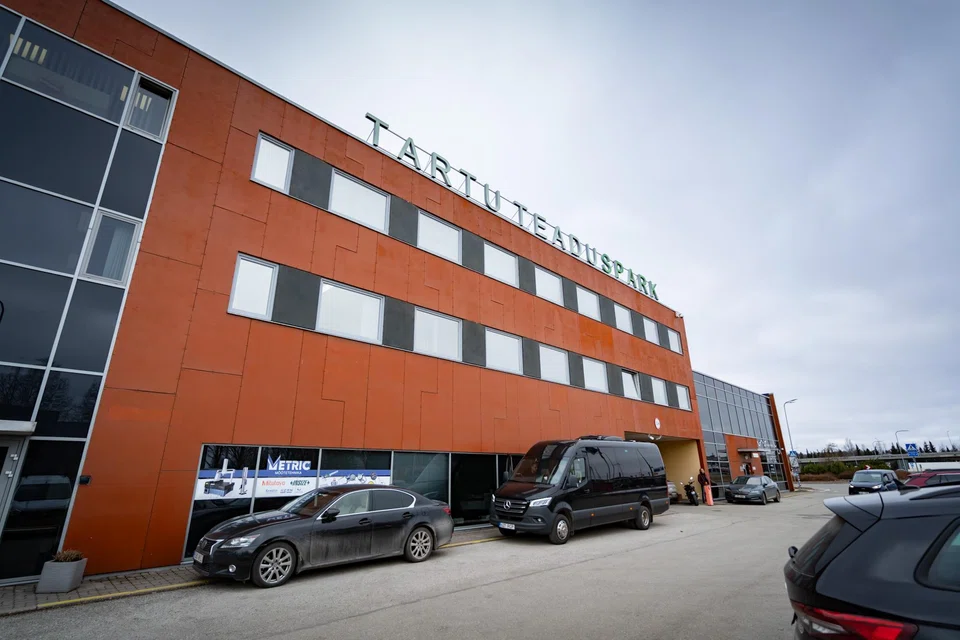
[TALLINN, ESTONIA] Since the Russian invasion of Ukraine propelled national security to the top of Europe’s agenda, venture capital (VC) and private equity (PE) have increasingly pivoted towards defence technologies, diverting attention from clean technologies.
VC and PE funding going towards defence tech in the European Union has soared annually since the 2022 invasion, data from market intelligence platform Tracxn showed.
It climbed over 50 per cent from US$248.1 million in 2022 to US$376.5 million in 2023. It more than doubled to US$763.6 million in 2024, before surging past the billion-dollar mark to US$1.28 billion in 2025.
This trend is expected to continue as escalating global instability reinforces security concerns.
The sharp rise in defence tech investment has coincided with growing competition for capital. Across the EU, cleantech has experienced a steep drop in funding over the same period.
While it attracted over US$6.1 billion in 2022, VC and PE funding for cleantech fell 38.4 per cent to US$3.7 billion in 2023 and remained at that level in 2024, before dropping further to US$1.8 billion in 2025.
One of the most visible examples of the rush into defence funding is Estonia.
Given the Baltic country’s history under the former Soviet Union’s rule, as well as its border with Russia, it is no surprise that the war in Ukraine has intensified longstanding security concerns with its largest neighbour.
It is targeting to invest 5 per cent of its 2026 gross domestic product into defence, making it one of the highest spenders – by proportion – among the member countries of Nato, an intergovernmental military alliance between 30 European countries, as well as the US and Canada.
With the launch of a 100 million euro (S$149 million) defence industry fund, the country’s startup authorities said earlier this year that it is increasingly seen as a “European gravity point for defence innovation”.
Impact on Estonia’s cleantech sector
The pivot towards defence tech has led to competition for capital and talent within Estonia’s cleantech ecosystem, said Karlis Goldstein, CEO of the cleantech association in Estonia.
In response, cleantech startups in the country are increasingly emphasising that their technologies serve a dual purpose: enhancing energy security while supporting the low-carbon transition.
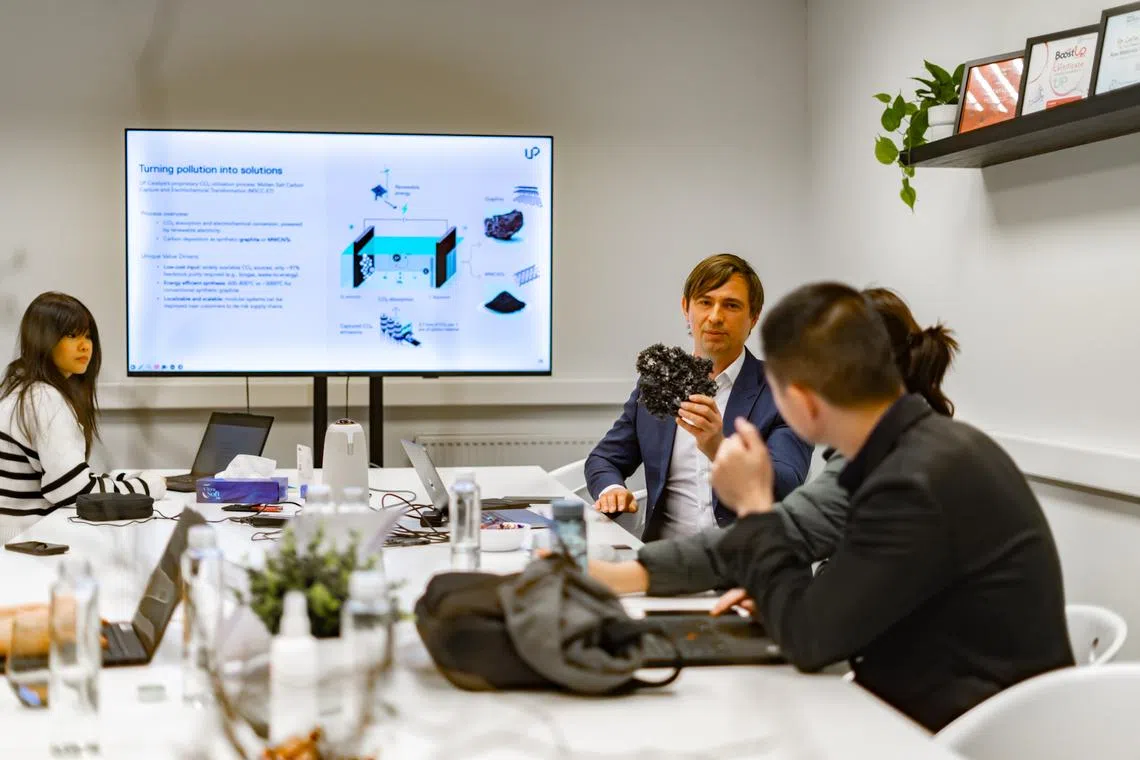
Rait Maasikas, CEO of UP Catalyst, said that the funding landscape is seeing “a more nuanced rebalancing”, instead of a “full shift away from cleantech”.
His company produces graphite and carbon nanotubes using carbon extracted from carbon dioxide. These materials are critical for batteries, electronics and defence-related applications.
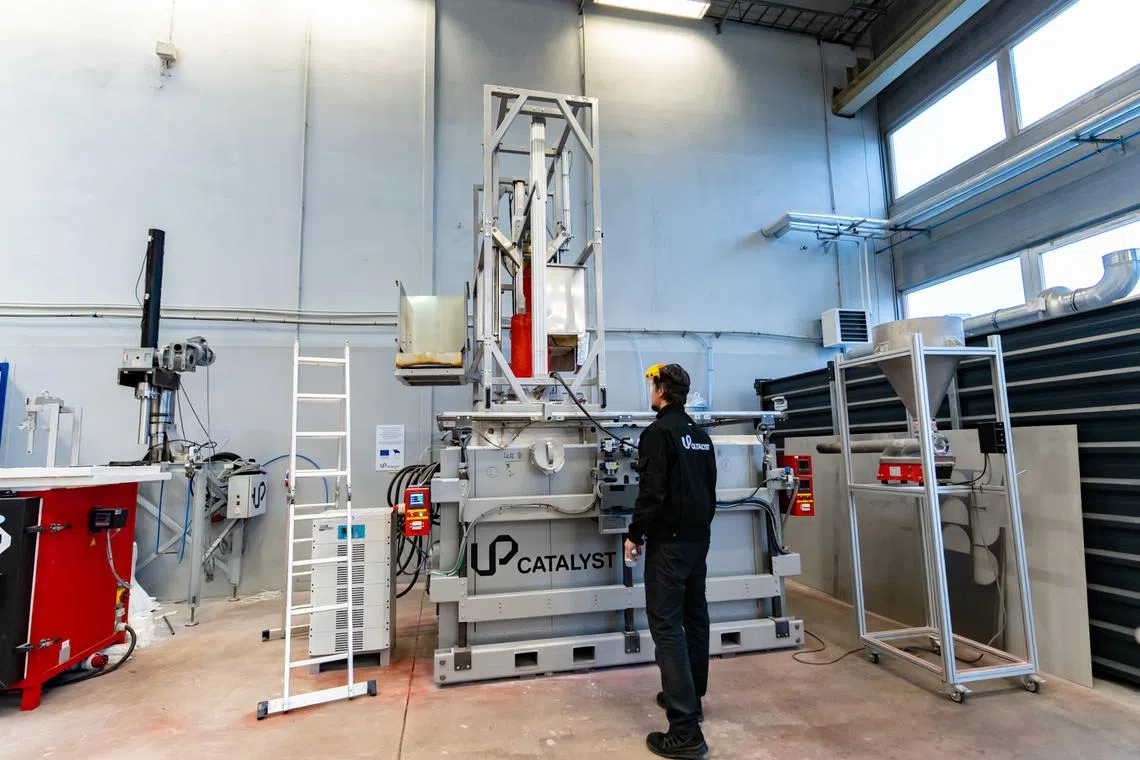
“We are not pivoting away from our core mission,” said Maasikas. Instead, we are clearly articulating the dual value proposition of our technology: enabling low-carbon, cost-effective production while strengthening Europe’s strategic independence in critical raw materials.”
He added that investors and policymakers are “increasingly prioritising technologies that address security objectives through future-proof solutions”.
“In that sense, the current macroeconomic environment reinforces our long-term relevance, even if it requires greater focus and precision in how we position ourselves to investors and partners.”
Marko Virkebau, CEO of green hydrogen startup Stargate Hydrogen, said that the company is fully funded after raising 14 million euros in its Series A round in 2025.
While the funding landscape has changed, he noted that companies with a differentiated technology and clear value proposition are still getting funded.
“That being said, we are also looking into defence and resilience-related applications of hydrogen more and more,” he added.
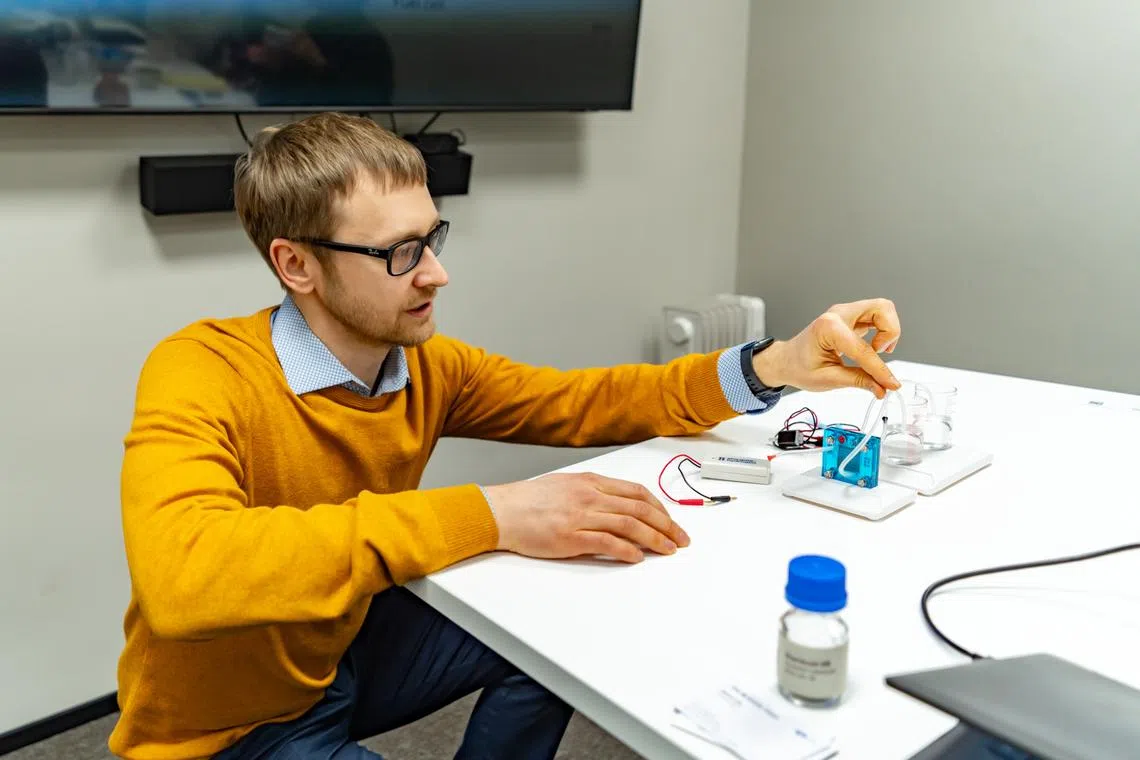
Peep Siitam, co-founder and CEO of energy storage startup Zero Terrain, said that investments in defence tech and cleantech are not in opposition to one another, but, in fact, complement each other.
While Zero Terrain’s underground pumped-hydro energy storage solution was originally developed to overcome the geographic constraints of traditional pumped hydro storage, he said that the underground infrastructure can have other uses.
“In South-east Asia, such infrastructure is well-suited for flood management and water supply needs. It is also applicable to underground data centres, where the stable subterranean climate reduces energy consumption, enhances security, and – when combined with large-scale energy storage – improves the reliability of power supply,” he said.
At the same time, changes in the global security environment are “creating new challenges for civil protection and the military, where underground infrastructure may also offer efficient solutions”, he added.
Continued demand for cleantech solutions
Despite some reallocation of investment towards defence tech, cleantech startups in Estonia say demand for their solutions has not been affected. In fact, they are seeing growing interest.
Maasikas said that industrial players are increasingly focused on securing critical raw materials, such as graphite, locally.
“While geopolitical tensions have clearly shifted political attention towards security and defence, we do not see this as a zero-sum game with the energy transition,” he said. “If anything, recent crises have reinforced how critical energy independence and resilient supply chains are for Europe… Especially in turbulent times like today, we cannot afford to remain reliant on imports for critical materials.”
Stargate Hydrogen is also experiencing a similar trend. Virkebau said that the company is receiving an increasing number of inquiries on resiliency-related applications for green hydrogen.
“As the supply chains for natural gas are under risk, we see increasing demand for green ammonia, hydrogen-based synthetic natural gas and refining use cases of green hydrogen,” he said.
“The advantage of making green hydrogen via electrolysis is that you can make it on-site and lose dependency on external supply chains, which is fully aligned with a security view of the world.”
While the prioritisation of national security for Estonia intensified in 2022 after Russia’s invasion of Ukraine, the recent escalation of conflict in the Middle East has added to a sense of global instability, Goldstein noted.
“We are expecting the societal debate to include more of a narrative of long-term resilience,” he said. “While there is some recognition that budget allocations and political attention (towards cleantech) are under pressure, many companies view the energy transition as part of the security agenda itself, not in competition with it.”
TRENDING NOW

Philippine power giant First Gen rebuffs foreign offers, plans up to US$2.6 billion in expansion

Cliff Tan has 7 million followers and a 4-month waitlist. Why won’t he expand his business?

Could stablecoins be the future of money?
From finance aspirant to Asean CEO: TUV SUD’s Jonas Strahberger on finding people who believe in you

