Conference organisers expected to measure events’ waste, emissions by next year

Wong Pei Ting
BY NEXT year, organisers of meetings, incentives, conferences and exhibitions (Mice) in Singapore will be expected to measure the waste and carbon footprint generated at their events.
This is part of an effort to push the industry towards more sustainable alternatives, especially for exhibitor booths, which were identified to be generating the greatest amount of waste currently.
The plan was articulated in the Mice Sustainability Roadmap – a sustainability plan launched on Thursday (Dec 1) by a committee formed by the Singapore Tourism Board (STB) and the Singapore Association of Convention and Exhibition Organisers and Suppliers (Saceos).
The road map sets out targets and strategies to raise sustainability standards across Singapore’s Mice industry over the next few years, so Singapore can be positioned as Asia-Pacific’s leading sustainable Mice destination by 2030, the committee said.
One of the targets was to develop a set of sustainability standards by next year, so the industry, which includes event organisers, venues, stand builder contractors and food-and-beverage caterers, may readily apply them. It aims to be internationally recognised by 2024.
The second target was for all six purpose-built Mice venues and 80 per cent of Saceos members to obtain internationally or nationally recognised sustainability certification – or both – by 2025. The six purpose-built venues are: Changi Exhibition Centre, Raffles City Convention Centre, Resorts World Convention Centre, Marina Bay Sands Expo and Convention Centre, Singapore Expo, and Suntec Singapore Convention and Exhibition Centre.
The third was for the Singapore Mice industry to start tracking waste and emissions by 2023, to reduce waste as aligned with the Singapore Green Plan by 2030, and achieve net-zero emissions by 2050, in line with the national target.
Formed in August, the Mice sustainability committee is co-chaired by Edward Koh, STB’s executive director for conventions, meetings and incentive travel, and Sukumar Verma, Saceos’ vice-president for industry and enterprise.
In response to queries by The Business Times on the projected impact on costs for event organisers if they are expected to track waste and emissions, Verma, without stating specific costs, said it depends on the type of event and the sector being serviced.
A trade show with 500 exhibitors will have a different cost base compared to a C-Suite conference with 1,000 attendees, he said. Exhibitor booths generate the greatest amount of waste, contributing anything from 60 to 80 per cent of trade show waste, so organisers of this type of events will likely have to make the single largest investment to effect change, he said.
The unit cost for sourcing sustainable product solutions, such as lanyards and tote bags, will also be higher, but smaller events will not feel the impact as much, Verma added.
For now, the industry can receive more accurate numbers by getting suppliers and partners to share this data, he said. But no matter what, it is a “given” that cost will go down over time as market forces create more demand for sustainable projects and services, he noted.
On how organisers are expected to measure the waste and emissions metrics, Verma said the committee expects to have a clearer position on this by 2023.
The committee is currently working with professional services firm KPMG to establish a bar, starting with the pilot of a waste audit at upcoming events to lend credence to the metric for waste management, he said.
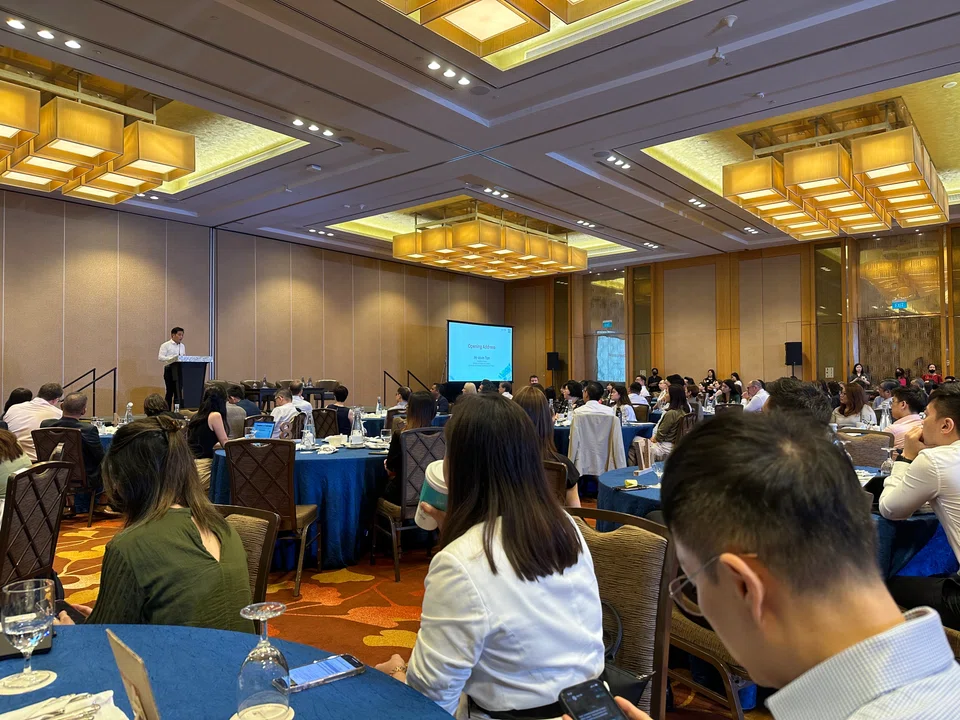
He added that it is also part of the road map to create a consistent set of measurement methodologies focused on waste and carbon. This will guide the industry towards meeting the nationally recognised Mice sustainability standards. “We will have a very specific measure by the second quarter of 2023,” he stated in his speech at the road map’s launch event in a ballroom at Marina Bay Sands, where the temperature was set higher to 25 deg Celsius. Event attendees were encouraged to remove their blazers and jackets.
Nevertheless, Verma said the committee will make adherence to these measurement methodologies voluntary, so more data can be generated and help define boundaries. This is to cater for the fact that the Mice industry is still in the post-Covid recovery phase and on its journey to adopting internationally and nationally recognised standards, he said.
Asked if there will be a verification process tied to the methodologies, Verma said there is none governed by the road map. The committee is only considering a verification or reporting tool within Saceos’ certification model, in which more than 80 per cent of applicable members will get certified under by 2025.
Verma said there are internationally recognised sustainability certification that Mice businesses can consider obtaining. They include the ISO 20121: Sustainable Events Management System Certification, and ISO 14001: Environmental Management Systems.
“Such certification is typically conferred after a rigorous audit conducted by independent third-party bodies,” he said. “This requirement increases public transparency and accountability as there is third-party verification involved, and consumers will know which product or service providers have been certified.”
The targets set for the road map are meant to allow for a “clear way” to determine if the industry has met its matrix of success, he added.