

Don’t aim for perfection in sustainability disclosures before getting started, says global standards body vice-chair

Janice Lim
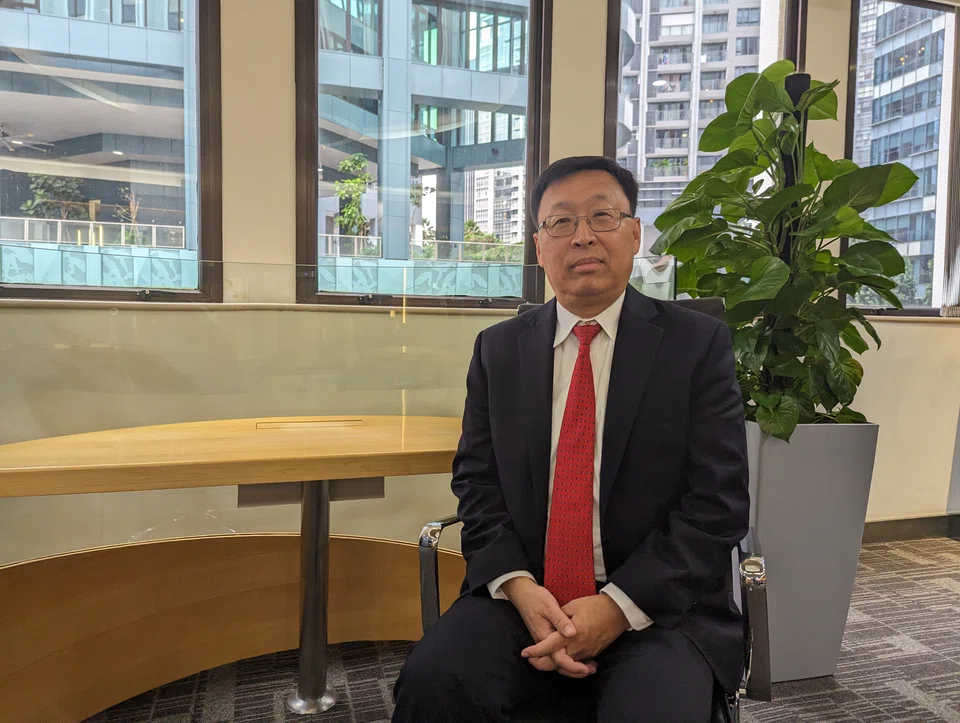
THE long-awaited disclosure standards for sustainabilty and climate were finally published on Monday (Jun 26) – after more than a year of meetings and discussions.
But it is only the beginning. Hua Jingdong, vice-chair of the International Sustainability Standards Board (ISSB) – the global accounting standards body behind the guidance – said that sustainability reporting is a journey on which capital market participants are just embarking, and that it is still a new language everyone is learning to speak.
This means that companies which are new to sustainability reporting and do not have resources or capacity to invest in this can start by disclosing sustainability or climate-related information in a simple and qualitative manner. They can then progress to more sophisticated quantitative reporting at a later stage. “We are not anticipating perfection on Day One. It is to encourage you to start that journey,” Hua said.
Take the example of Scope 3 emissions reporting, which is one of the requirements set out in the two newly launched sustainability disclosure standards. Known as S1 and S2, these two standards mark the first global baseline of sustainability disclosures, which aim to unify the way companies report on their environmental and social impact.
Given the complexities involved in measuring and reporting the indirect emissions derived from a company’s value chain, Hua said, companies can opt for the relief provided for in the guidance. Companies need not disclose their Scope 3 emissions in the first year of ISSB-aligned reporting, and can use that one year to learn about the various methodologies.
Even if they feel ill-equipped after the first year, they can make their Scope 3 disclosures on a best-effort basis, instead of aiming for exact accuracy for a start, said Hua.
“My shout-out to companies is... do start this journey... Don’t say, ‘Oh, I don’t know how to do it, therefore, I will never do it.’ If you don’t do it, then investors will say, ‘Well, I’m going to invest in those companies that are already disclosing’,” he added.
“If you have data you can use that is direct, use them. If it’s indirect, use them. If it’s an estimate, use them... That’s not to say you have to be accurate from Day One, because this is something that is still evolving in any case.”
The inclusion of Scope 3 emissions reporting was one of the most hotly debated topics throughout the one year of discussion.
While ISSB had accommodated the challenges that companies faced by providing for the transitional relief, Hua said, there was no way Scope 3 emissions could be excluded. This was a metric strongly requested for by investors during the consultation process of ISSB’s exposure drafts that took place in the second quarter of last year.
“Inclusion of Scope 3 is so central to an investor assessing that relationship between a company and its environment. Therefore, inclusion of Scope 3 is a done deal... Investors want this,” he said.
Hua added that companies which fail to disclose its Scope 3 emissions would be at a competitive disadvantage.
Another area of concern was capacity and implementation gaps among smaller companies, or those operating in emerging economies, several of which are member states of the Association of Southeast Asian Nations (Asean).
Hua said that he is “very hopeful” that Asean member states will not be left behind, and instead, play a leading role in the adoption of ISSB standards. While the eventual end goal is for these standards to be mandatory across all jurisdictions – much like the international accounting standards developed by ISSB’s sister body – it is currently based on voluntary adoption, whether by national regulators or companies themselves.
Through ISSB’s engagement with Asean capital market regulators, Hua noted that there is a lot of enthusiasm for early adoption. He pointed out that Cambodian companies had used their exposure drafts as a model to start their disclosures.
“Asean capital market regulators have a public policy mandate of increasing their financial markets’ vibrancy, and therefore attracting more global investment into their country. So there is political or regulatory commitment to that,” he added.
He also said that ISSB is committed to providing support to developing economies through capacity-building training sessions.
In doing so, “the speed of adoption in developing countries would be similar to that of developed countries – because that’s where you achieve a true global baseline”, he added.
ISSB is formulating a technical education curriculum for its standards, and is working with several partners to organise training sessions. They include Asean capital market regulators, accounting professionals and national accounting bodies
While the body has established partnerships with several international organisations at last year’s COP – the United Nations’ annual climate change conference – Hua said ISSB aims to establish collaborations with regional or national-level bodies to provide more granular support at this year’s COP, which will be held in Dubai in December.
TRENDING NOW
Singapore expects all parties to honour commitments, says PM Wong after Indonesia cuts gas exports

China’s US$3.5 trillion stock rout deepens as profits sink, major stimulus stays elusive
Gas supply cut from Indonesia accounts for less than 2% of Singapore’s daily gas demand: EMA

Singapore’s central gas buyer affirms Indonesia’s role as ‘important partner’ amid export review warning

