

Don’t invest through the rear-view mirror: Schroders sustainable investment head

Wong Pei Ting

ANDY Howard is riled up that there are still doubts about the investment case for environmental, social and governance (ESG) funds.
The relevance of ESG investment strategies is no longer up for debate, said the global head of sustainable investment at Schroders. Amid fundamental shifts in regulator focus, business and financial drivers and client interest, fund managers need to pay heed to the changes coming up the road.
“When the road is straight, if you’re driving your car, you can drive by looking at the rear-view mirror, because the rear-view mirror is fine on a straight road,” Howard said. “But when the road starts to turn, driving through the rear-view mirror means you crash quite quickly… If you carry on assuming that the companies that have succeeded in the past will be the winners of the future, then you crash.”
The London-based executive told The Business Times that the investment management company’s ESG funds have “generally performed very well” since their launch. The firm said that six of eight ESG strategies applied on the European market outperformed their closest non-ESG peers by between 1 and 13 per cent as at March. Underperformance in the remaining two ESG strategies was kept well under 1 per cent.
But in the broader market, confidence about ESG funds is more shaky. Index provider Scientific Beta recently released a study that showed ESG-based exchange-traded funds (ETFs) lagging market benchmarks over the past decade.
Scientific Beta found that average annual returns for ESG ETFs from 2012 to the end of 2022 were 0.2 percentage point lower than comparable non-ESG ETFs.
Howard, however, stands by ESG funds. “In our experience, this hasn’t been something which has cost money or returns in terms of performance.”
He said that many analyses have over-simplistic ways of assessing ESG fund performance. Unlike small-cap funds or income funds where the market can have a “reasonably consistent” idea of what they are looking at, ESG funds are not centred around a consistent idea. For instance, there are many different ways of rating companies, and these methods can have “very little correlation with each other”, he said.
Pointing out that electric-vehicle maker Tesla, for one, can earn a high ESG rating with one institution, while getting bad scores from another, he added: “There is no consistency. It’s all too confusing. It’s too tricky, but it’s much like every other area of investments.
“If we genuinely believe that this is about fundamentally understanding the long-term outlook and health of companies, you wouldn’t expect everyone that looks at a company to all reach the same fundamental conclusion about that company. There are different views, and that’s a positive thing.”
Howard argued that the point is not to convert everyone into having the same opinion about how sustainable a company is. Doing so will “undermine the ability of the market, finance to actually play a meaningful role because it would now become a compliance exercise and a rules-based exercise, rather than an exercise in really trying to make better investment decisions”.
With the design of ESG funds, there are “no simple answers” to how it can be done, he added. “It’s not like you can back-test this for the last 20 years and see what happened, what worked, and what didn’t work. This is fundamentally a logical question, rather than a mechanical rules question. It’s about trying to develop better ways of investing, and that very rarely works with just rules,” he reiterated.
After all, companies “aren’t just numbers, tickers”, but are a part of the real world; they employ people, sell to customers, follow regulations, and work with suppliers and communities, Howard said. “Unless we understand those relationships, we are missing a part of the investment picture that’s only getting more powerful.”
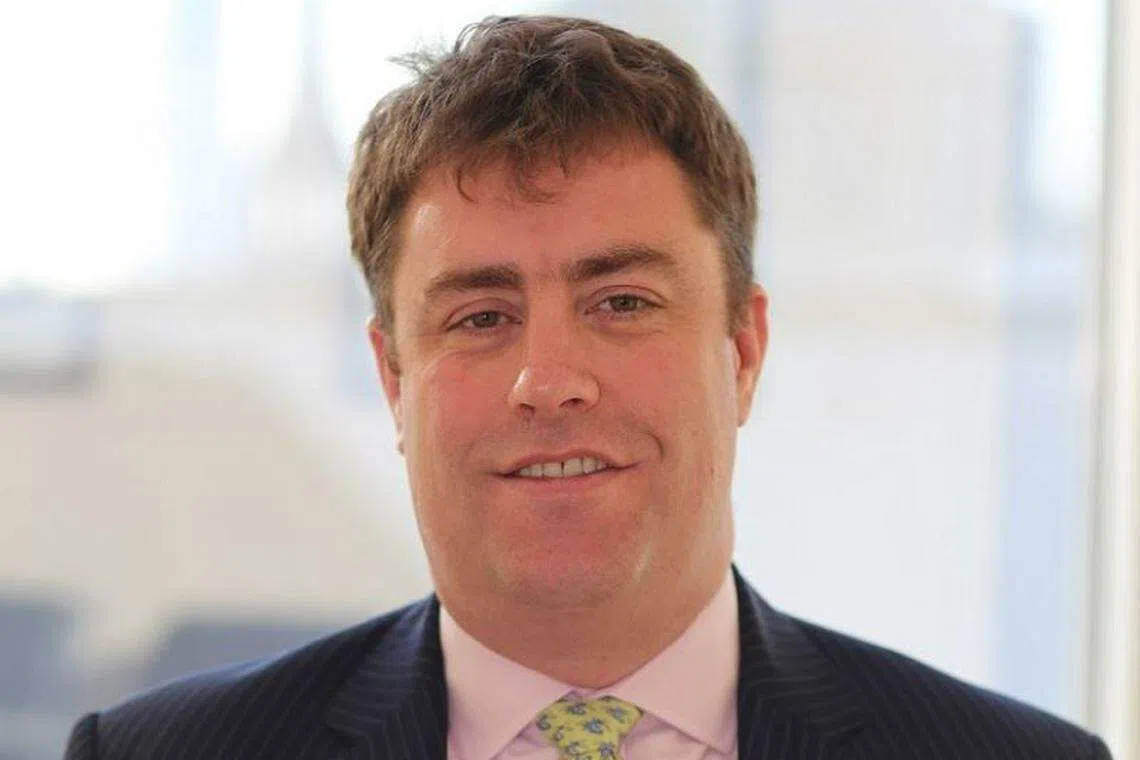
No matter what the results show, one cannot ignore the fact that investment success will be increasingly driven by social or environmental change, he said. Sustainability is “unavoidably” where fund managers need to focus because it is becoming regulated in a way that it was not historically, he added.
Changes do come fast and furious. Howard said he lately observed a growing recognition in Europe that early rules and regulations have made it unnecessarily difficult for sustainable investors to focus on transition finance, for instance.
With that, attention on the European Union’s sustainable finance taxonomy appears to have declined a little over the last few years, as industry players detect a “chicken-and-egg problem” to its adoption, he noted. The problem emerges when the specific and detailed data requirements governing whether an economic activity can be classified as sustainable prevent new activities without such data points from entering the picture.
And while some ESG considerations appear hypothetical at the moment, he urged investors to understand that they are not theoretical takes. “We are all exposed. This is going to impact all of us. The question is, are we (taking in these considerations) consciously, or are we just hoping for the best?” he said.
Expounding on his analogy of driving with a rear-view mirror, Howard said that when business circumstances are changing as they are now, the same determinants of success will evolve as well. How to cut costs or how to shift production, for instance, will require different solutions.
“The momentum towards delivering tougher climate policies that will help decarbonise the economy is increasing. That will impact all investments,” he said. “The real question is: Are we being proactive about trying to understand those risks and where those opportunities are? Or are we just thinking about this through a backwards-looking mirror, applying the formula from the last 20 years to the next 20 years?”






