

Energy is the new water, says climate ambassador Ravi Menon
Asean needs to come up with policy responses that allow for it to be traded in a way that all parties benefit

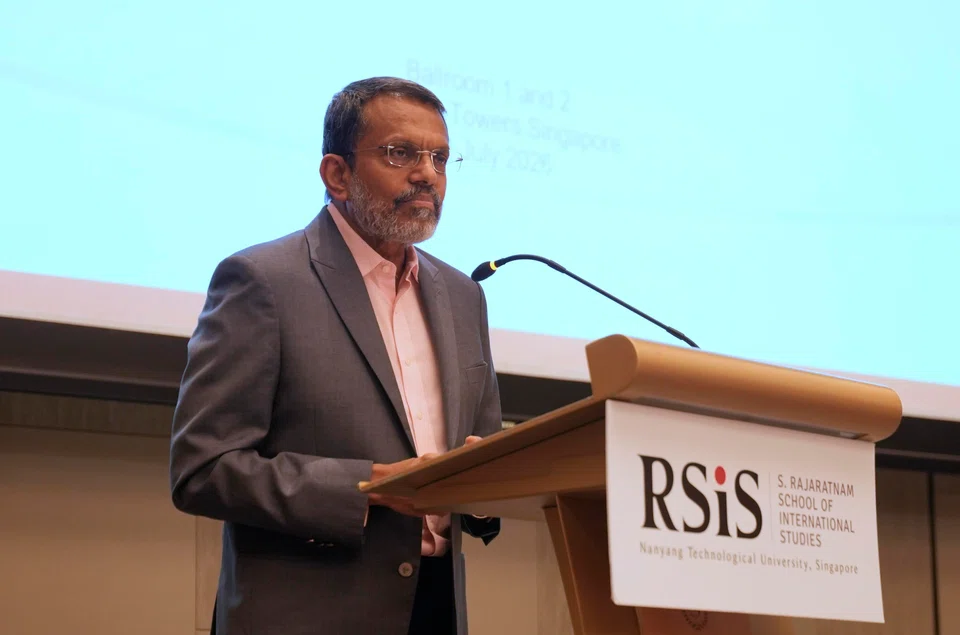
[SINGAPORE] As energy becomes a scarce resource like water, member states of Asean need to come up with policy responses that allow for energy to be traded in a way that all parties are able to reap benefits, said Singapore’s ambassador for climate action Ravi Menon.
“You got to reimagine the region the way we did 30, 40 years ago. When we reimagined the flow of trade, the flow of goods and services, and we built mechanisms to facilitate that – shipping ports, airports, railway lines, containers, all kinds of physical infrastructure and customs procedures and so on – to enable trade in goods and services,” said Menon.
“We have to reimagine a world where we now trade energy. Because energy is the new water. Its scarcity is going to drive a lot of responses, and we must make sure those responses are cooperative responses that give rise to mutual benefit,” he added.
Menon was responding to a question on Tuesday (Jul 14) after delivering a lecture on how the world is entering a new era of geo-economics, as a distinguished fellow at the S Rajaratnam School of International Studies at the Nanyang Technological University.
One project that could benefit all member states of Asean would be the building out of a regional, interconnected grid, known as the Asean Power Grid.
“The outcome will be as what we have seen in goods and services, which is that renewable energy-deficit countries will be able to buy renewable energy from surplus countries, and both parties gain from that,” he added.
'%3e%3cpath%20d='M12.1475%2025.5262C13.7713%2025.4295%2014.94%2023.913%2014.94%2021.8832C14.94%2019.5359%2013.474%2018.093%2011.5917%2018.093C11.3745%2018.093%2010.9582%2018.093%2010.8393%2018.1413V25.2086L11.8891%2025.5745C11.8891%2025.5745%2012.207%2025.5262%2012.1475%2025.5262ZM11.4934%2017.6281C13.2567%2017.6281%2014.3843%2016.4292%2014.3843%2014.4501C14.3843%2012.372%2013.275%2011.2973%2011.4339%2011.2973H10.8393V17.6305H11.4934V17.6281ZM6.66078%2025.6482L7.39265%2025.5492C8.02617%2025.4502%208.26403%2025.3053%208.26403%2025.1097V11.6149C8.26403%2011.4193%208.1451%2011.3709%207.23484%2011.249L6.68137%2011.173L6.6219%2010.7588H11.9508C15.7153%2010.7588%2017.0624%2012.0797%2017.0624%2014.1578C17.0624%2015.9666%2015.7748%2017.1909%2013.4969%2017.6305V17.7041C16.111%2017.948%2017.6571%2019.5382%2017.6571%2021.7636C17.6571%2024.3318%2015.8937%2026.0417%2012.1109%2026.0417H6.60132L6.66078%2025.6482Z'%20fill='%232B2B2B'/%3e%3cpath%20d='M20.6287%2025.6505L21.5596%2025.5515C22.1725%2025.4779%2022.4104%2025.3076%2022.4104%2025.112V11.249H21.9346C20.073%2011.3479%2018.982%2013.0095%2018.408%2014.6227L18.1907%2015.5018H17.6555L18.1701%2010.7588H29.3837L29.6421%2015.4787H29.1664L28.9491%2014.6227C28.3728%2012.8645%2027.3047%2011.2743%2025.5002%2011.249H24.9856V25.1856C24.9856%2025.3812%2025.1251%2025.4548%2025.9965%2025.5515L26.7695%2025.6505L26.829%2026.0417H20.5693L20.6287%2025.6505Z'%20fill='%232B2B2B'/%3e%3c/g%3e%3cdefs%3e%3cclipPath%20id='clip0_5242_21648'%3e%3crect%20width='24'%20height='16.8'%20fill='white'%20transform='translate(6%2010)'/%3e%3c/clipPath%3e%3c/defs%3e%3c/svg%3e)
Clean energy adoption has been slow in Asean, but the region would have to tackle the issue of climate change and decarbonisation as more frequent extreme weather events hit the region.
The Asean Power Grid – which has been in discussion over the past two decades – would allow for cross-border power trading and has been touted as an avenue to accelerate the deployment of clean energy projects across the region.
Singapore has given conditional approvals for the development of several cross-border low-carbon electricity projects located across the region, such as in Indonesia and Vietnam.

Besides Asean member states having to meet their net-zero commitments, renewable energy is now widely seen as crucial for greater energy security and resilience with the ongoing Iran war hitting energy prices in the region.
Menon said that the geopolitical tensions surrounding the semiconductor industry over national security concerns that has gradually led to a bifurcation of the sector’s supply chain would unlikely be occurring in the renewable energy space in Asean.
That is because semiconductor manufacturing is only taking place in very few markets and is at the top end of the supply chain.
“So the contestation there is highly concentration, and so you now see a bifurcation... It is going to make the availability of chips and how we all navigate our own technology pathways a lot more difficult. It’s going to be very difficult for the rest of us, but I don’t think it needs to affect things like power grid in Asean,” said Menon.
Decoding Asia newsletter: your guide to navigating Asia in a new global order. Sign up here to get Decoding Asia newsletter. Delivered to your inbox. Free.
Copyright SPH Media. All rights reserved.
TRENDING NOW

LTA proposes combining car COE categories, adding rebate-surcharge system

StarHub to acquire MyRepublic’s mobile business amid ongoing telco consolidation

DBS, OCBC, UOB rout lops billions off STI as inflation, rate concerns spook investors

Grab CEO’s wife Chloe Tong on life with Anthony Tan and finding her purpose

