

Engie Factory’s potential Apac exit signals energy firms’ pivot to near-term returns: analysts
Profit constraints, tighter capital could be reasons for the venture arm’s proposed divestment, say observers

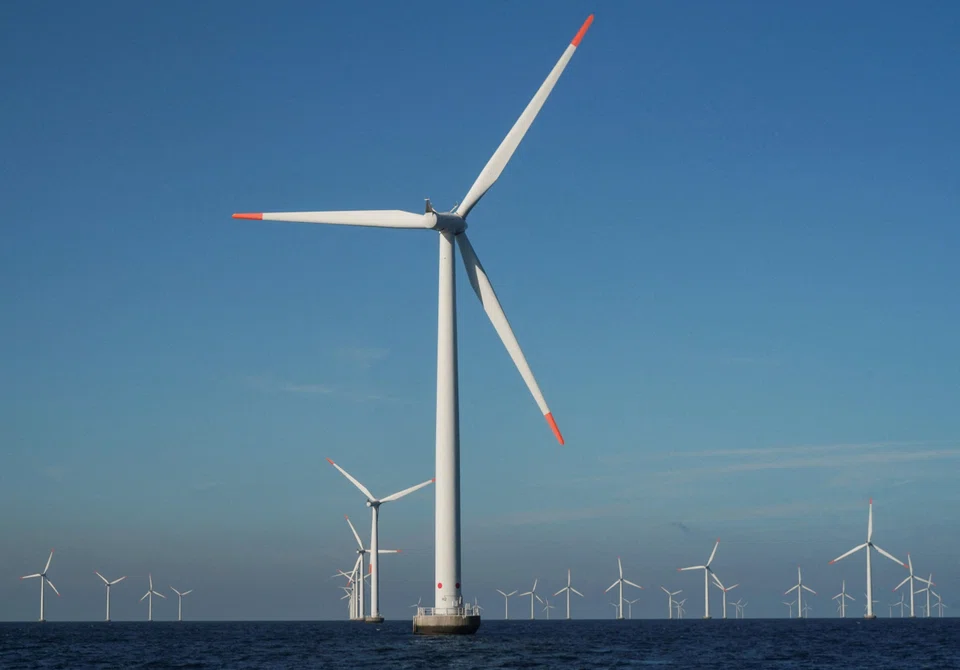
[SINGAPORE] Rising project costs in the energy space have led companies in the sector to prioritise investments that deliver “clear, near-term returns” over non-core activities.
This includes their advisory units and venture arms.
The move comes on the back of higher interest rates and inflation levels post-Covid-19, which may have led companies such as Engie – which recently put its regional startup stakes up for sale – to manage cost concerns amid a slew of projects likely to be capital-intensive, said industry observers.
In January, the French multinational energy giant extended an offer to its partner investors to buy all its interests in the startups held via its venture arm Engie Factory in Apac (EFAP).
The venture arm is focused on building new startups focused on climate-tech to help with the energy transition. Alternatively, the group may entirely divest EFAP.
In response to queries from The Business Times, a representative from Engie South-east Asia said on Thursday (Apr 2) that there are no updates on its research and innovation activities in the Asia-Pacific.
'%3e%3cpath%20d='M12.1475%2025.5262C13.7713%2025.4295%2014.94%2023.913%2014.94%2021.8832C14.94%2019.5359%2013.474%2018.093%2011.5917%2018.093C11.3745%2018.093%2010.9582%2018.093%2010.8393%2018.1413V25.2086L11.8891%2025.5745C11.8891%2025.5745%2012.207%2025.5262%2012.1475%2025.5262ZM11.4934%2017.6281C13.2567%2017.6281%2014.3843%2016.4292%2014.3843%2014.4501C14.3843%2012.372%2013.275%2011.2973%2011.4339%2011.2973H10.8393V17.6305H11.4934V17.6281ZM6.66078%2025.6482L7.39265%2025.5492C8.02617%2025.4502%208.26403%2025.3053%208.26403%2025.1097V11.6149C8.26403%2011.4193%208.1451%2011.3709%207.23484%2011.249L6.68137%2011.173L6.6219%2010.7588H11.9508C15.7153%2010.7588%2017.0624%2012.0797%2017.0624%2014.1578C17.0624%2015.9666%2015.7748%2017.1909%2013.4969%2017.6305V17.7041C16.111%2017.948%2017.6571%2019.5382%2017.6571%2021.7636C17.6571%2024.3318%2015.8937%2026.0417%2012.1109%2026.0417H6.60132L6.66078%2025.6482Z'%20fill='%232B2B2B'/%3e%3cpath%20d='M20.6287%2025.6505L21.5596%2025.5515C22.1725%2025.4779%2022.4104%2025.3076%2022.4104%2025.112V11.249H21.9346C20.073%2011.3479%2018.982%2013.0095%2018.408%2014.6227L18.1907%2015.5018H17.6555L18.1701%2010.7588H29.3837L29.6421%2015.4787H29.1664L28.9491%2014.6227C28.3728%2012.8645%2027.3047%2011.2743%2025.5002%2011.249H24.9856V25.1856C24.9856%2025.3812%2025.1251%2025.4548%2025.9965%2025.5515L26.7695%2025.6505L26.829%2026.0417H20.5693L20.6287%2025.6505Z'%20fill='%232B2B2B'/%3e%3c/g%3e%3cdefs%3e%3cclipPath%20id='clip0_5242_21648'%3e%3crect%20width='24'%20height='16.8'%20fill='white'%20transform='translate(6%2010)'/%3e%3c/clipPath%3e%3c/defs%3e%3c/svg%3e)
Why project costs are rising
Lam Pham, Asia analyst at global energy think tank Ember, told BT that capital-intensive projects, such as those for renewable energy, can be very sensitive to the cost of debt financing or interest rates.
He noted that building electricity transmission grids has come with rising material costs recently, with further spikes amid increasing demand for them worldwide. Project delays can also lead to cost overruns, further pressuring profit.
The analyst also highlighted that income for various projects in South-east Asia is handled in local currencies, while debt remains in foreign currencies, such as the US dollar.
“This means that project returns will be (lower), considering how the US dollar is still stronger than many Asean currencies,” he explained.
Energy companies are therefore shifting their focus to “bankable and investor-return friendly projects” as project costs rise and margins narrow, said Teo Hui Ling, founder at Beyond Horizons by Bethel Chambers.
To that end, such companies may choose to scale down non-core units such as their sustainability venture or advisory arms.
Shift to higher-return projects
Experts BT spoke to said utilities and related companies have been consolidating portfolios and simplifying organisational structures to concentrate on “fewer and larger” projects with better returns.
As a result, higher-risk projects – such as those dealing with offshore wind and hydrogen – are deprioritised.
One example would be Mitsubishi’s withdrawal from three offshore wind projects in August 202. A December 2025 report from the Institute for Energy Economics and Financial Analysis noted that this came on the back of “aggressive auction bidding” in 2021 that left limited buffers for inflation.
Fewer long-term contracts, delays in regulatory approvals and financial support will lead to “tightened balance sheets (within companies) and the eventual disinvestment of non-core, high-risk assets and businesses”, said Ember’s Lam.
Besides margin concerns, some companies also scale back on activities that offer limited strategic value, said observers.
A report by S&P Global in September 2025 noted that Scottish Power, a utility subsidiary of global energy firm Iberdrola Group, ceased its renewable hydrogen project developments, despite securing funding for two projects, as it saw no clear path to commercialise the hydrogen.
Similarly, Statkraft, a Norwegian state-owned renewable energy generator, is also halting most of its hydrogen project developments in the light of “increased uncertainty” in the market.
Meanwhile, global energy players are also narrowing their geographic focus as part of cost-cutting strategies, said industry observers.
Lam said this could entail the “rationalisation or optimisation of regional offices and experimental business lines”, particularly outside of their core markets.
Can non-core, green units stay viable?
Despite mounting cost pressures, observers believe there are still ways to support smaller, non-core green units in energy companies. One method is to hold more renewable energy auctions, where governments or utility companies solicit bids from developers to build renewable projects at the lowest price per unit of electricity.
Lam said that more structural reforms and revenue frameworks would be required to raise confidence in high-risk project financing. This could take the form of securing more long-term contracts to offer more predictable cash flows for lenders. “Where project risk is adequately mitigated, supporting industries such as venture arms and consulting units will follow and grow,” he said.
Decoding Asia newsletter: your guide to navigating Asia in a new global order. Sign up here to get Decoding Asia newsletter. Delivered to your inbox. Free.
Copyright SPH Media. All rights reserved.
TRENDING NOW

Could stablecoins be the future of money?

Once staunchly pro-China, Malaysian Chinese businesses are now distancing themselves from Beijing
Vietnam’s data-centre investment rush faces reality check on power and site constraints

‘My grandfather’s legacy’: Sherman Kwek lays out three-year plan for CDL to drive returns

